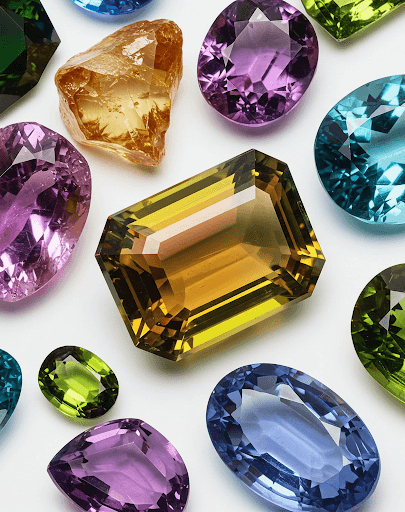
Semi-Precious Stones
Amethyst, citrine, tourmaline, tanzanite, morganite, agate and lapis lazuli: what each stone looks like, where it comes from, and what is attributed to it.
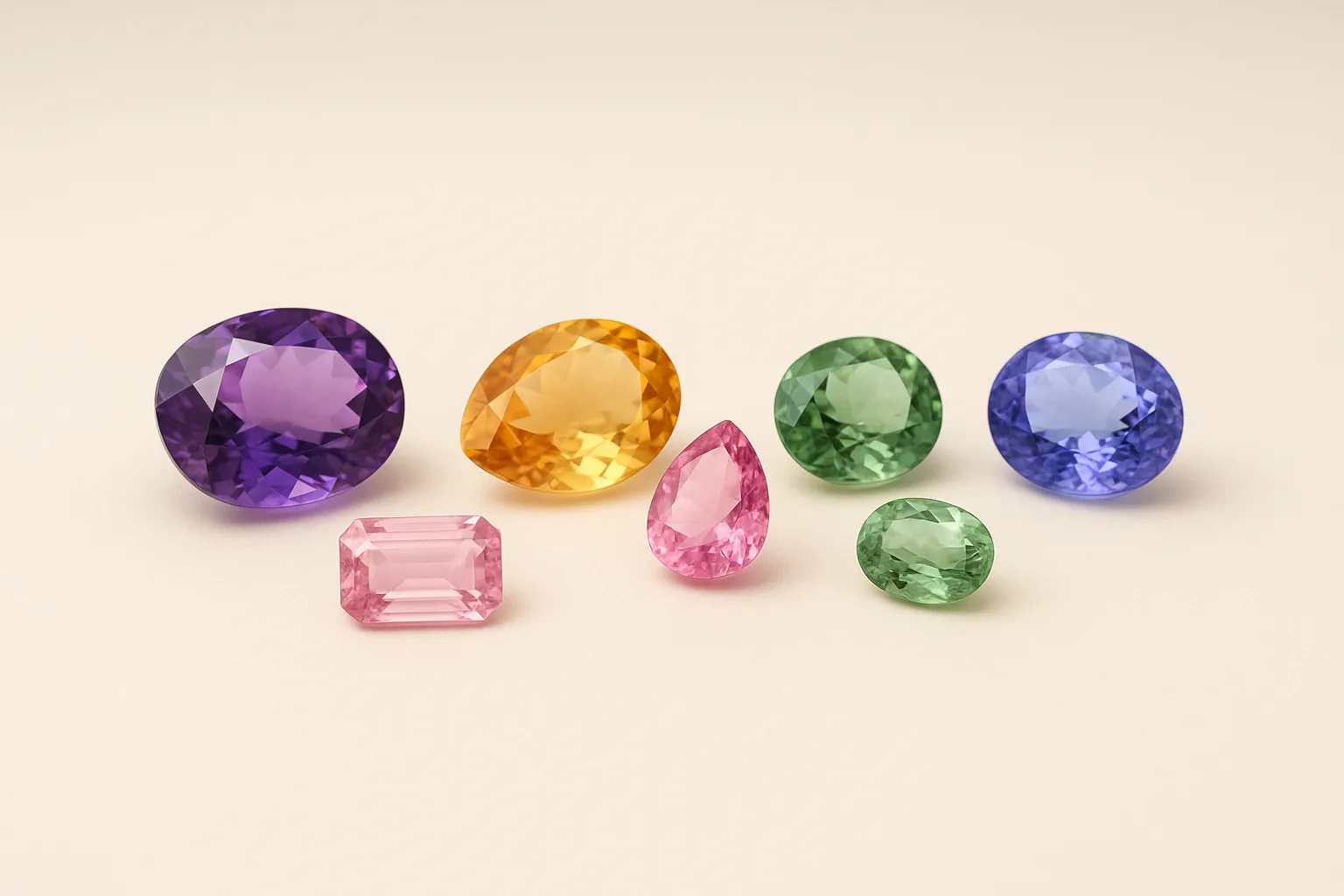
Semi-precious stones have been used throughout history in several important cultures. In ancient Egypt, for example, the emerald and the topaz were regarded as precious gemstones used to adorn jewelry and decorative items. In ancient Greece and Rome too, the use of semi-precious stones was widespread, particularly as personal seals, engravings and jewelry for the upper classes. Over time, each culture developed its own rules and standards regarding which gemstones were considered precious and rare.
As noted, gemstones have accompanied humankind throughout history, and there is evidence of jewelry with precious stones uncovered in ancient tombs. In our region, jewelry with gemstones originating from other parts of the world has been found in ancient tombs, and this testifies to trade in gemstones. The Bible contains the most famous story of such trade: the Queen of Sheba comes to visit King Solomon and brings with her gifts of gold and precious stones from distant Africa. Gemstones are also mentioned as adorning the breastplate of the High Priest.
Semi-precious stones have many advantages, both aesthetically and physically and emotionally:
- More accessible - unlike precious gemstones, semi-precious stones are more accessible in terms of price, which allows many people to enjoy them.
- Magnificent and varied designs - the range of colors and textures of these gemstones allows for different designs to suit every style.
- Medical and spiritual benefits - according to spiritual beliefs, these stones help to increase positive energy, mental health and feelings of calm and tranquillity.
Types of semi-precious stone
Semi-precious stones are exceptionally varied, and they differ from one another in characteristics such as color, transparency, hardness and texture. Below are some of the most popular.
Amethyst (Achlama)
The amethyst (opens in new tab) is a purple gemstone that is very popular in the world of jewelry, and is identified with various shades of purple, from light purple to dark purple. The amethyst is one of the most highly valued semi-precious stones in the world, and it is mostly used in jewelry such as rings, earrings and necklaces. Amethyst is the birthstone of the month of February.
- Symbolism and spirituality: the amethyst is identified with mental stability, spirituality and calm. It is often called the "spiritual reinforcement" of body and soul… Some believe that the amethyst can help relieve anxiety and improve concentration and mental clarity. It instils a relaxed atmosphere and strengthens intuition and creativity. It eases the process of withdrawal.
- Medical uses: some believe that the amethyst can help with headaches, reduce mental stress and help improve the quality of sleep.
Citrine
The citrine (opens in new tab) is a gemstone in shades of yellow through to orange and even brown tones. The citrine is often called the "sun stone" because of its warm, radiant color.
- Symbolism and spirituality: the citrine is considered a stone of optimism, joy and creativity, the stone of abundance; it increases self-confidence and creativity and strengthens the intellect and the memory. It symbolizes wealth and prosperity, and it is claimed that it helps to bring positive energy out and to draw abundance to whoever wears it.
- Medical uses: some believe that the citrine can help relieve stress and anxiety, and in particular increase physical and mental energy. It is sometimes used to improve the appetite and the digestive system. It assists in healing the kidneys.
Tourmaline
The tourmaline is a gemstone that exists in a wide range of colors, including green, blue, red, yellow and black. Each color of tourmaline carries a different meaning and a different healing property.
- Symbolism and spirituality: the tourmaline is known for providing protection and balance. Some believe that it summons positive energies and turns away negative ones. Black tourmaline in particular is identified as a stone of protection.
- Medical uses: some believe that the tourmaline improves blood flow, releases energetic blockages and helps relieve stress. Tourmaline is also considered a strengthening stone, particularly for the immune system and the bones.
Black tourmaline - offers protection from negative energies, balances, and can treat rheumatism, dyslexia and anxieties.
Green tourmaline - feelings of love, creativity; drives away fears and calms the nerves. Assists with weight loss.
Pink tourmaline - strengthens a sense of joy and enthusiasm for life, increases self-love, confers trust in love.
Tanzanite
Tanzanite is a mineral of the epidote group that was first discovered in 1967 in northern Tanzania, from which it takes its name. Tanzanite has a hardness of 6.5–7 on the Mohs scale and comes in varying colors, including shades of purple, green and sapphire blue. Tanzanite is a remarkable gemstone, and there is only one deposit of natural tanzanite in the world, in the Merelani hills of Tanzania, extending over 8 square kilometers - which is why it is named after the country.
Artificial tanzanite stones are also sold on the market under the name "tanzanique", but their color does not shift as it does in the original stone. The tanzanite market is entirely controlled by the company TanzaniteOne, which some years ago began an advertising and marketing campaign to position tanzanite as a birthstone, to be given to every baby at birth.
The advertising campaigns of the jewelry manufacturer Tiffany also contributed greatly to the popularity of tanzanite, and the sales volume of the gemstone in the USA amounts to half a billion dollars a year. Tanzanite is admittedly not set in rings because of its tendency to break, but it is used by the jewelry industry to produce precious gemstones that are enjoying growing popularity.
- Symbolism and spirituality: tanzanite is considered a stone of spiritual change, helping to raise spiritual awareness and to strengthen the inner connection with the universe. Some believe that it increases the ability to communicate with a higher consciousness.
- Medical uses: some believe that tanzanite helps improve the limbic system, which is the part of the brain involved in emotional states, and therefore helps to relieve stress and anxiety.
Morganite
The morganite (opens in new tab) is a pink or peach-colored gemstone with a soft, romantic tone. It is considered one of the most beautiful semi-precious stones and is especially loved in contemporary designs.
- Symbolism and spirituality: the morganite is considered a stone of love, inner peace and harmony. It helps to ease emotional pain and to increase the ability to love ourselves and others.
- Medical uses: morganite stones are sometimes used as a spiritual tool for releasing emotional blockages, particularly those connected with love and inner harmony. Some believe that it also helps to relieve stress and improve mood.
Agate
A common gemstone with natural patterns and varying colors. The agate signifies stability and self-confidence.
Turritella agate - the "work stone"; holding it makes it easier to find a job and to advance at work. It confers strength and courage.
Botswana agate - creativity. It encourages alertness and vigilance while strengthening judgement. It helps in preserving character.
Moss agate - strengthens the ego and self-esteem. Confers emotional stability. Eases influenza and brings down fever.
Lace agate - allows you to laugh from the heart and to accept life with better understanding. It stimulates vital organs.
Green agate - confers a sense of strength and courage. Strengthens the heart and calms. Stabilizes the aura. Increases the capacity for precision.
Blue agate - communication, flow and speech. It makes expression without anger easier. It calms and confers a sense of strength and courage.
Blue lace agate - calms and confers a flowing, relaxed approach. Recommended for people who speak in front of an audience. It confers courage.
Lapis Lazuli (Hakat)
Lapis lazuli is a deep blue gemstone, considered one of the most ancient stones across various cultures. It is accepted by many as a stone of wisdom and holiness.
- Symbolism and spirituality: lapis lazuli is considered a stone of inner wisdom and communication, and it helps people to express their thoughts and feelings clearly and precisely.
- Medical uses: it acts as a mental and spiritual purifier. Some believe that lapis lazuli helps to relieve emotional tension and helps improve the spiritual connection with others and with the world. It brings relief in cases of despair and releases pressure.
Carnelian
A red or orange stone that is accepted as training energy and spirituality.
The ten stones at a glance
Hardness governs how a stone survives daily wear, treatment governs what you are actually buying, and colour carries most of the price. Each stone has its own guide.
| Stone | Hardness (Mohs) | Colour range | Usual treatment | Everyday wear |
|---|---|---|---|---|
| Amethyst | 7 | pale lilac to deep purple | usually none | good, keep out of strong sun |
| Aquamarine | 7.5-8 | pale to deep blue, often green | nearly always heated | very good |
| Citrine | 7 | lemon to deep orange | usually heated amethyst | good, keep out of strong sun |
| Topaz | 8 | blue, Imperial orange, yellow | blue is always treated | good, but it cleaves |
| Tourmaline | 7-7.5 | every colour, often two at once | often heated | good |
| Garnet | 6.5-7.5 | red, green, orange, purple | essentially never | very good |
| Spinel | 8 | red, pink, cobalt blue, grey | almost never | excellent |
| Morganite | 7.5-8 | pale pink to peach | nearly always heated | good, protect the girdle |
| Quartz | 7 | colourless, smoky, rose, rutilated | often irradiated or heated | good |
| Moissanite | 9.25 | colourless | none, grown to specification | exceptional |
In summary
Besides the stones mentioned above, there are many more semi-precious gemstones.
Semi-precious stones are a precious and widespread stone in the jewelry industry, in alternative medicine and in mysticism. They come in a magnificent range of colors and textures. They are valued for their beauty, their spiritual power and their mystical influence, and together with their more accessible price they offer many advantages. Because they are widely available and vary a good deal in quality, it is worth comparing loose semi-precious stones (opens in new tab) from a specialist supplier, where you can weigh color and clarity against price directly.
Whether for personal use in jewelry or as a tool for spiritual healing, semi-precious stones offer experiences and values for everyone, and in this way they remain a central stone in human culture throughout history
Several of the stones above are also assigned to a zodiac sign by tradition, among them amethyst, citrine, garnet, topaz and tourmaline. Astrology and gemstones sets out which sign takes which stone, and which of them are hard enough to wear every day.
Tanzanite is one of three birthstones for December, alongside turquoise and zircon; the December birthstone guide covers all three.
The faceted stones in the series now run from the familiar to the rare: tanzanite, tsavorite and demantoid among the fine coloured stones, peridot and zircon as the affordable brilliant ones.
The cabochon and phenomenal stones each have a guide too: opal, moonstone, turquoise, tiger's eye and onyx, where what you are buying is an effect or a polish rather than a colour.