Gemstones
What separates a precious stone from a semi-precious one, how gemstones are valued, and what to look at in color, clarity, cut and carat before buying.
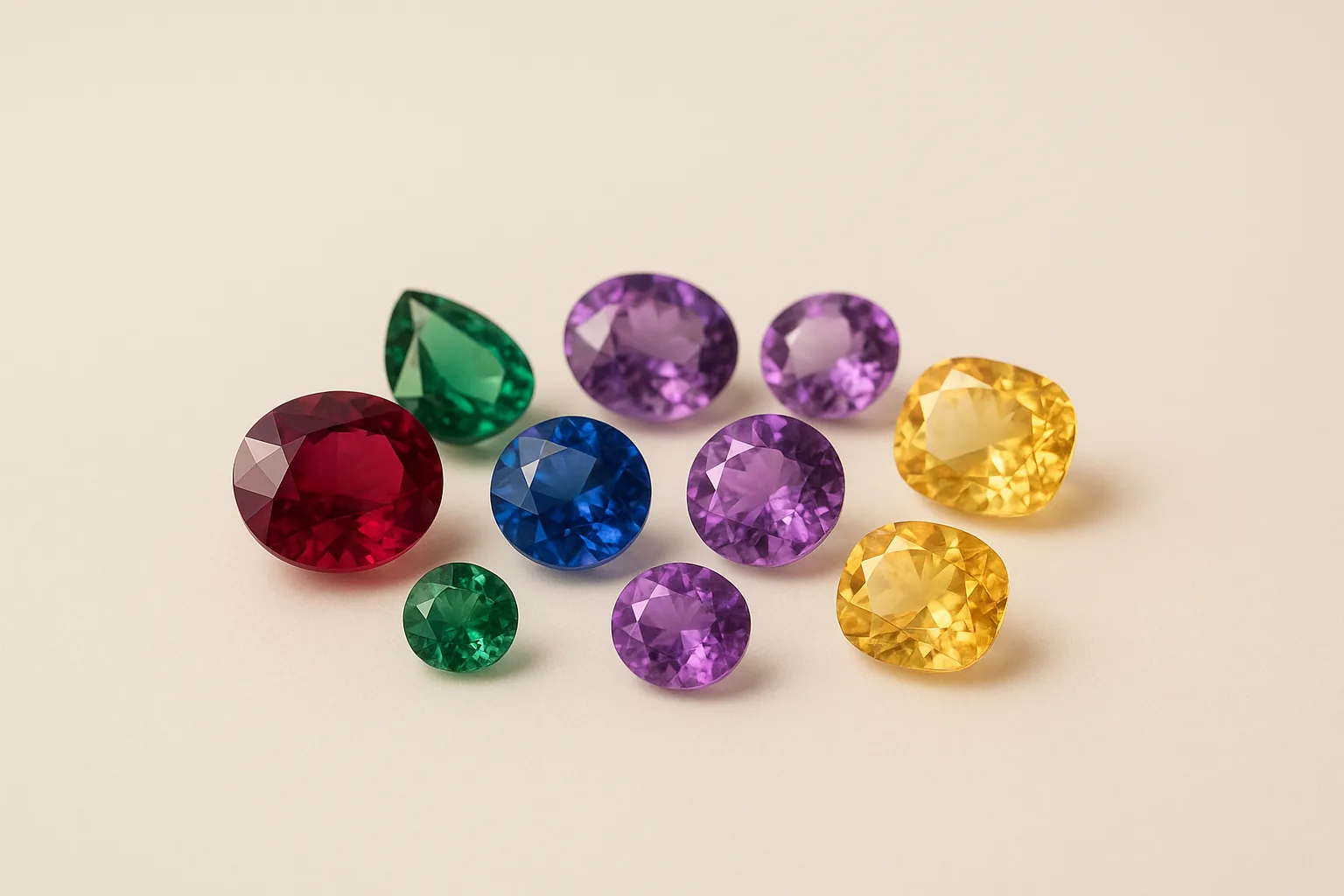
What are gemstones?
Gemstones are natural minerals that are worked and polished for use in jewelry or as valuable goods. They are known for their beauty and their value, and are also used in other fields such as alternative medicine and therapy.
Types of gemstone
Gemstones are divided into 2 categories, according to the type of mineral or material they are made from.
Precious stones - these are stones considered particularly rare and valuable, and they are usually divided into four main categories:
- Diamond - the most precious gemstone of all. A diamond is considered a symbol of eternal beauty and durability; it is the hardest mineral in nature (hardness 10).
- Ruby (opens in new tab) - a red gemstone whose color can change according to the angle from which it is viewed. It is considered a highly valuable and much sought-after gemstone (the ruby has a hardness of 9).
- Sapphire (opens in new tab) - available in a range of colors (pink, yellow, green, purple, orange and more); the blue sapphire is the most popular (the sapphire, like the ruby, has a hardness of 9).
- Emerald (opens in new tab) - a green gemstone that is highly prized for its intense color and its rarity (the emerald has a hardness of 7.5–8).
Semi-precious stones (opens in new tab) - all the other gemstones. Semi-precious stones are not as rare as precious stones, but they still have value and a magnificent aesthetic.
How will I know which gemstone to choose?
When choosing a gemstone, there are several criteria that can help determine its value:
- Color - this is the most important criterion! The question of color has 2 sides: on the one hand, which color you or she prefers, and on the other, when looking at the color in a gemstone, the hue and the depth of the color matter a great deal. Rarer colors, such as a deep green or a pure blue, will often make the stone more expensive.
- Luster - how the stone reflects light. Quality gemstones will have an exceptional luster.
- Cut - the cut of the stone is very important for returning light and for emphasizing the color.
- Clarity - stones free of flaws and clean (without fissures or grooves) are worth more.
- Weight - the weight of the stone is measured in carats, and it affects the price.
- Hardness - it is worth taking this factor into account so as not to end up in a situation where the stone cracks or breaks during setting.
- Natural or synthetic - be aware that there are natural gemstones but also synthetic gemstones (something that of course affects the price), and you need to decide which stone you want and aim for that.
How do you care for gemstones?
- Preventing scratches: avoid contact with sharp materials that could scratch the stone.
- Proper storage: keep the stones in shaded places, away from direct heat or damp.
- Cleaning: gemstones can be cleaned gently using warm water and soap (except for sensitive stones such as opal, pearls and others).
Gemstones in therapy
Over the years, gemstones have also been used in the fields of alternative medicine and therapy. It is believed that stones have the ability to improve a person's mental, physical and spiritual health. For example:
- Diamond - associated with strengthening personal energy and spiritual empowerment.
- Amethyst - considered a stone that brings calm and gentleness.
- Ruby - symbolizes strength and a sense of vigor.
How do you invest in gemstones?
- Choose the right stone - it is important to understand which type of gemstone suits your budget and what you are looking for. If it is for a piece of jewelry, color and cut matter a great deal.
- Look for a reliable source - you should make sure you are buying the stone from a reliable source that specializes in gemstones. It is worth checking the valuation certificate, especially where a precious stone such as a diamond is concerned. Many buyers prefer to purchase closer to the source - directly from a manufacturer or established gemstone supplier rather than through several intermediaries - because it can reduce added markups, give access to a larger inventory, and make it easier to compare certified stones on transparent terms; it can also make custom work simpler if you want a particular stone set your way. A specialist supplier such as Israel Diamonds, for example, lists certified loose gemstones (opens in new tab) alongside its diamonds.
- Preliminary checks - before buying, it is worth having the stone examined by an expert or a gemologist who will assess its quality.
Summary
Gemstones are not only magnificent pieces of jewelry, but also a unique investment and a lasting value. Every gemstone offers a different experience of beauty, and they have special qualities that deepen their charm. Whether it is a personal piece of jewelry or a financial investment, gemstones are a whole world offering an abundance of possibilities.