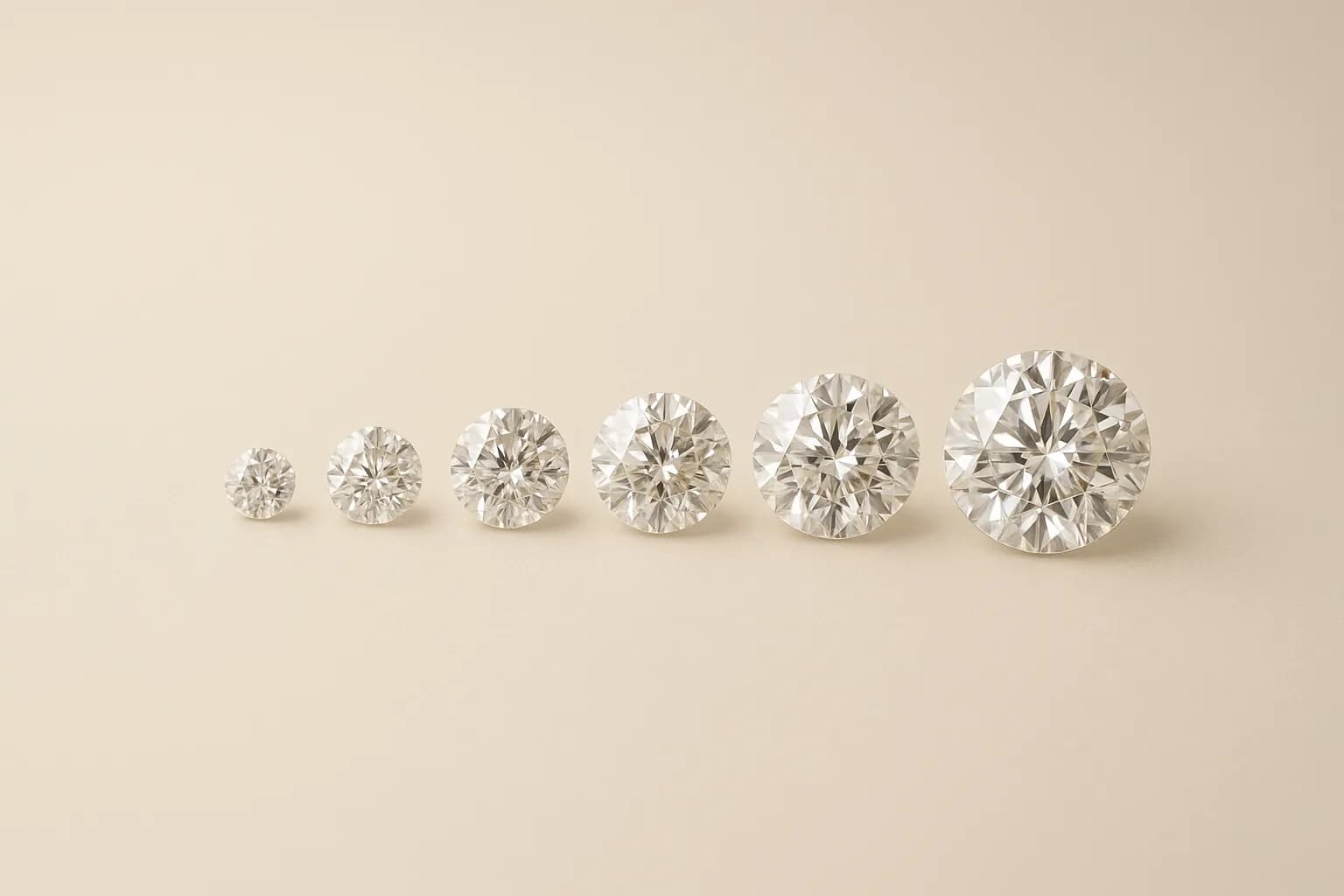
Carat Weight
A carat measures weight, not size. See how carat weight relates to the diamond you actually see, and why prices jump at every round-number weight.
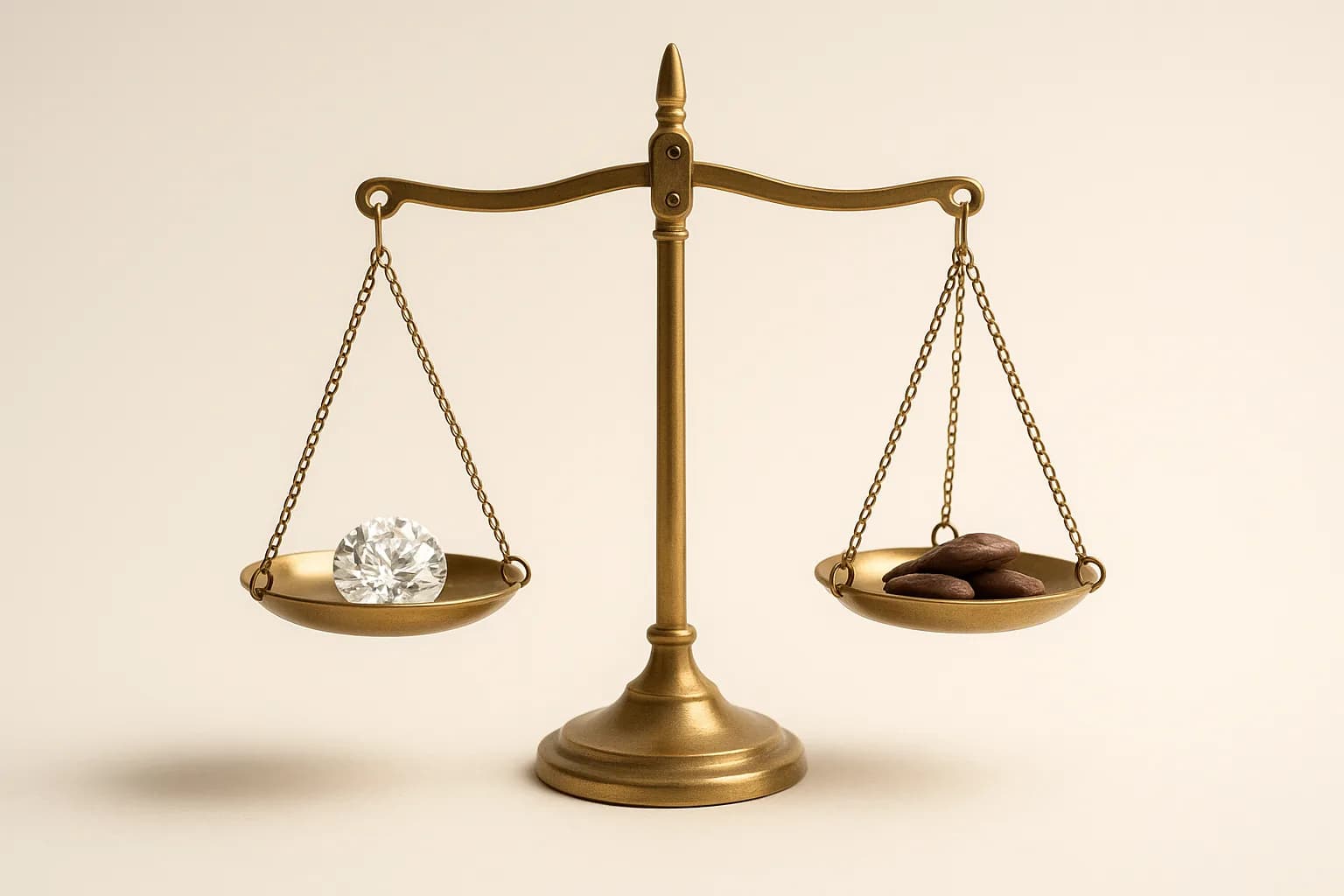
A diamond's weight is measured in carats (CARAT). Carat is usually abbreviated to ct.
One carat weighs 200 milligrams. With diamonds a points system is also used, in which each carat equals 100 points.
The carat weight originates in carob seeds, which always weigh the same amount (1 carat).
Historically, gemstone and diamond traders used carob seeds as counterweights on their scales; the practice took root and continues all over the world to this very day.
Cttw refers to the total carat weight, covering all the diamonds in a piece of jewelry. In the case of diamond earrings, for example, the total carat weight refers to the weight of the diamonds in both earrings together.
So if the total weight of the diamonds in the earrings is 1 carat (1.00cttw), each individual earring holds a ½ (0.50) carat diamond.
Some weights are considered more sought after than others, for example ½ carat, ¾ carat and 1 carat.
The relationship between carat weight and price - did you know?
- A diamond (not set in jewelry) is priced by price per carat.
- All other factors being equal, a larger diamond will cost more per carat than a smaller one.
- A larger diamond costs more because it is rarer.
- Two half-carat diamonds will usually cost less together than a single one-carat diamond.
- A four-carat diamond will cost more than four times the price of a one-carat diamond of the same quality.
Because those round-number weights are in higher demand, a stone that sits just below a "magic size" - say 0.90ct rather than a full carat - often carries a noticeably lower price per carat while looking almost identical on the finger. It is one of the simplest ways to stretch a budget without visibly compromising on size.
Since a loose diamond is priced per carat, the way you buy also affects the final figure. Many experienced buyers purchase closer to the source, from diamond manufacturers or established suppliers rather than through several intermediaries, which can reduce added markups, widen the choice of stones on offer, and make pricing more transparent when you are weighing one weight-and-quality combination against another. Direct suppliers such as Israel Diamonds (opens in new tab), for example, let you compare loose diamonds by weight, quality and price per carat (opens in new tab) before committing.
The relationship between carat weight and dimensions
Two diamonds of exactly the same carat weight but of different shapes (opens in new tab) can have very different measurements depending on their cut, and so even when all the shapes weigh the same, their prices will differ.
Example measurements by shape:
- 6.30 x 6.30 mm - one-carat round diamond
- 5.20 x 10.00 mm - one-carat marquise diamond
- 5.50 x 5.50 mm - one-carat princess diamond
- 5.50 x 8.00 mm - one-carat pear diamond