Design Your Own Ring
Turn a photo or sketch into a personal ring. Work with a jeweler on your taste, budget and specifications, then review the CAD design before casting.
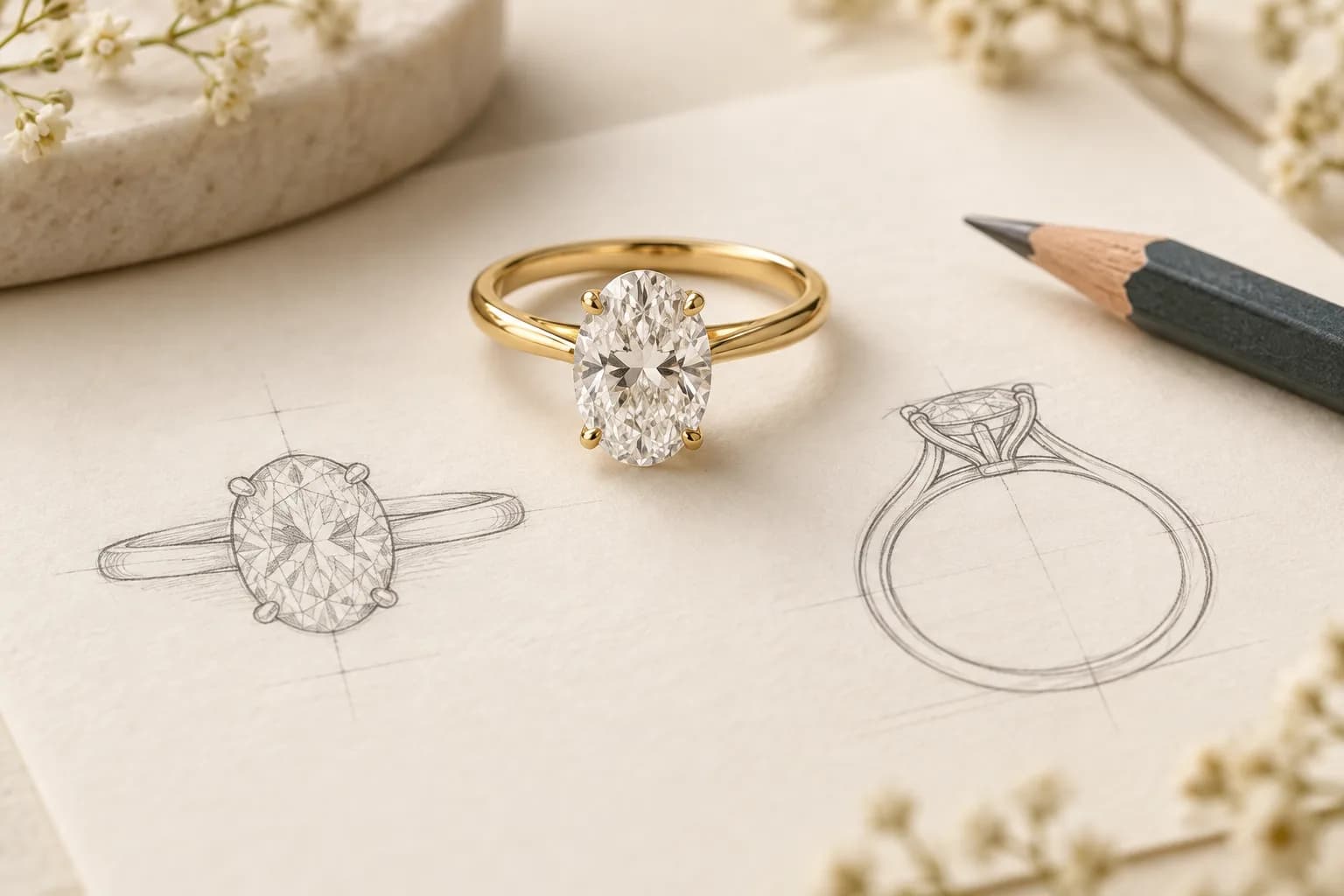
Designing your own ring is a little like having a dress made especially for you: you bring the inspiration, and a skilled professional helps turn it into something that suits your taste, proportions and budget. You do not need to be a designer or arrive with a technical drawing.
Start with a picture or a sketch
Send a photograph, a simple drawing or a few reference images, and explain what you like about each: the stone shape, the band, the setting or a small detail. Describe what you would change, too. For example, the Israel Diamonds design request form (opens in new tab) lets you describe your idea and upload an image or file. Its form is in English.
Shape the specifications around your budget
Tell the jewelry expert your comfortable total budget and which features matter most. Together you can agree on the center stone, metal and purity, ring size, band width, setting height and finish. Explain how you will wear the ring and whether it needs to sit beside a wedding band.
If the first proposal costs too much, ask for alternatives: a different stone size or quality, fewer accent stones, or a simpler setting. Ask the jeweler to preserve comfort and secure stone support. Get a written quote covering design work, revisions, stones, metal, setting and any delivery charges or taxes.
Review the CAD before casting
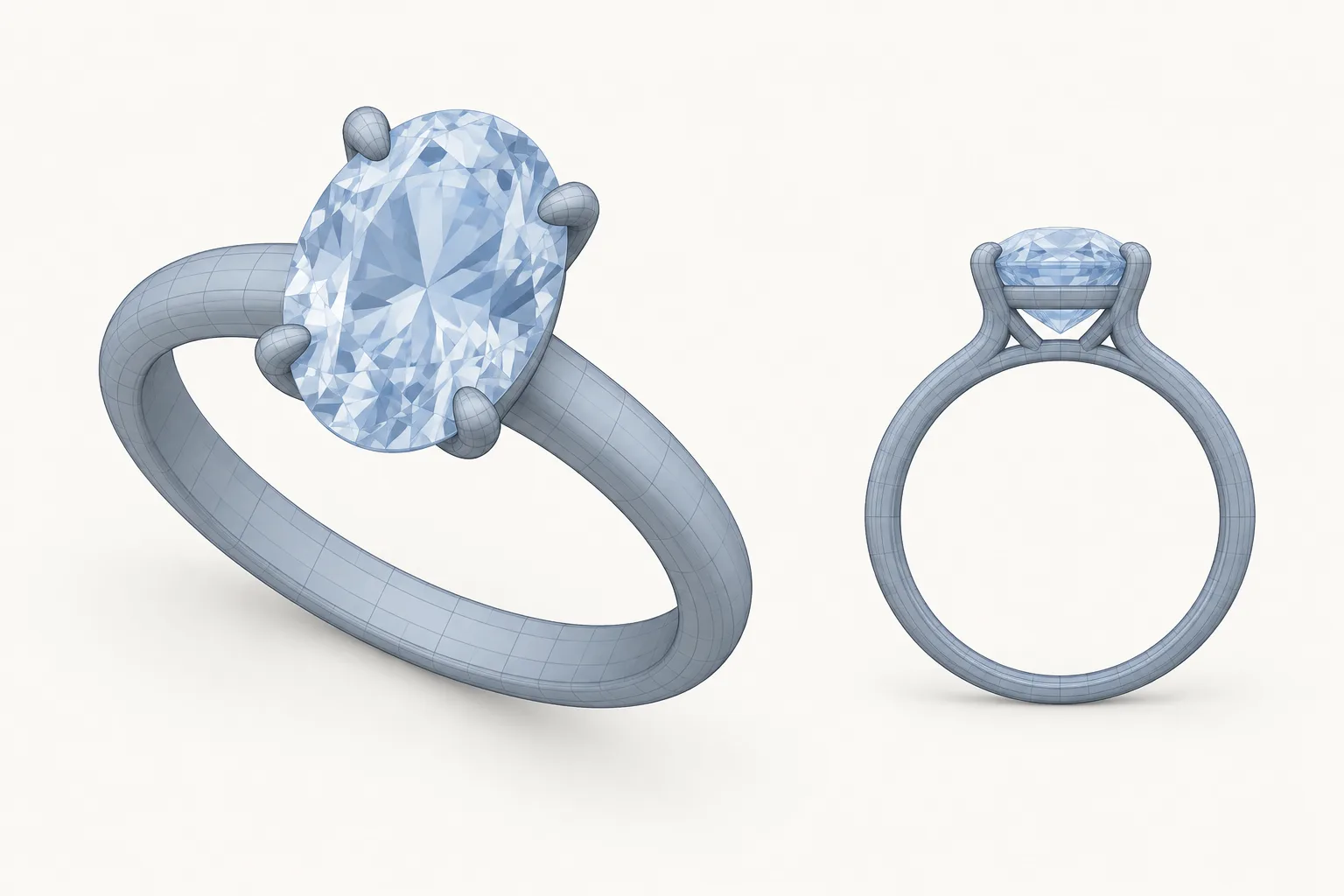
CAD means computer-aided design. The jeweler can prepare a three-dimensional model so you can review the ring from several angles before it is cast. Israel Diamonds describes CAD approval (opens in new tab) as a step before modeling and crafting. Confirm the approval stage and the included revisions with your chosen vendor.
Check the top, side and on-finger proportions, the measurements, stone positions and space beside a wedding band. Ask questions and request changes before giving written approval. A rendering helps align expectations, but it cannot reproduce the exact sparkle, color or feel of the finished ring. Ask which details will change during setting and polishing.
From an approved design to your ring
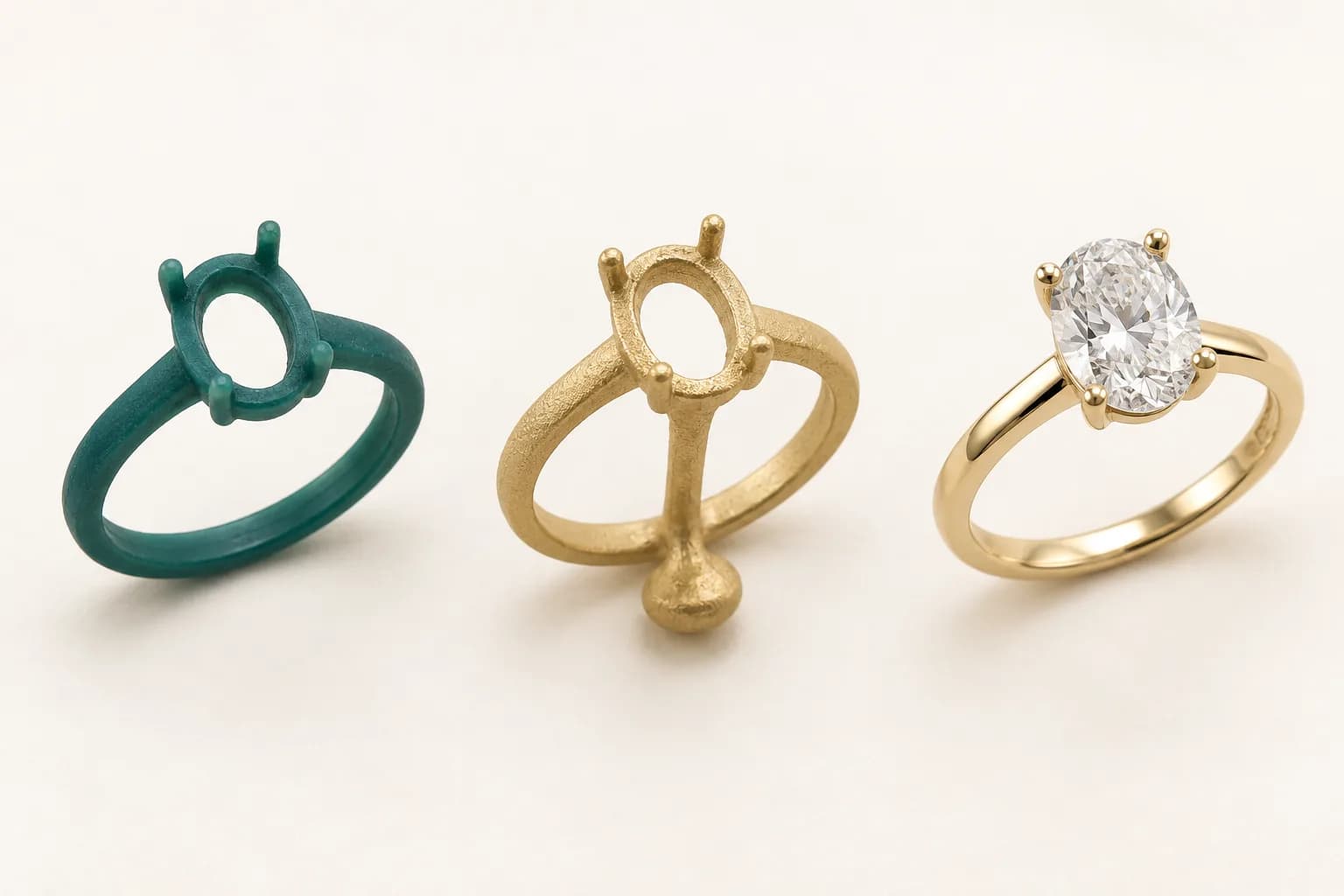
For a cast ring, the approved design is used to make a model and then the metal casting; the jeweler sets the stones and finishes the piece. Agree on the delivery schedule, final inspection, resizing and aftercare, as well as the cancellation and return terms for a custom order. This shared process helps the finished ring reflect what you agreed together.
Before sending your brief, explore setting a budget, choosing the metal and ring size. Clear preferences and an approved design give the craftsperson a much better starting point.