The Ring
Everything that goes into the ring around the stone: choosing a design, the setting that holds it, the metal it is made from, the budget and the size.
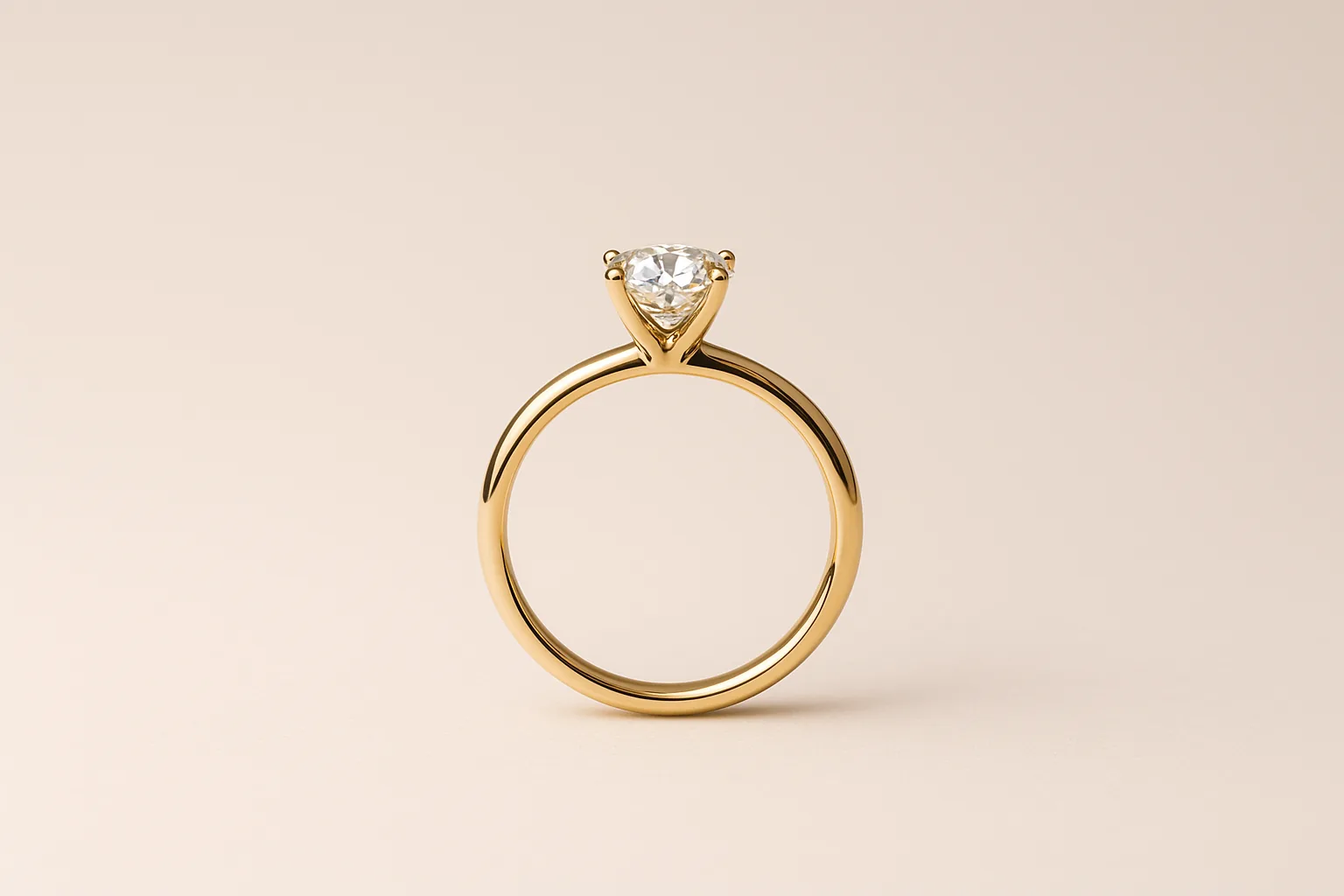
The stone gets the attention. The ring gets the wear. A setting has to hold a diamond through decades of washing up, gardening and gloves, and it is the part far more likely to need repair later - so it repays the same care you gave the stone.
A sensible order to decide in
Nearly every choice here narrows the next one, which is why the order matters more than people expect. This sequence causes the fewest expensive reversals.
- Start with the budget. Every other decision gets easier once there is a number, because the number is what decides whether the stone or the mount takes the larger share. Setting a budget covers what actually moves the price.
- Then the design. Solitaire, halo, three-stone, vintage, or something drawn from scratch. It is the first thing anyone notices and the hardest thing to undo. Ring design sets the main families side by side, and choosing a design works through the questions that narrow them down.
- Then the setting. This is part of the design, but it is also a practical decision: how much light reaches the stone, how exposed it sits, how often it catches on clothing. A hand that spends the day at a keyboard and a hand that spends it in a garden do not want the same setting type.
- Then the metal. Choosing the metal compares 14k with 18k, yellow with white and rose, and gold with platinum. One point worth knowing early: white gold is rhodium-plated, and the plating wears, so it needs redoing every few years.
- Size last. Ring size explains how to measure without giving the surprise away, and why the time of day changes the answer.
Size comes last because it is the one measurement a jeweler can usually correct afterwards. Usually - which leads to the more important question.
What can be changed later, and what cannot
Some of these decisions are reversible for a modest sum. Others are not, and knowing which is which is the difference between a fixable mistake and an expensive one.
- Size - usually adjustable. A plain band can normally move up or down about two sizes. A full eternity band, or any ring set with stones the whole way around, often cannot be resized at all, because there is nowhere to cut.
- Metal - effectively fixed. Remaking a ring in a different metal means remaking the ring.
- The stone - movable. A diamond can be lifted out and re-set into a new mount years later. This is how a great many rings are quietly renewed for a significant anniversary.
- The design - not really. Past re-setting the stone into something new, changing the design means starting again.
So if there is any doubt about the size, or any chance of wanting a different look in ten years, favor a band that can be resized and a stone that can be re-set. Neither costs anything extra at the time.
Where the money goes
On most engagement rings the stone is the larger share of the price and the mount the smaller one, though a heavy platinum setting with pavé shoulders narrows that gap quickly. When the total is fixed, the productive question is not how to spend less but which of the four Cs can be eased off without it showing - and that is what the diamonds section is for.
At some point reading stops helping. The difference between 14k and 18k yellow, or between a four-prong and a six-prong head, is far clearer in the hand than on a screen. Browsing engagement rings (opens in new tab), or building a ring around a stone you have already chosen (opens in new tab), is a good way to see how the parts actually combine.