Morganite
Morganite is naturally pale, so a larger stone genuinely looks pinker and rose gold lends it color it lacks. A buying guide to the pink beryl, honestly.
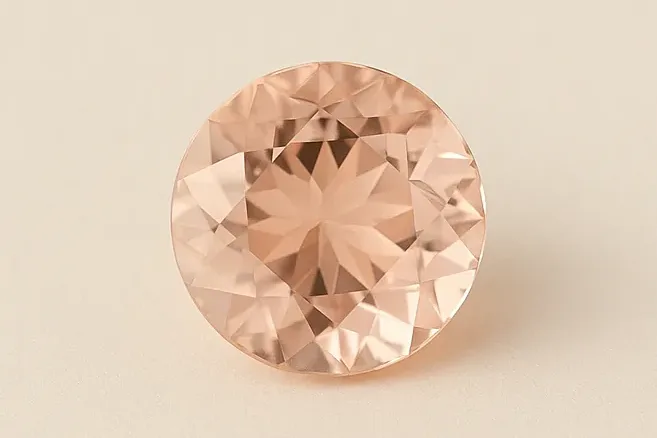
Morganite is pink beryl, which makes emerald and aquamarine its siblings. It is also the newest name in this series: the stone was identified in Madagascar and named in 1910 by George Kunz of Tiffany, after the banker J.P. Morgan, who was Kunz's most important client and a serious mineral collector.
For most of the century that followed it was a collector's curiosity. Then, around 2010, rose gold came back into fashion and morganite went with it. It is now one of the most requested coloured stones for engagement rings, and the reason is simple: it is the only affordable gem that is genuinely, softly pink at a size that makes a statement.
This page covers what the heat treatment behind almost every stone does, why size matters more here than for most gems, and what to check before buying loose.
The colors of morganite
Soft pink through peach to salmon, coloured by manganese. The defining characteristic is that morganite is naturally pale. Deep pink morganite essentially does not exist in the way deep pink sapphire does, and any stone claiming to be one is worth a second look.
- Pale pink. The most common, delicate and best in larger sizes where the colour accumulates.
- Peach to salmon. Warmer, with an orange component. Often the untreated natural colour.
- Pure pink. The most sought after, and almost always the result of heating out the yellow.
- Champagne pink. A soft neutral shade that has become fashionable with rose gold in particular.
Where morganite is mined
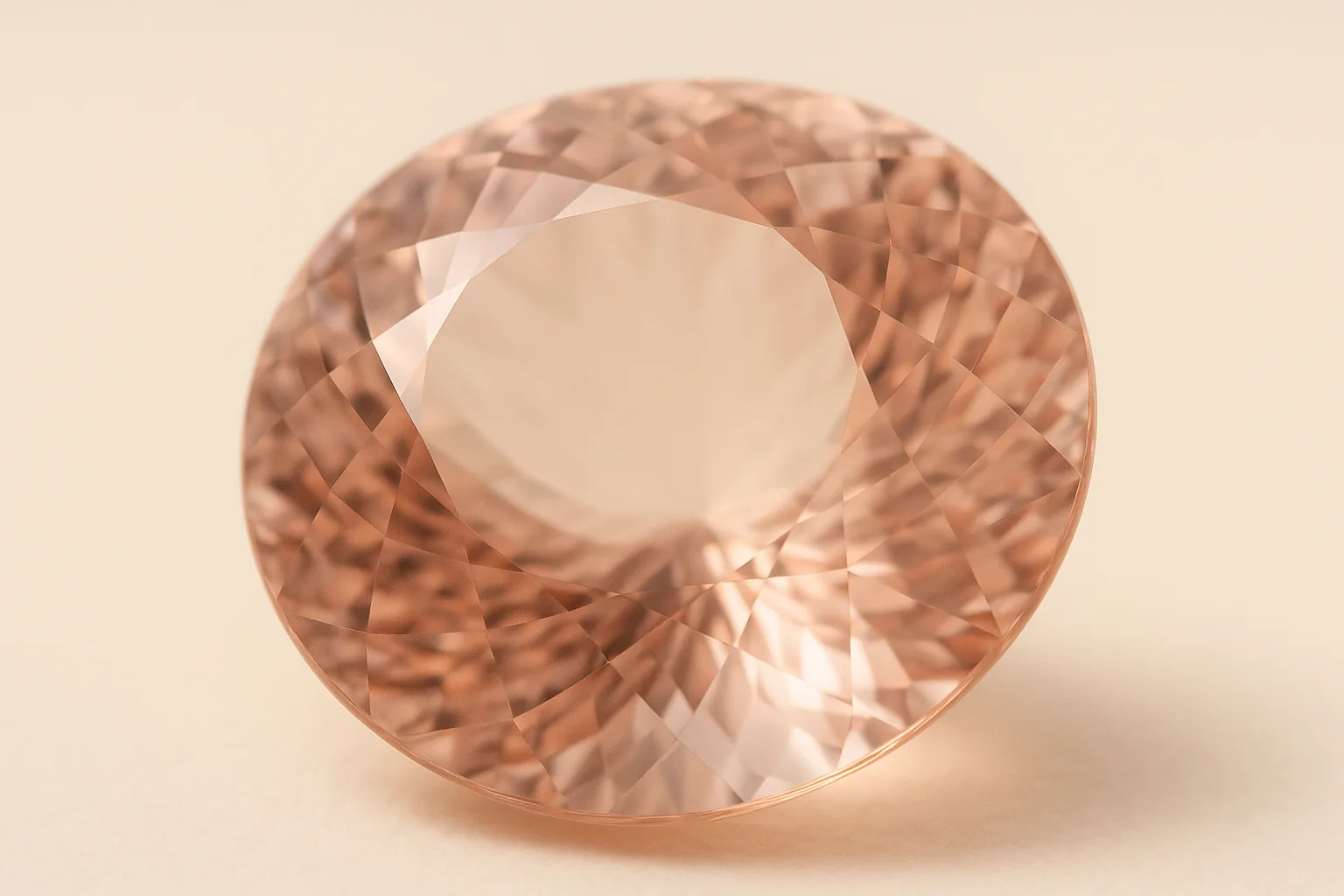
Brazil, principally Minas Gerais, is the main source and produces large clean crystals. Madagascar, where the stone was first identified, still contributes, and Mozambique, Nigeria and Afghanistan all produce material. California has historic deposits at Pala.
Origin has little bearing on price for morganite, unlike ruby or Paraiba tourmaline. What you are paying for is size, clarity and depth of colour, in that order of scarcity.
Hardness and everyday durability
Morganite is 7.5 to 8 on the Mohs scale, the same as aquamarine, which makes it hard enough for an everyday ring. It resists scratching well and holds a polish.
Like the rest of the beryl family it has one direction of imperfect cleavage, so a sharp blow on that plane can damage it. In practice this is a modest concern rather than a serious one, and a setting that protects the girdle handles it. It is not light sensitive and needs no special storage.
Treatment, and what the heat removes
The great majority of morganite is heated, to around 400 degrees Celsius, which drives off a yellow or orange component and leaves a purer pink. The change is permanent, stable and undetectable, and it requires no special care afterwards. It is as routine as heating aquamarine, and for the same reason.
There is a case for the untreated stone. Natural peach and salmon morganite has a warmth that the purified pink does not, it is often cheaper because the trade has spent a century removing exactly that colour, and it suits rose gold particularly well. If you like it, say so, because it will not usually be offered first.
What separates a good morganite from a great one
Colour leads, but morganite has an unusual relationship with size that changes how you should shop for it.
Color
Depth of pink is what you are paying for, and because the stone is naturally pale, genuinely saturated material commands a real premium. Beware of stones photographed to look far pinker than they are: morganite is one of the most misleadingly photographed gems on the market, and the difference between the image and the stone itself is frequently substantial.
Clarity
Morganite should be eye-clean, and clean material is plentiful enough that there is no reason to accept less. Visible inclusions are a reason to move on rather than to negotiate.
Cut
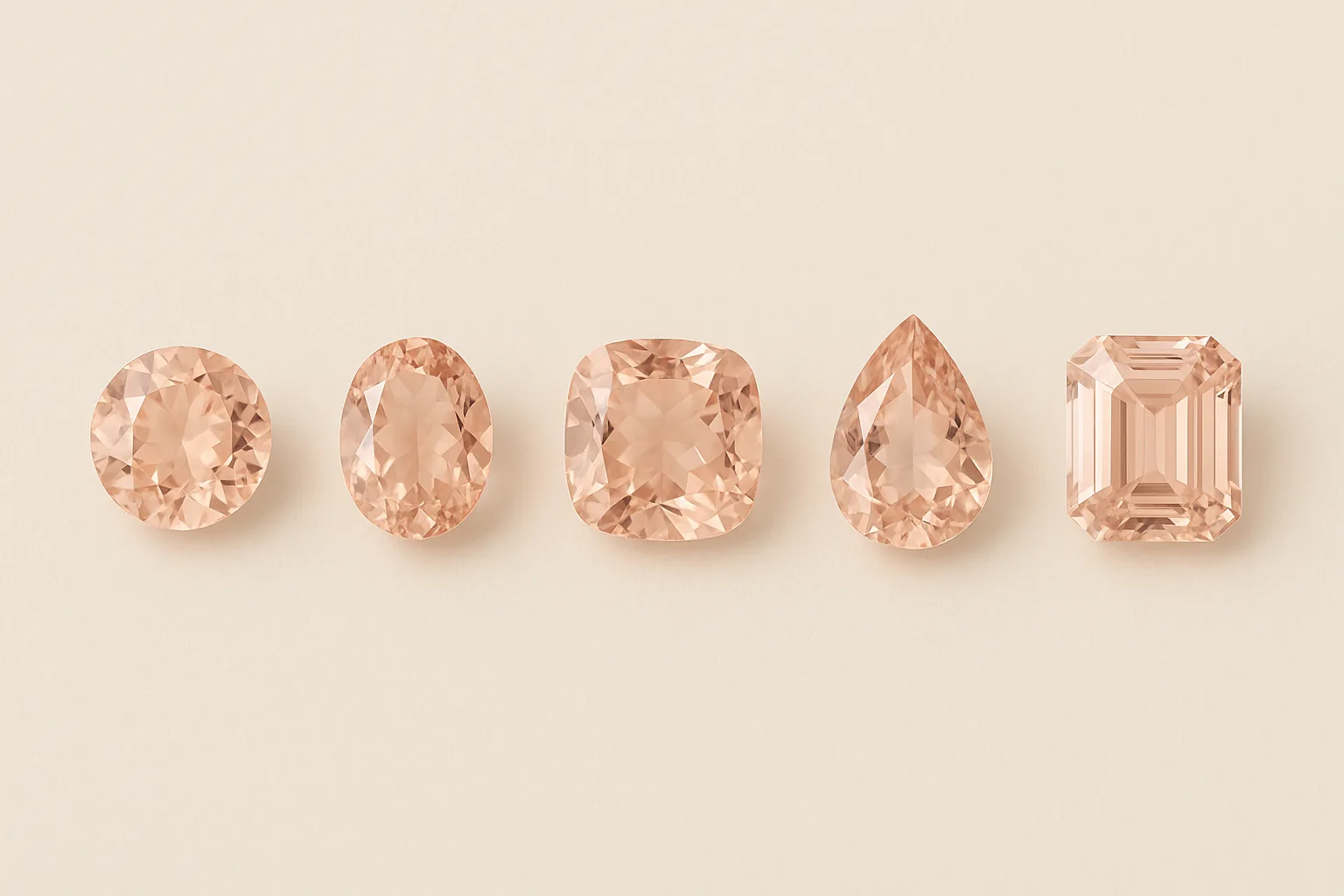
Because colour is pale, cut has to work harder here than in a saturated stone. A well proportioned morganite returns light and concentrates what colour there is; a shallow one looks washed out and glassy. Emerald cuts, ovals and cushions are common, and larger sizes suit the stone. See diamond clarity for the vocabulary the trade borrows.
Carat weight
This matters more for morganite than for almost any stone in this series. Colour depends on the path length light travels, and morganite is pale, so a larger stone genuinely looks pinker. A five carat morganite is a different colour experience from a one carat of identical grade. Clean rough is plentiful, so going larger is affordable and it is usually the right decision.
What loose morganite costs
Morganite is inexpensive by the standards of any gem of its size and hardness, which is exactly why it took over the engagement ring market. Large clean pale stones cost very little. Deeply coloured material of real saturation is scarcer and priced accordingly, though still far below pink sapphire.
- Depth of colour is the main lever, and saturated material is genuinely scarce.
- Size is affordable and improves the colour, so go larger than you first think.
- Eye-clean is the baseline. Do not pay for visible inclusions.
- Untreated peach is often cheaper than heated pink, and some people prefer it.
Meaning, symbolism and modern use
Morganite has no traditional folklore, because it has only been known since 1910. What it has acquired instead is a modern association with compassion, tenderness and gentle affection, which has grown up around its use in engagement rings over the last fifteen years.
It is not a birthstone. If you are shopping for a birthday, our guide to birthstones by month covers the stones that are, and pink tourmaline is a harder-wearing alternative in a similar colour.
Why buy the stone loose
Morganite is the stone in this series where the picture and the stone most often disagree. It is pale by nature, product photographs are routinely adjusted, and a rose gold setting lends it pink it does not have alone. Those three facts together produce a great deal of disappointment.
Bought loose, the stone is described on its own depth of colour, and the metal is a separate decision made afterwards.
- You know the real colour. Stated for the stone, not implied by a photograph.
- You know what the metal is doing. Rose gold flatters almost any morganite; the stone's own colour is a separate question.
- You weigh size against colour. Two stones of the same grade differ by carat, and size deepens the colour.
- The piece is built around it. Rather than the stone fitted to a ring that already existed.
Designing around a loose morganite
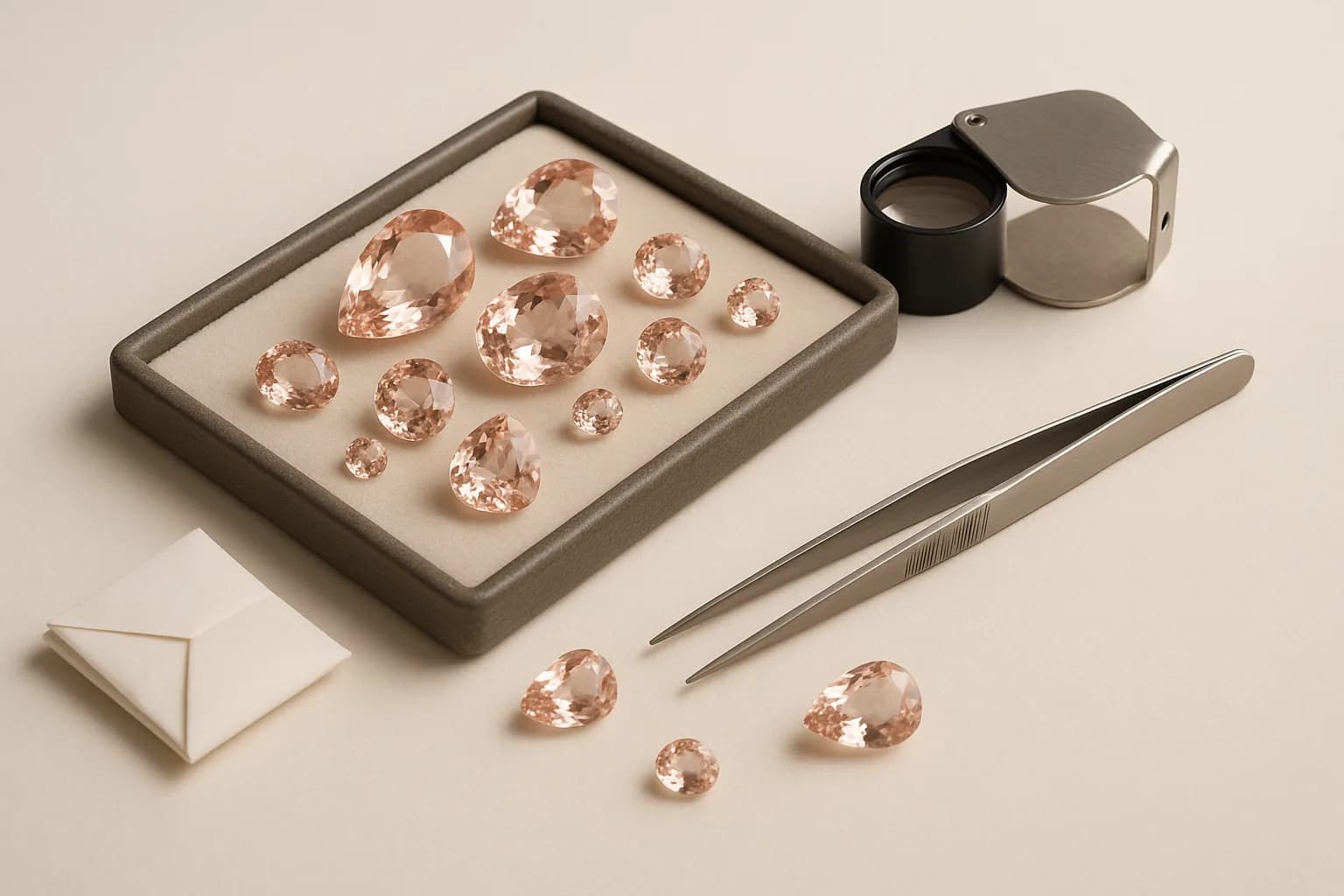
Rose gold is the pairing that made morganite famous, and it works because the metal lends the stone pink it does not fully have on its own. That is worth understanding rather than just accepting: a pale morganite in rose gold looks considerably pinker than the same stone in platinum. If you want the stone to carry the colour by itself, choose white metal and buy a more saturated stone.
Halo settings with colourless accents intensify the centre by contrast and are extremely common with morganite for that reason. See ring settings and choosing a metal, or start at design your own ring (opens in new tab).
A short buying checklist
- Ask how the colour reads in daylight, away from any rose gold.
- Ask to see it against white before you see it against a warm metal.
- Go larger than you first planned. Size deepens the colour.
- Insist on eye-clean.
- Ask whether it is heated, and whether untreated peach material is available.
- Check the cut returns light rather than looking glassy and flat.
Frequently asked questions
What is morganite? Pink beryl, the same mineral family as emerald and aquamarine, coloured by manganese. It was identified in Madagascar and named in 1910 after the banker J.P. Morgan by George Kunz of Tiffany.
Is morganite heated? Nearly always. Heating to around 400 degrees Celsius removes a yellow or orange component and leaves a purer pink. The change is permanent, stable and requires no special care. Untreated peach and salmon material also exists and is often cheaper.
How hard is morganite? It is 7.5 to 8 on the Mohs scale, the same as aquamarine, which is suitable for daily wear. It has one direction of imperfect cleavage, so a setting that protects the girdle is sensible.
Why does morganite look pinker in photographs than it really is? Because it is naturally pale and photographs are routinely adjusted, and because rose gold settings lend it colour it does not have alone. Morganite is the most misleadingly photographed stone in common sale, so buy on the stated depth of colour rather than on the picture.
Does a bigger morganite look pinker? Yes, genuinely. Colour depends on how far light travels through the stone, and because morganite is pale that effect is pronounced. A five carat stone looks meaningfully deeper than a one carat of the same grade.
Is morganite suitable for an engagement ring? Yes, and it has become one of the most popular choices. Its hardness suits daily wear and a protective setting handles the cleavage. Our guide to designing an engagement ring covers planning around a coloured centre.
Does morganite fade? No. Unlike amethyst, morganite is not light sensitive and its colour is stable under normal wear and storage.
Why is morganite so much cheaper than pink sapphire? Supply. Large clean morganite is plentiful, while fine pink sapphire is scarce. Morganite is also softer and paler. It is a different stone at a different price, not a substitute pretending to be one.
How should I clean morganite jewelry? Warm water, mild soap and a soft brush. Ultrasonic cleaning is usually safe on clean stones but should be avoided on anything with visible inclusions or fractures.
What is a good alternative to morganite? Pink tourmaline is harder wearing and holds deeper colour, and pink spinel is tougher still and untreated. Both cost more for equivalent size, which is precisely why morganite is so widely used.
To see what is available, browse the loose morganite collection (opens in new tab), or start from a design and create your own ring (opens in new tab) around a stone. Morganite is the stone where it pays most to ask before you decide, so contact us (opens in new tab) and someone who handles these every day will help you narrow it down.