Diamond Color
Diamond color runs from D, entirely colorless, down to Z. See what separates one grade from the next, and where the difference stops being visible.
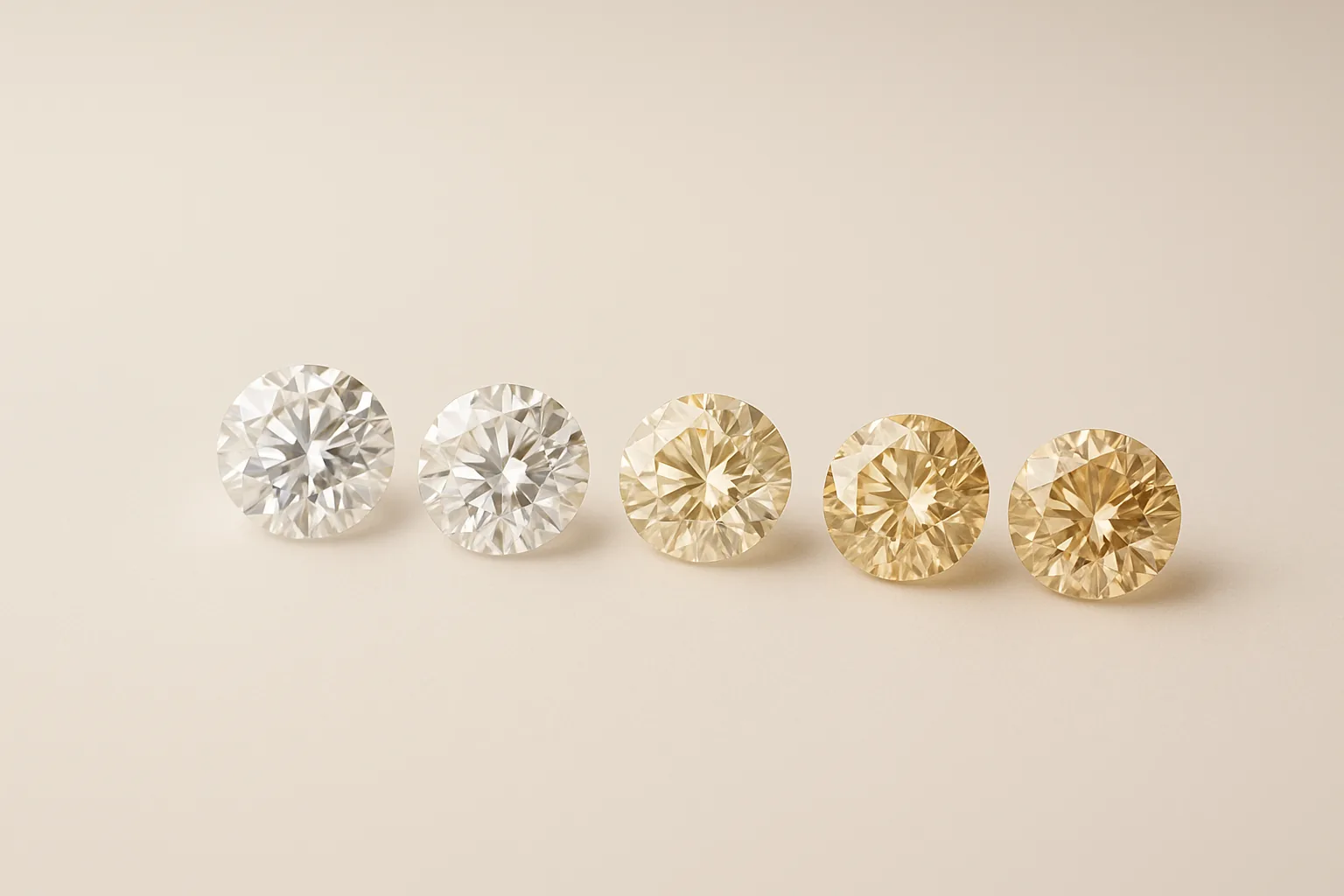
Choose a diamond color that suits your ring
Start with the color chart, then compare actual diamonds in similar lighting. A higher color grade means less yellow or brown tint, but the right choice also depends on the shape, size, setting and your budget.
Diamond color is graded on a letter scale from D (colorless) to Z (yellow or brown).
The diamond color chart
GIA divides the D-Z scale into five groups. D, E and F are all colorless grades; differences between adjacent grades can be subtle. The chart describes grading categories, not a guarantee of how every mounted diamond will look.
| Grade | What it looks like |
|---|---|
| D-F | Colorless |
| G-J | Near colorless |
| K-M | Faint yellow or brown |
| N-R | Very light yellow or brown |
| S-Z | Light yellow or brown |
- D
- E
- F
- G
- H
- I
- J
- K
- L
- M
- N
Compare G-J diamonds with higher grades before paying more for color alone. Larger diamonds and some shapes show tint more readily, and the metal can influence the appearance. View the actual stone face-up in the intended setting rather than choosing by its grade alone. Explore: yellow gold setting (opens in new tab), fancy colored diamonds (opens in new tab).
In summary, we would stress that color is mainly a matter of personal preference: some people look for an almost colorless diamond while others prefer a hint of color. Budget, of course, also guides the choice, and viewing a few stones one or two grades apart side by side is the easiest way to see how little difference a color grade can make to the eye while it changes the price.
This scale runs from colourless down through faint tints and stops where fancy colour begins; the guide to fancy coloured diamonds picks up from there.
Choosing a color grade for your setting
Compare two diamonds of the same shape and similar size, one or two color grades apart, under the same neutral light. Then view each against the metal you plan to use. A yellow-gold band can change the overall impression; it does not change the laboratory grade. For a practical comparison, place a G and an H diamond of similar shape, size and cut side by side. If you cannot see a meaningful face-up color difference in your chosen metal, compare what the price difference could buy in cut quality.
For a larger diamond or a shape that shows tint clearly, inspect the face-up appearance instead of buying a grade by habit. If you cannot see a worthwhile difference, compare what the extra budget buys in cut quality. D-Z color grading and fancy-color grading are different systems.