GIA Certification
A GIA report is a diamond's independent record of quality. Learn what each section states, how to verify a certificate online, and what it does not cover.
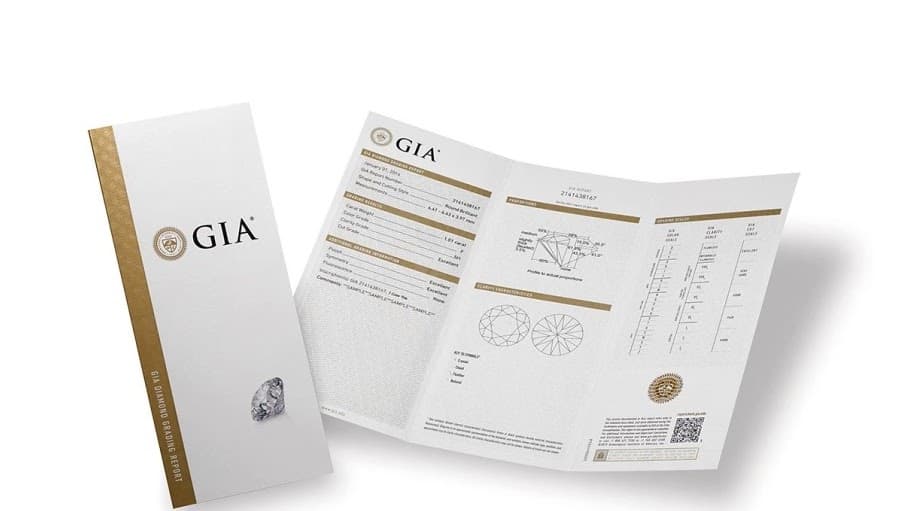
A GIA grading report records a diamond’s measured characteristics. People often call it a GIA certificate, but GIA does not certify diamonds or provide an appraisal. Use the report to compare stones, then inspect the actual diamond.
How to read a GIA diamond report
Read the report number and date first, then the shape, measurements and grades. Carat is weight, not diameter. Color and clarity are different characteristics; a high clarity grade does not guarantee a good cut. Available grades, diagrams and inscriptions depend on the report type.
Carat Weight · Diamond Color · Diamond Clarity · Diamond Cut
The Grading Report Detective
Select a field, decide whether the claim is supported, then uncover what the entry can and cannot tell you.
Practice example only. These values do not belong to a real GIA report or diamond.
Practice report fields
0 of 5 fields checked
What the report fields can and cannot tell you
- Report number
- What it tells you: A real report number lets you compare the report details with GIA records.
- What it does not prove: A database match does not identify the physical stone. Ask a jeweler to match its characteristics and inscription, if present.
- Measurements
- What it tells you: The dimensions describe this stone in millimeters.
- What it does not prove: Dimensions alone do not tell you how bright or appealing the stone will look.
- Carat weight
- What it tells you: The entry records the diamond’s weight.
- What it does not prove: Equal weight does not guarantee equal face-up size, appearance or price.
- Clarity grade
- What it tells you: The grade reflects inclusions and blemishes assessed at 10× magnification.
- What it does not prove: It does not guarantee that every VS2 stone looks eye-clean in every viewing condition.
- Cut grade
- What it tells you: For a standard D-to-Z round brilliant, it assesses overall cut quality.
- What it does not prove: The same GIA cut grade is not issued for every fancy shape and is not a substitute for viewing the stone.
How to check a GIA report
- Enter the report number in GIA Report Check (opens in new tab).
- Compare the returned shape, measurements, weight and grades with the document and the seller’s description.
- Ask a qualified jeweler to match the stone to its report, including the inscription where present. Have discrepancies resolved before paying.
A matching online record verifies report data, not the identity of the stone in front of you. A report is not a price estimate, a guarantee of beauty or a substitute for examining the diamond.
Compare diamonds before buying
Compare stones with similar shape, weight and grading information. View them under the same lighting, ask about treatments and return terms, and distinguish the price of the loose diamond from the price of the setting. For example, two 0.90 ct round diamonds graded G/VS2 can differ in measurements, cut and inclusion placement. Check both reports and view both stones; the cut guide explains why the cut difference matters.
Where you buy a certified diamond matters, too
Because a GIA report makes a stone's quality directly comparable, where you buy a certified diamond can matter almost as much as the grade itself. Many experienced buyers choose to purchase closer to the source - from diamond manufacturers or long-established suppliers rather than through a chain of intermediaries. Buying more directly can reduce added markups, open access to a larger inventory of certified stones, make pricing more transparent, and make it easier to compare one graded diamond against another; it can also allow greater flexibility if you want a stone cut, matched or set to your own specification. Direct suppliers such as Israel Diamonds (opens in new tab), for example, list loose GIA-graded diamonds (opens in new tab) and wholesale diamonds (opens in new tab) that can be compared side by side before buying.
Fancy coloured diamonds are graded on a different report, one where colour is the point rather than its absence; the guide to fancy coloured diamonds covers how that grading works.
Your next decision
- If you have a report number: use GIA Report Check (opens in new tab) and the Grading Report Detective. Match the number, measurements and any inscription to the actual stone.
- If a detail disagrees: pause the purchase until the seller resolves it. If it matches, compare cut, appearance and return terms between actual stones rather than buying by grade alone.