Quartz
Rock crystal, smoky, rose and rutilated quartz. The material costs almost nothing, so a buying guide to what you are really paying for: the lapidary work.
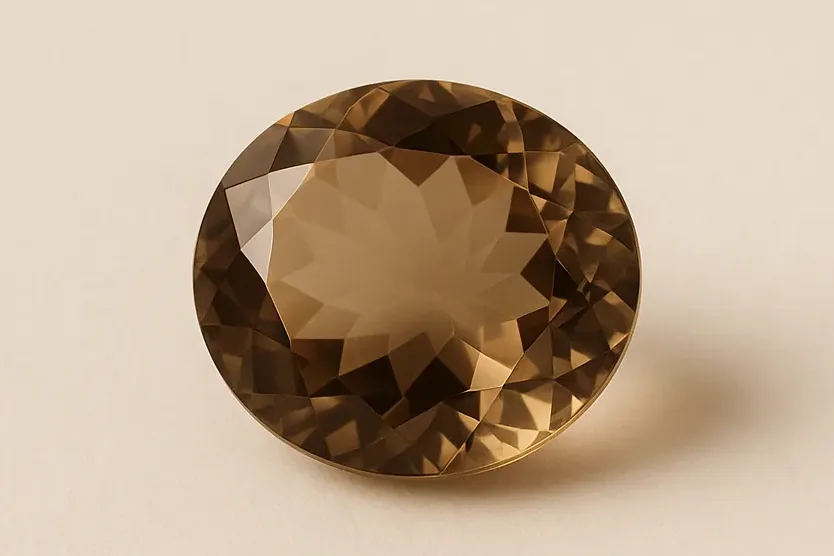
Quartz is the most abundant mineral family in the earth's crust, and that single fact explains almost everything about buying it. There is no scarcity to pay for. A flawless twenty carat rock crystal costs less than a mediocre one carat sapphire, and always will.
Which means the value in loose quartz sits somewhere unusual: not in the material but in what has been done to it. A precision-cut quartz by a skilled lapidary can cost many times a commercially cut stone of identical rough, and be worth it. This is the one gem family where you are essentially buying craftsmanship.
Two members of the family, amethyst and citrine, have their own pages here. This one covers the rest.
The varieties of quartz
All the same mineral, silicon dioxide, differing by trace elements, natural irradiation or what grew inside them.
- Rock crystal. Colorless and water-clear. The original crystal, used for optics and carving long before it was used for jewelry.
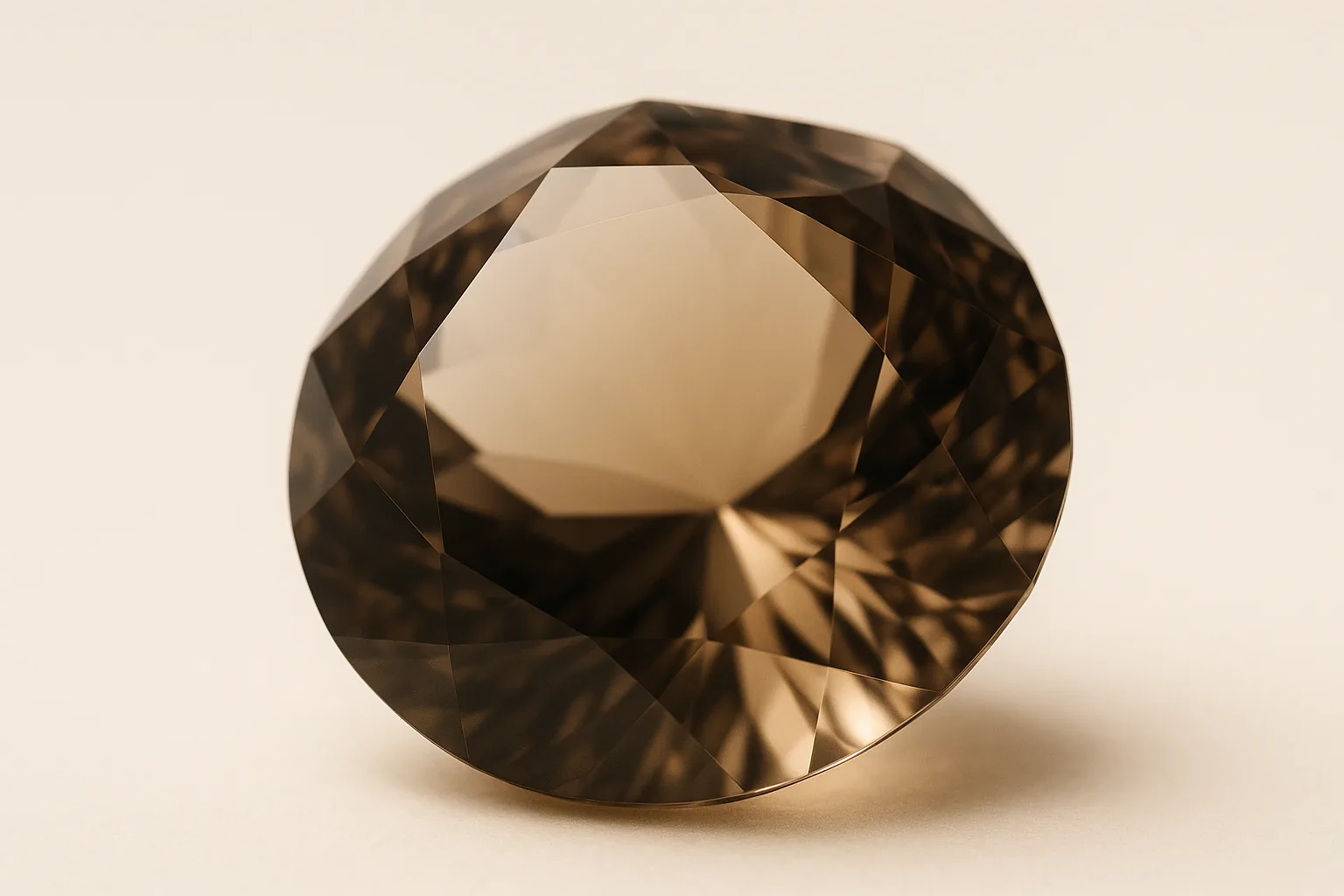
- Smoky quartz. Brown to near-black, colored by natural irradiation acting on aluminium in the structure. Warm, understated and very wearable.
- Rose quartz. Pink, and usually translucent rather than transparent. Facetable clear material is genuinely uncommon; most is cut as cabochons or beads.
- Rutilated quartz. Clear quartz threaded with golden needles of rutile. The inclusions are the entire point, which reverses the usual rule.
- Prasiolite. Soft leek green, almost always produced by heating amethyst from specific deposits.
Where quartz comes from
Everywhere, which is the honest answer. Brazil dominates commercial supply, particularly Minas Gerais and Rio Grande do Sul, and produces most of the rutilated and smoky material as well as the amethyst that becomes citrine and prasiolite.
Madagascar, the Alps, Arkansas in the United States and the Himalaya all produce fine specimen material. Origin has almost no bearing on price for faceted quartz, unlike nearly every other gem in this series. What you pay for is size, clarity and above all the cutting.
Hardness and everyday durability
Quartz is 7 on the Mohs scale with no cleavage, which makes it thoroughly practical for daily wear. It is the reference point for the hardness of ordinary dust, which is why softer stones scratch over time and quartz largely does not.
Smoky quartz can fade under prolonged strong sunlight, since its color comes from irradiation, and rose quartz can too. Neither will happen through normal wear. Rutilated quartz needs slightly more care in an ultrasonic cleaner, because the needles are a different mineral and the boundary between them and the host can be a weakness.
Treatment, and what is routinely done
Quartz is treated more often than its price would suggest, largely because the material is cheap enough that experimenting with it costs nothing.
Most smoky quartz on the market has been irradiated, taking colorless rock crystal and darkening it. The result is stable and safe. Prasiolite is heated amethyst. Some rose quartz is dyed, though good material is not. And a great deal of brightly colored "quartz" sold in the crystal trade is dyed or coated, sometimes under invented names. For a faceted stone from a reputable seller none of this is a problem, but it is a family where asking is worthwhile.
What separates a good quartz from a great one
The usual four factors apply, but their weighting is unlike anything else in this series, because the raw material is close to free.
Cut
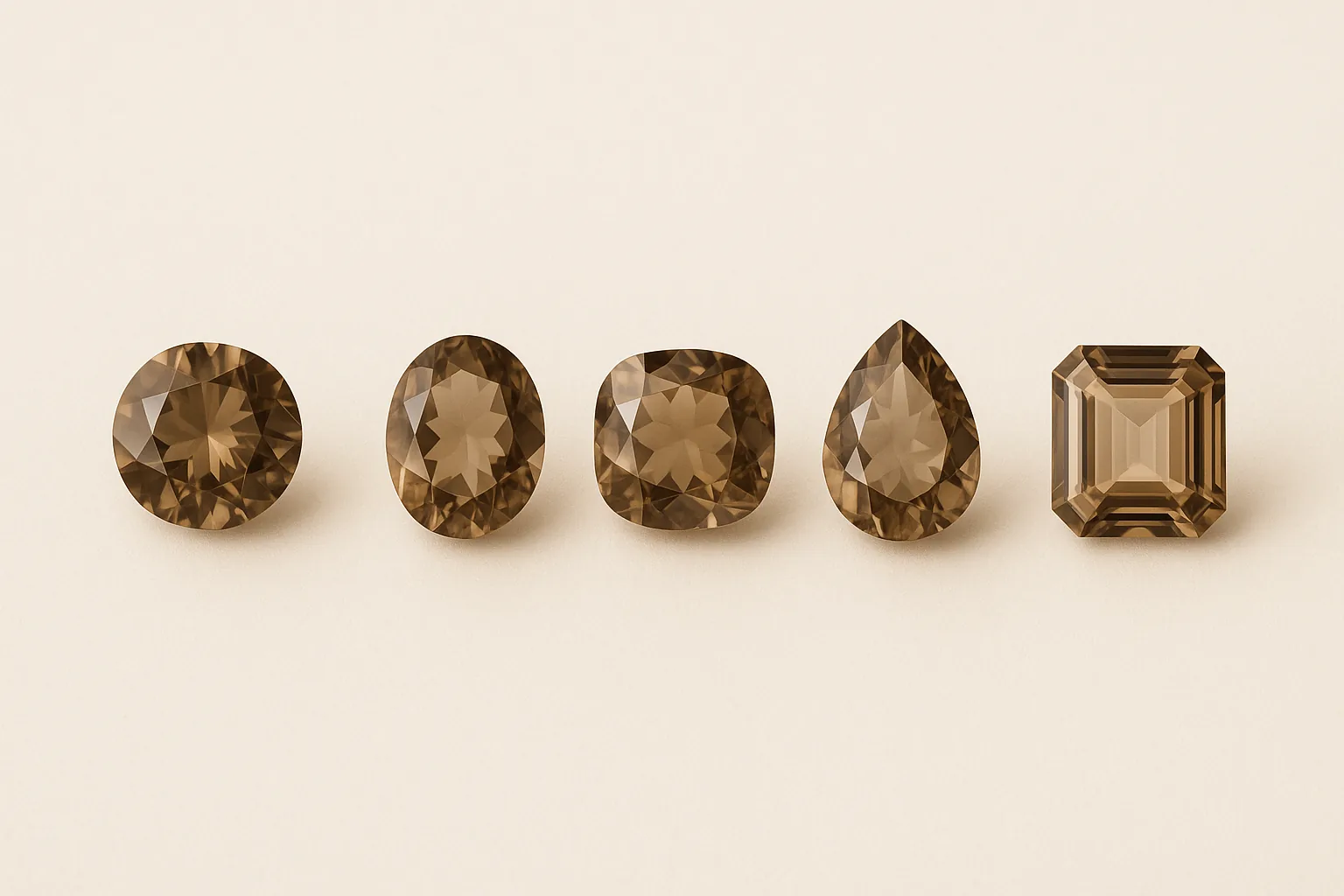
This is the whole game, and it is listed first here for that reason. Since rough costs almost nothing, there is no excuse for a poorly proportioned stone, and precision cutting with unusual facet designs is where quartz becomes genuinely interesting. Specialist cutters produce work in quartz that would be economically impossible in sapphire. Our page on diamond cut explains the optics, which apply to any transparent stone.
Clarity
Expect flawless in rock crystal and smoky, because clean material is abundant. The exception is rutilated quartz, where the inclusions are what you are buying: there, judge the arrangement, color and density of the needles, not their absence.
Color
For smoky, an even warm brown rather than a muddy grey. For rose, an even pink without excessive cloudiness. For prasiolite, a clean green without brown. Depth matters less here than evenness, because the colors involved are all gentle.
Carat weight
Effectively unlimited. Quartz is cut in sizes that would be absurd in any other gem, and price per carat barely moves. If a design calls for a fifty carat centerpiece, quartz is one of the very few honest ways to get one.
What loose quartz costs
Less than any other transparent gem in this series, by a wide margin, and the price is dominated by labour rather than material. Commercially cut quartz is inexpensive at any size. Precision-cut work by a known lapidary carries a real premium, and fine rutilated material with well arranged needles is priced on appearance rather than weight.
- Cutting quality is the dominant cost, which is true of no other stone here.
- Size costs almost nothing. Buy what the design needs.
- Rutilated material is judged on the pattern of its inclusions.
- Treatments are common and cheap. Ask, especially about color that looks unlikely.
Meaning, symbolism and use
Rock crystal has stood for clarity and truth in more cultures than can usefully be listed, and it is the material of the crystal ball, of Roman seals and of Japanese carvings. Rose quartz has carried associations with love and gentleness since antiquity. Smoky quartz is the national gem of Scotland and was set into the hilts of Highland dirks.
No quartz variety other than amethyst and citrine is a modern birthstone. See our guide to birthstones by month for the stones that are.
Why buy the stone loose
Because with quartz you are buying the cut, and a finished piece prices the cut and the metal as a single thing. A precision-cut stone and a commercial one of identical material and weight can differ tenfold in price, and that difference is the entire purchase.
For rutilated quartz the case is stronger still: the arrangement of the needles is the entire value, and it is particular to the individual stone.
- You judge the cutting. Which is what you are actually paying for.
- You choose the needle pattern. Rutilated stones are individual, and no two match.
- You confirm the color is real. Dyed material exists in this family.
- You can go large. Size is nearly free, so let the design decide.
Designing around a loose quartz
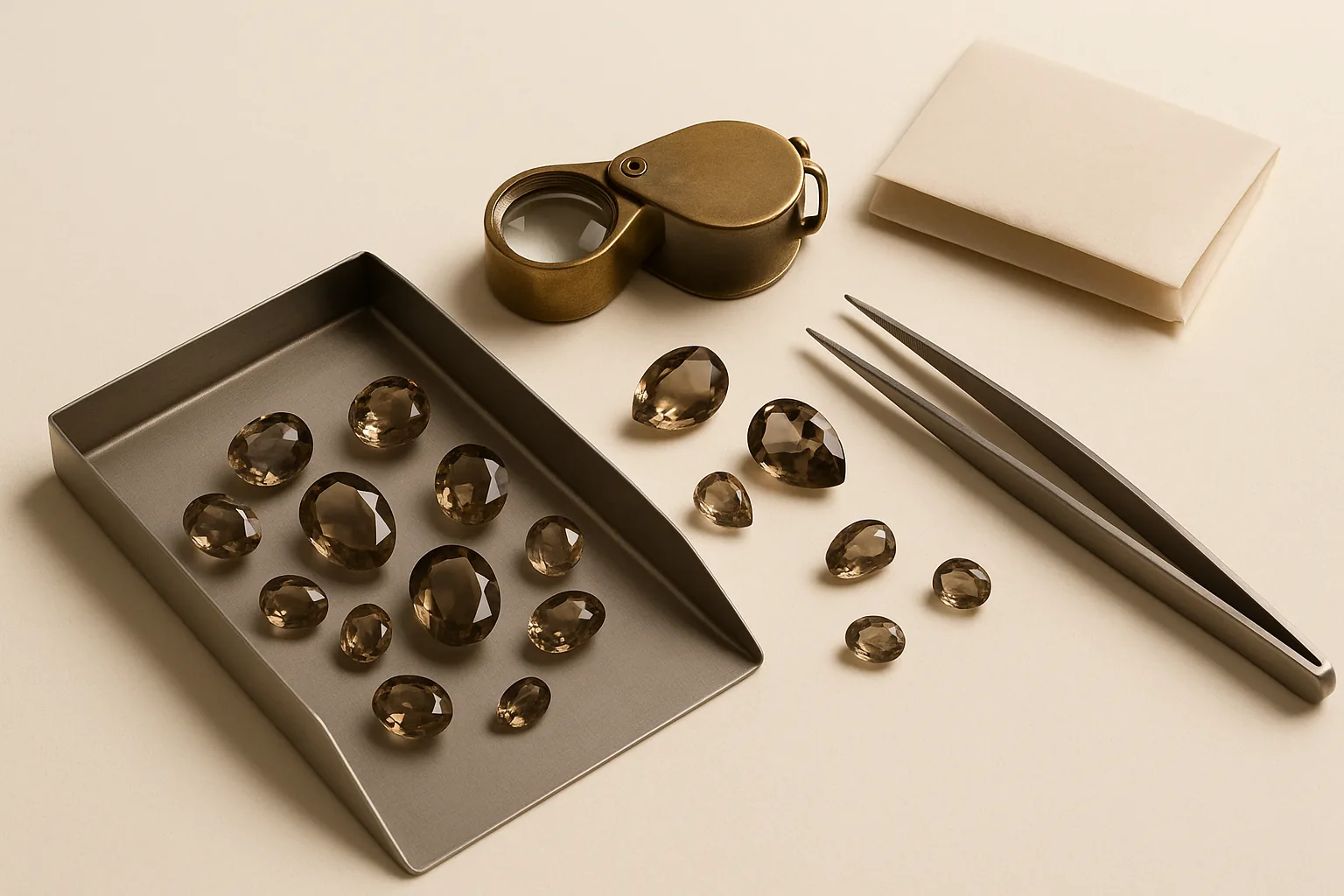
Rock crystal is the neutral, and it works with any metal; it is often used to layer over other materials or to carve. Smoky quartz belongs in yellow gold, which warms it further, and looks strikingly modern in blackened or oxidised settings. Rose quartz suits rose gold for obvious reasons and silver for less obvious ones.
Because quartz is affordable at scale, it suits bold architectural designs that would be reckless in an expensive stone. See ring settings and choosing a metal, or start at design your own ring (opens in new tab).
A short buying checklist
- Judge the cutting first. It is the main thing you are paying for.
- Expect flawless in rock crystal and smoky quartz.
- For rutilated, look at the needle pattern from several angles.
- Ask about irradiation on smoky and about dye on strongly coloured material.
- Consider a much larger stone than you would in another gem.
- Compare a precision cut against a commercial one before deciding it is not worth it.
Frequently asked questions
Is quartz a real gemstone? Yes. Quartz is a natural mineral and includes amethyst and citrine, which nobody disputes are gemstones. It is simply extremely abundant, and abundance rather than beauty is what keeps the price low.
Why is quartz so cheap? Because it is the most common mineral family in the earth's crust and large clean material is plentiful. Price follows scarcity, and there is no scarcity here. That is why the cutting, rather than the stone, carries the value.
Is smoky quartz irradiated? Usually. Most smoky quartz on the market is colorless rock crystal that has been irradiated to darken it. Natural smoky quartz forms the same way underground, over much longer periods. Treated material is stable and safe to wear.
What is rutilated quartz? Clear quartz containing golden needles of the mineral rutile. It is the one case in this family where inclusions add value rather than subtracting it, and stones are judged on the arrangement and color of the needles.
Is rose quartz ever transparent? Rarely. Most rose quartz is translucent and cloudy, which is why it is usually cut as cabochons or beads. Transparent facetable material exists but is uncommon, and it costs considerably more.
What is prasiolite? Green quartz, almost always produced by heating amethyst from particular deposits. Natural green quartz exists but is very rare, so assume heat treatment unless a report says otherwise.
How hard is quartz? It is 7 on the Mohs scale with no cleavage, which is entirely practical for everyday jewelry. Quartz is roughly the hardness of ordinary dust, which is why softer stones dull over years of wear and quartz does not.
Is expensive quartz ever worth it? Yes, when you are paying for cutting rather than material. Precision-cut quartz with complex facet designs is real craftsmanship, and it can be beautiful in ways commercial cutting is not. Whether it is worth it depends on whether you value that.
How should I clean quartz jewelry? Warm water, mild soap and a soft brush. Avoid ultrasonic cleaning on rutilated quartz, where the needles create internal boundaries, and keep smoky and rose quartz out of prolonged direct sunlight.
Can quartz be used in an engagement ring? Yes. Its hardness and lack of cleavage suit daily wear, and it allows a very large stone on a small budget. Choose a well cut one. See our guide to designing an engagement ring.
To see what is available, browse the loose quartz collection (opens in new tab), or start from a design and create your own ring (opens in new tab) around a stone. Quartz is priced on work rather than on material, so contact us (opens in new tab) and we will help you tell commercial cutting from precision work.