Setting Types
The setting decides how a stone looks, how much light reaches it and how well it survives daily wear. Compare the main types before you commit to one.
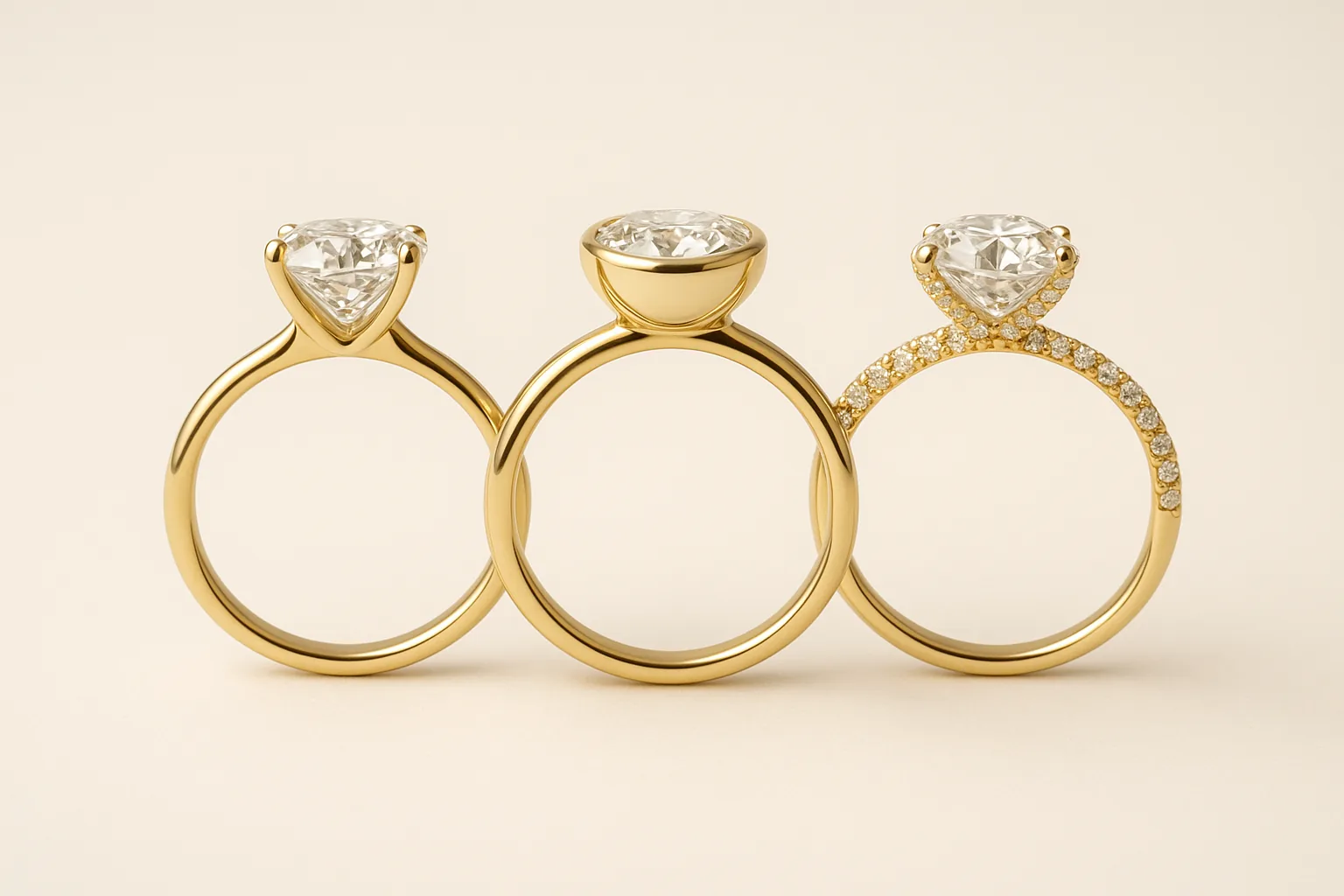
Setting types
Setting a diamond or a gemstone is the process of fixing the stone into the piece of jewelry. Which setting suits everyday wear? A bezel covers more of the stone’s edge and is less likely to catch on clothing; prongs expose more of the stone. Choose for the wearer’s routine, the stone’s shape and future maintenance. GIA setting guide (opens in new tab).
The setting matters a great deal: it determines not only the look, but how the piece is perceived, how well it suits the wearer’s style, how durable it is, where the stones sit, and the play between the light and the stones.
So before deciding which setting to choose, it is worth weighing how well it suits the shape of the stone, its stability and durability, how the piece will hold its appearance over time, the personal expression it allows, and of course the look itself.
Compare the fastening method separately from the ring design. Prongs, bezels, channels and pavé each balance visibility, protection and maintenance differently.
The main setting methods
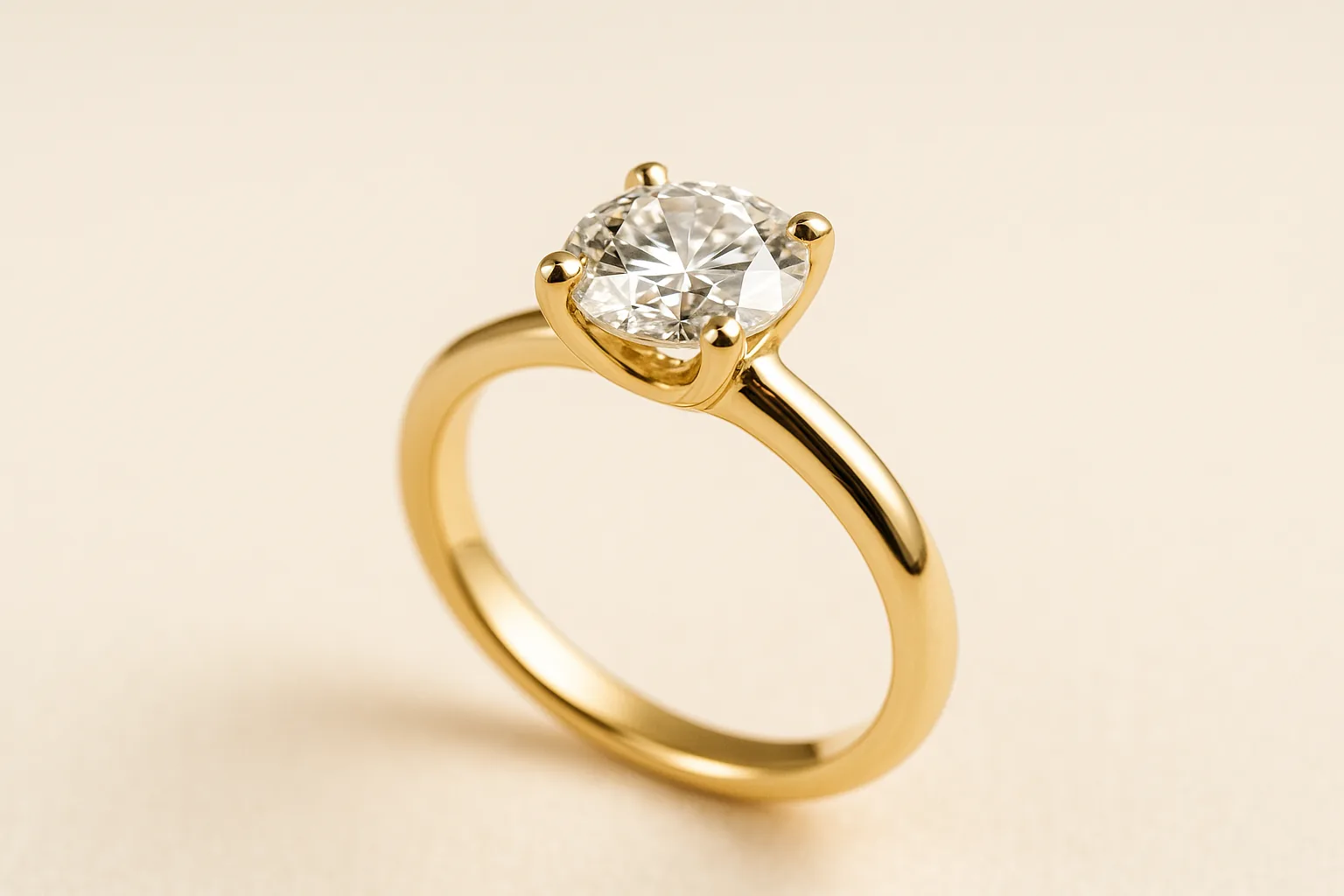
- Prong or claw setting (Prong / Claw): the classic and most common method. Four to six small metal prongs hold the diamond, exposing the stone to the light, allowing maximum light in and bringing out its brilliance and its size. It suits center stones and engagement rings above all. The drawback: the stone is less protected from knocks, and the prongs can bend or break. The method is also used for small side stones, and in a variation with gently split prongs that create a scalloped, shell-like look when the piece is seen from the side.
- Surface prong setting (Surface prong): small prongs that stand proud of the metal surface. Small shared prongs are raised slightly above the metal, and tiny cuts are made in the gold to house the culet of the diamond, its pointed lower tip.
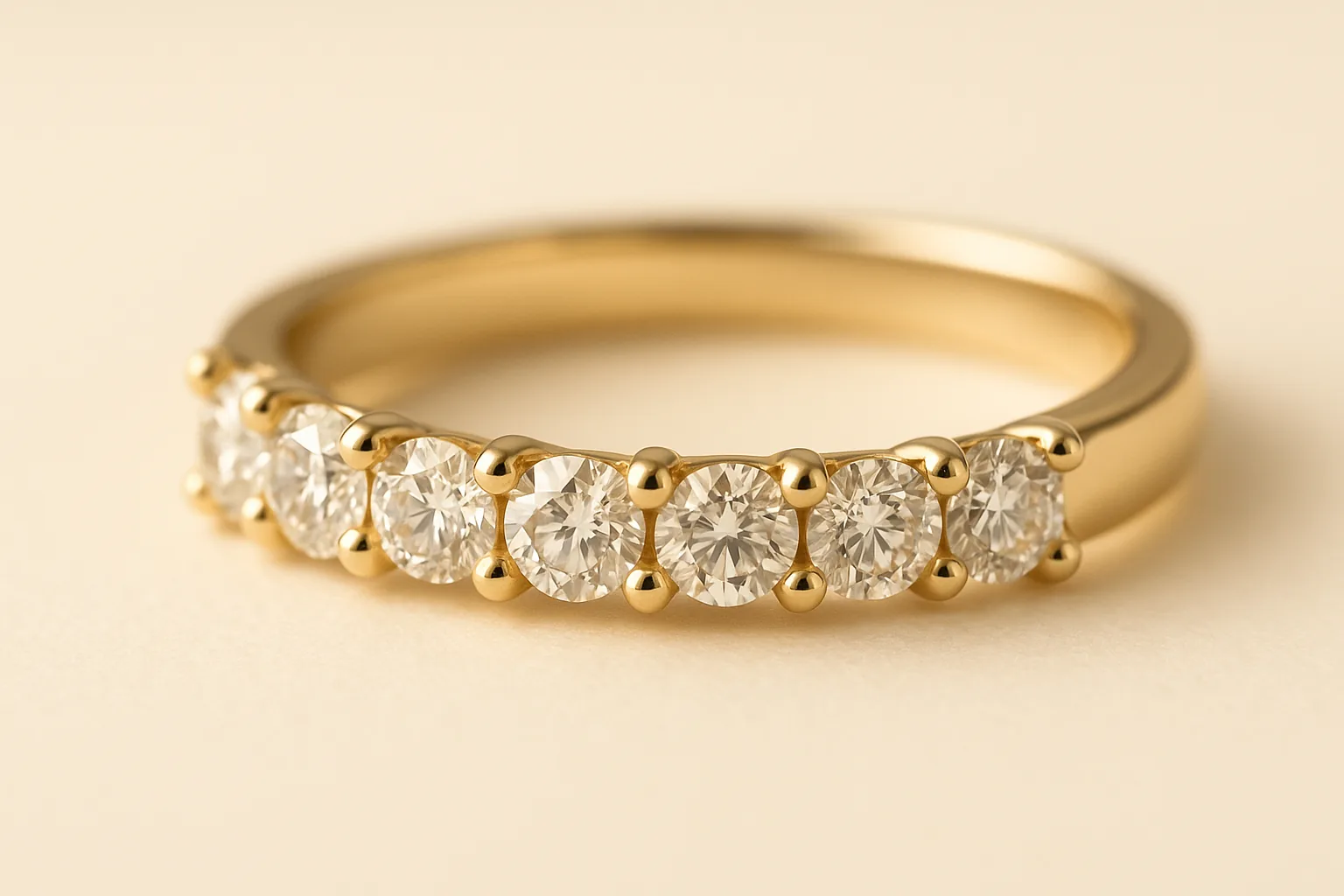
- Shared prong setting (Shared prong): a single prong holding two adjacent diamonds at once. A versatile style, usually suited to larger gemstones as well, and characterized by galleries - the area beneath the diamond - that are either open or closed to the light.
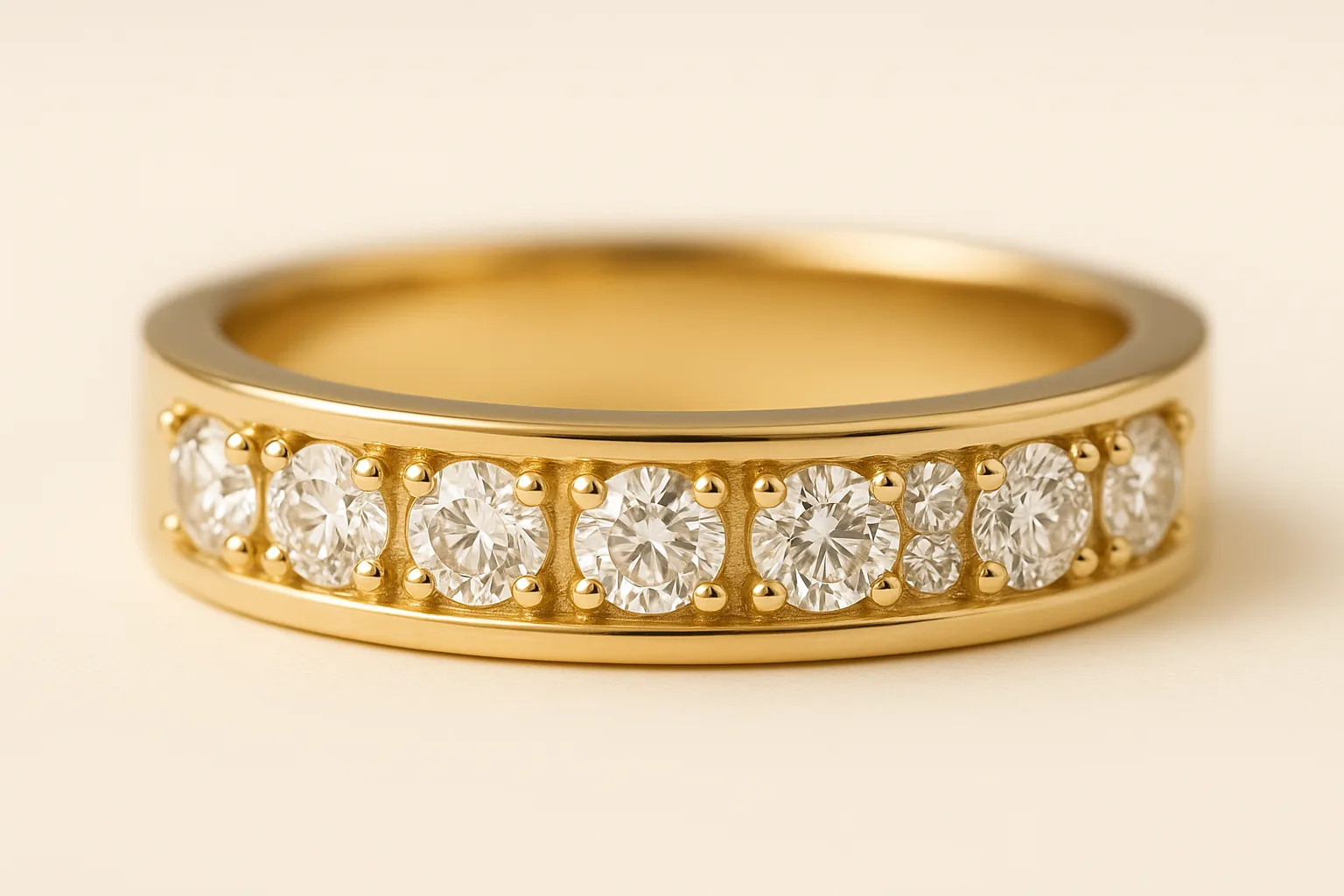
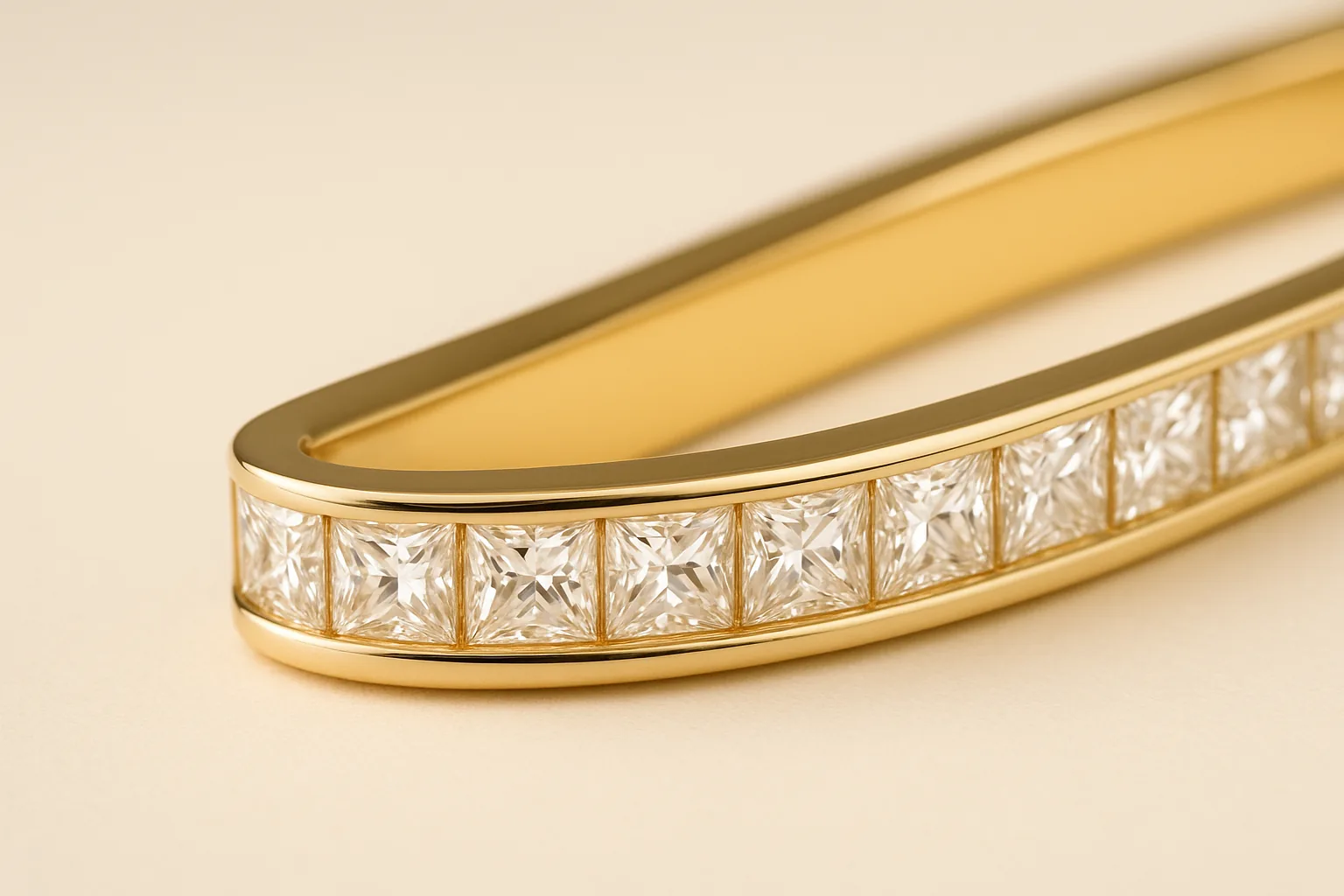
- Channel setting: stones are held between parallel metal walls; individual metal bars do not normally separate every stone.
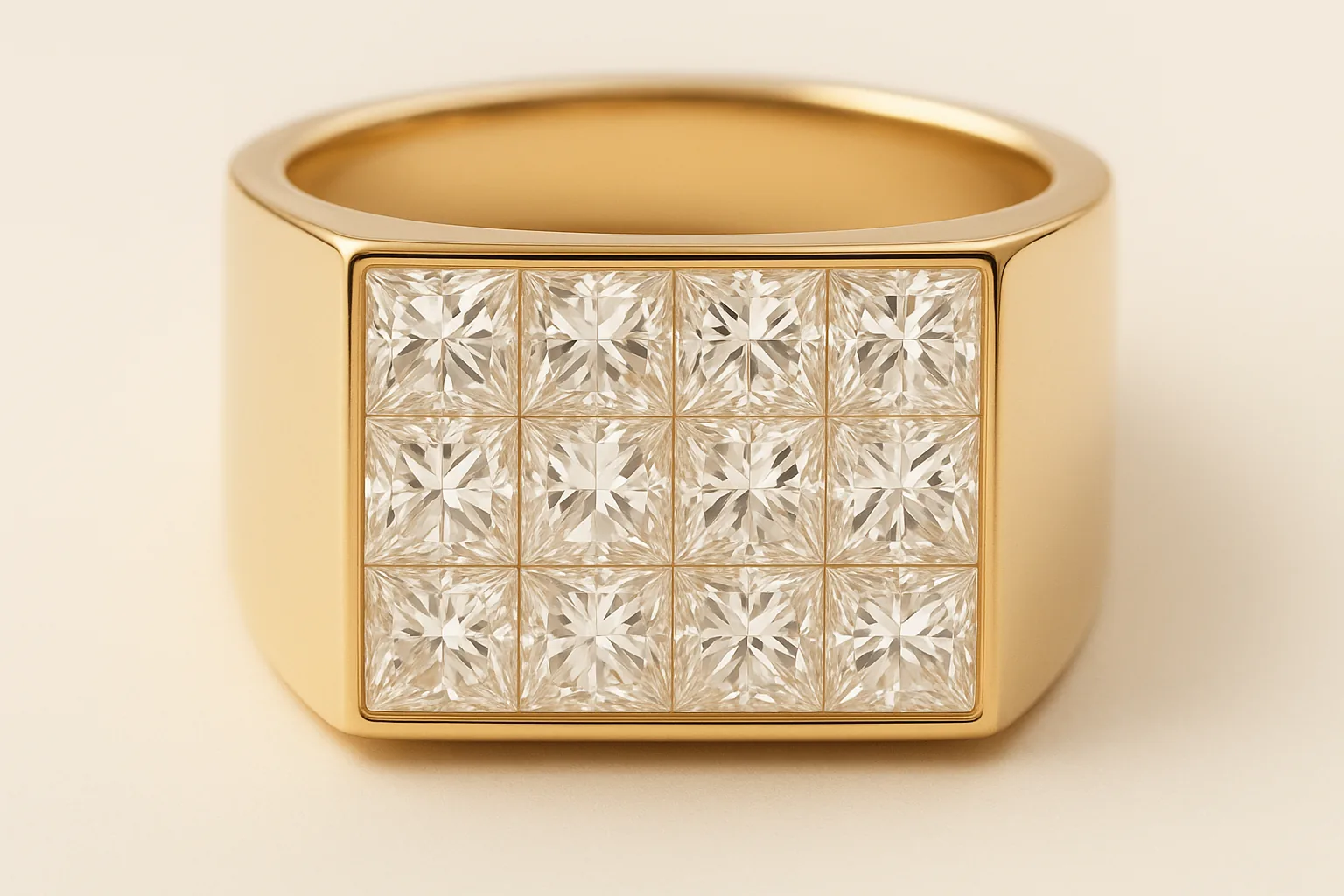
- Invisible setting (Invisible): a sophisticated technique in which a groove is cut into the diamond itself, so that the metal is hidden and the illusion of one large, continuous surface of diamonds is created.
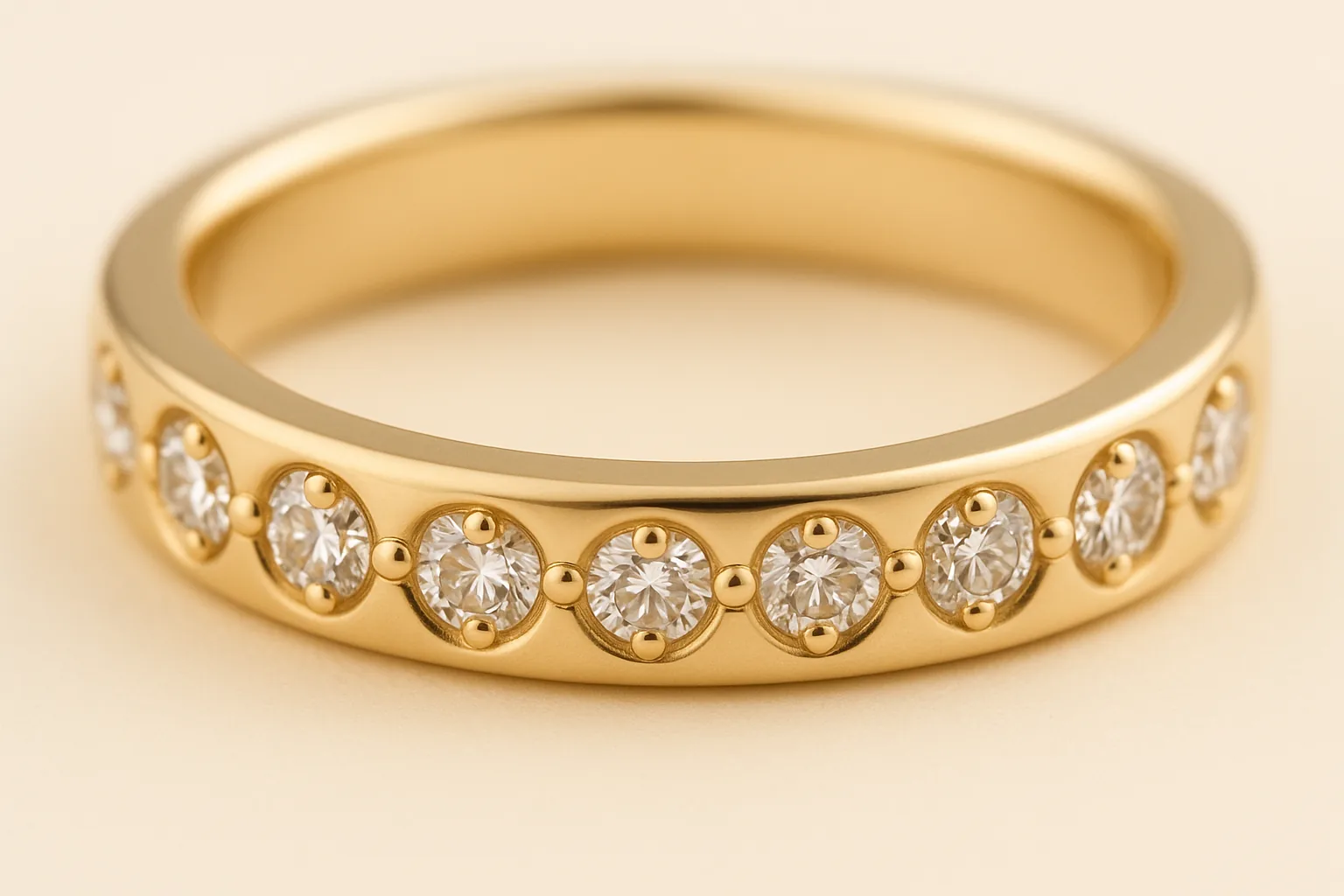
- Bead and flush settings are different: bead setting uses small raised beads to hold stones; flush setting seats the stone into the metal with its edge secured by surrounding metal.
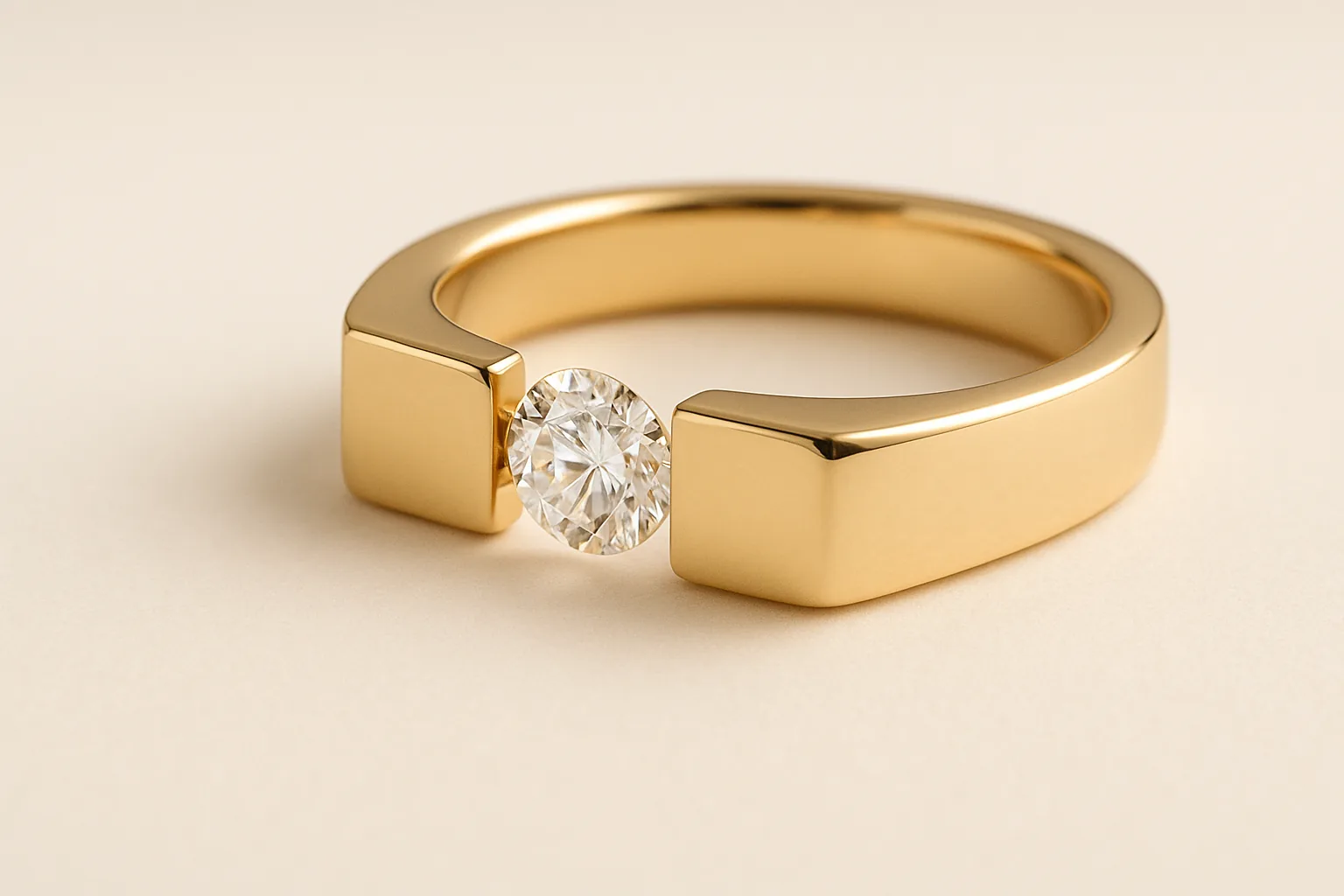
- Tension setting (Tension): the center diamond is held by the physical pressure of the metal on either side of it, with no prongs. It creates a modern, distinctive look, but demands great precision.
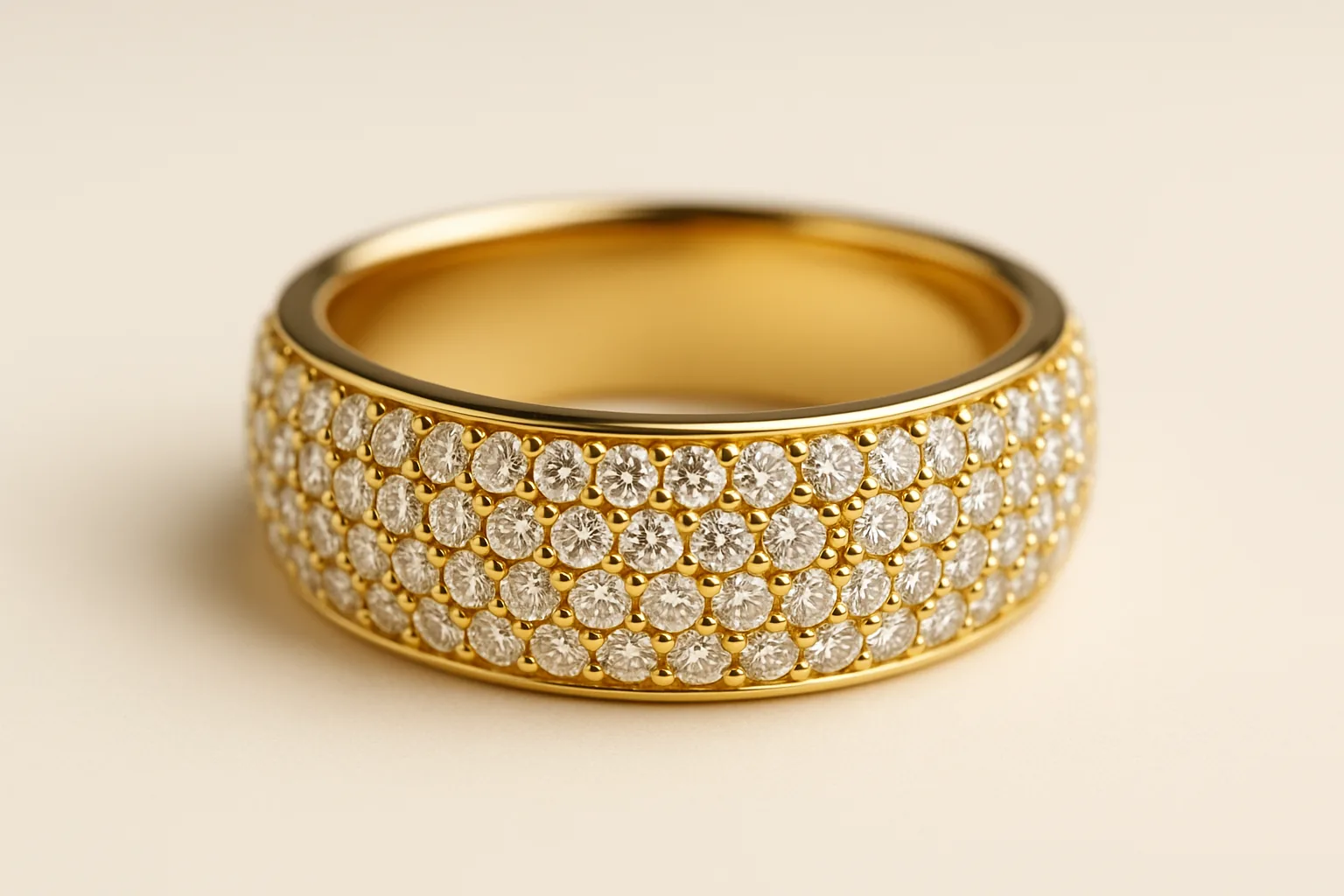
- Pavé setting: closely spaced small stones are secured by tiny beads or prongs. Pavé does not require three rows.
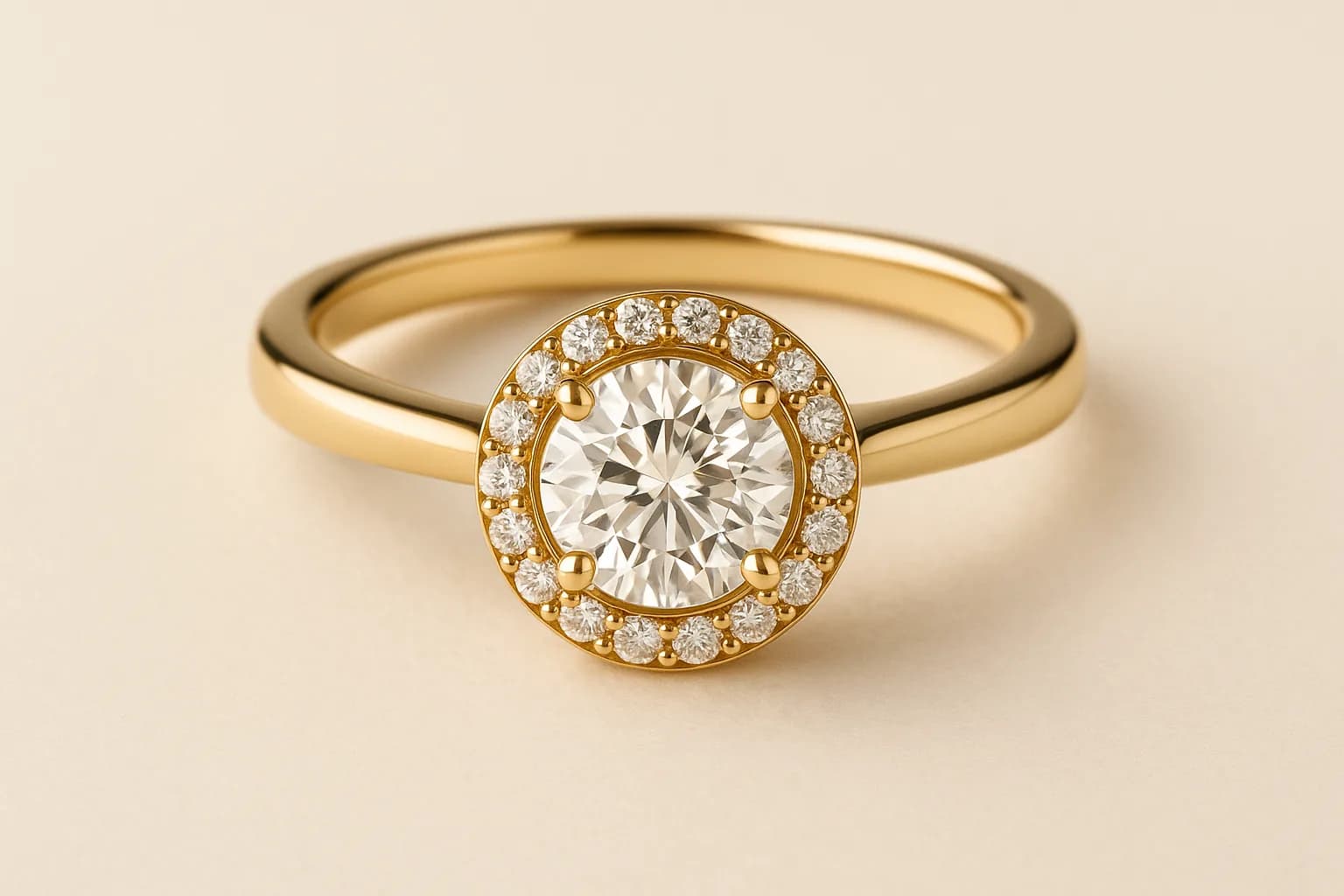
- Halo setting (Halo): a center diamond encircled by a ring of smaller diamonds, which increases its visual size and adds brilliance.
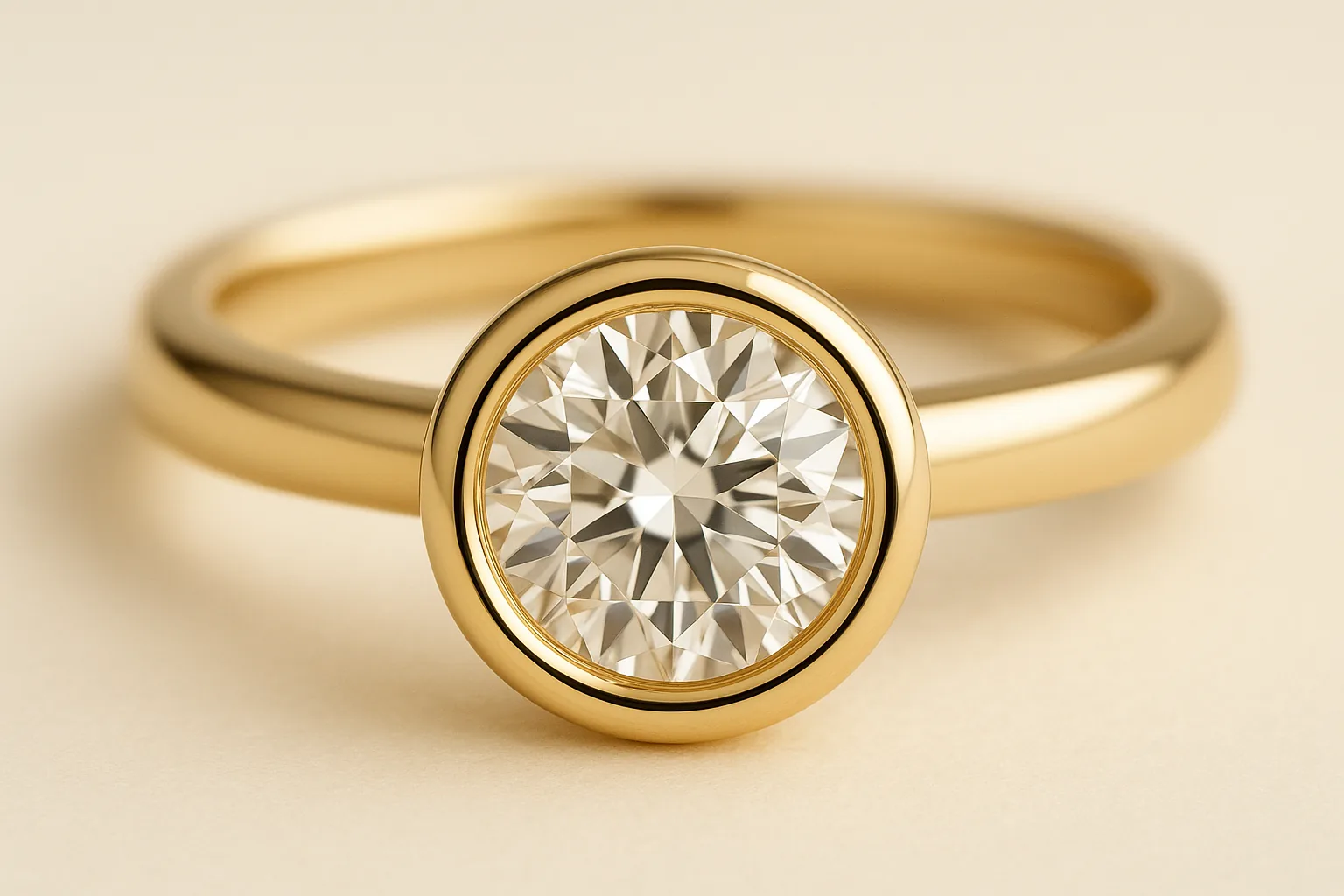
- Bezel setting (Bezel): a style with a clean, modern look. A metal frame surrounds the whole diamond in a slender band of precious metal and protects it well. The frame wraps the diamond completely - modern and secure, though it blocks a little light.
Prong or claw Surface prong Shared prong Channel Invisible Bead setting Tension Pavé Halo Bezel
One-minute buyer case
The choice of setting depends on personal style, on the type of piece, on the size of the diamonds, on the budget, and on whether you want to emphasize the diamond or create a uniform, sparkling look.
Common questions
- Does the setting affect the size of the stone? Yes. The right setting can create an illusion of size and heighten the brilliance and presence of a particular stone.
- Can several setting types be combined in one piece? Yes. Different setting methods can be combined to create a personal, distinctive piece and a balanced, rich look.
- How does the setting affect caring for the piece? The right setting makes cleaning easy and keeps the piece looking its best for years.
The right setting depends on your stone, your budget and how the ring will be worn day to day. If you would like to see settings in white gold, yellow gold or platinum, or build a ring around your own stone, a direct supplier such as Israel Diamonds lets you design your own ring (opens in new tab) and choose the setting yourself.
A coloured stone changes what a setting has to do, because most of them are softer than diamond; the gemstone guides covers the stones themselves.
Compare settings for everyday wear
| Setting | What to check |
|---|---|
| Prongs | Leave much of the stone visible. Check for snagging, worn tips and secure support at pointed corners. |
| Bezel | A metal rim covers the edge. Ask how the underside can be cleaned and whether a wedding band sits beside it. |
| Channel | Small stones sit between metal walls. Inspect the channel edges and ask about resizing before ordering. |
| Pavé | Small stones are held by tiny beads or prongs. More stones mean more places to inspect and clean. |
A solitaire describes a ring with one main stone, not a fastening method. A halo describes the surrounding design. Either can use different settings. No setting removes the need for inspection after a knock.
Ring Design · Choosing the Metal · Ring Size
Your next decision
- If rings catch on clothing or the wearer works with their hands: compare a bezel and low-profile prongs from the side. Ask how each will be cleaned and inspected over time.
- If a wedding band will sit beside it: try the exact pair together and ask whether the design can be resized. Bring a confirmed ring size to the jeweller.