Topaz
Blue topaz and Imperial topaz share a name and almost nothing else. A guide to the varieties, the treatments behind every blue stone, and cleavage risk.
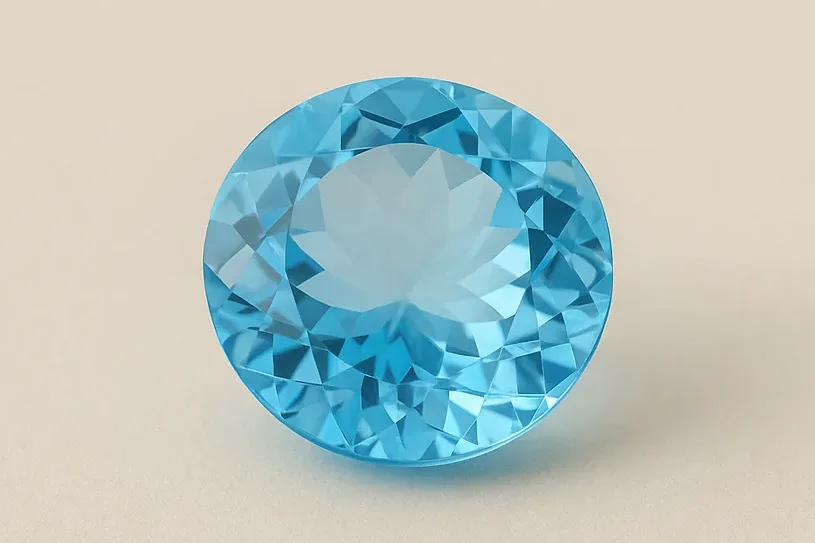
Topaz is two stones wearing one name. There is blue topaz, which is abundant, treated and among the cheapest transparent gems you can buy at any size. And there is Imperial topaz, a peachy orange to pinkish red from a handful of Brazilian mines, which is genuinely scarce and priced accordingly. Confusing the two costs people money in both directions.
Topaz is also the stone where a hardness number misleads most badly. At 8 on the Mohs scale it is harder than quartz, harder than most colored gems. It also has perfect cleavage in one direction, which means a sharp knock on the wrong plane can split it cleanly. Hard is not the same as tough.
This page separates the varieties, explains the treatments behind nearly every blue stone sold, and covers what to check before buying loose.
The colors of topaz
Pure topaz is colorless. Everything else comes from trace elements or from treatment, and the market is dominated by colors that barely occur in nature.
- Blue. Almost never natural. Colorless topaz is irradiated and heated to produce it, and the trade names Sky, Swiss and London Blue describe increasing depth, not origin.
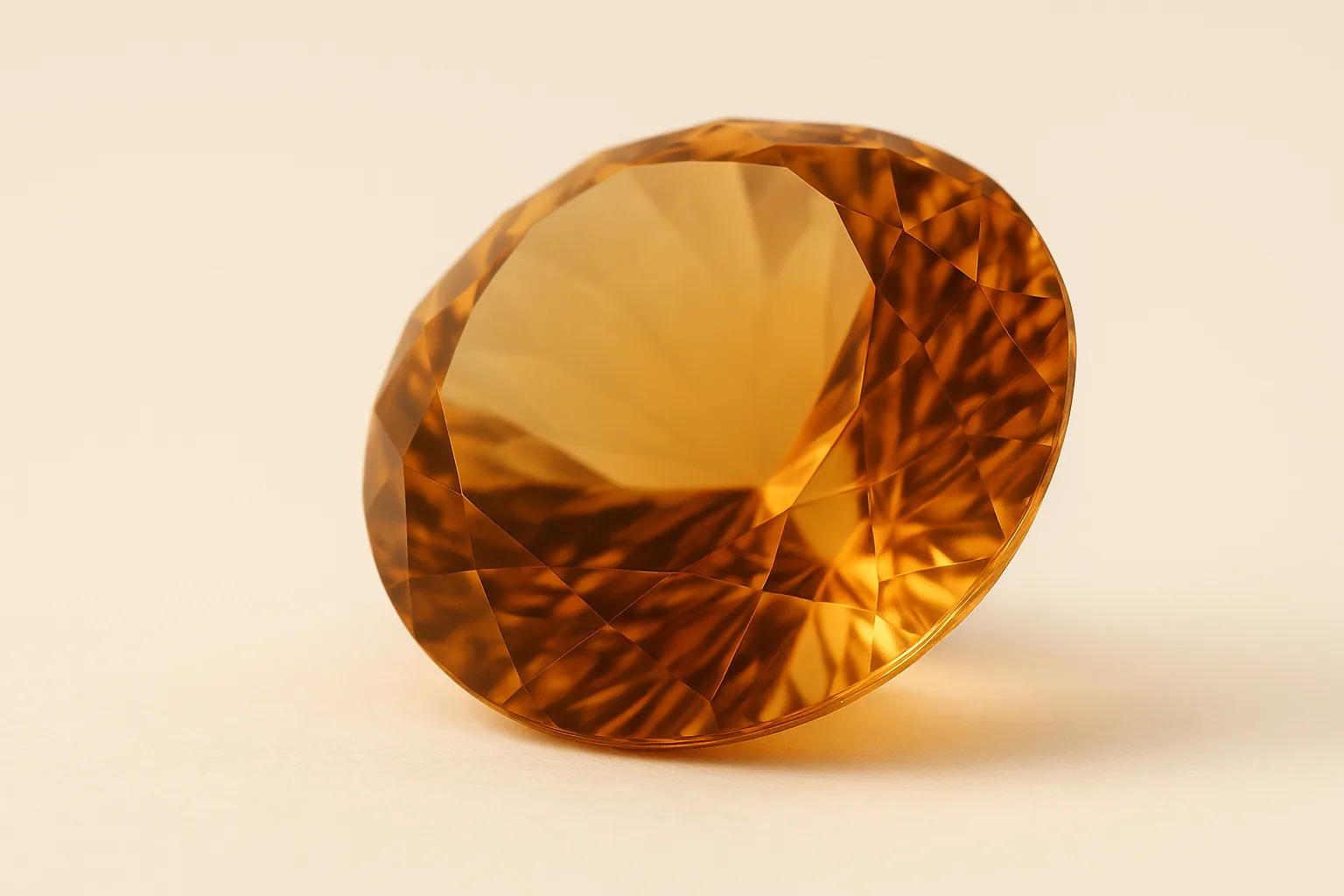
- Imperial. Orange with a pink or red overtone, from Ouro Preto in Brazil. The scarce and valuable variety, and the one worth paying for.
- Yellow to sherry brown. Natural and historically the classic topaz color, before blue took over the market.
- Pink and red. Rare naturally, sometimes produced by heating Imperial material. Red topaz is among the scarcest colors in the gem world.
Where topaz is mined
Brazil dominates, and Minas Gerais is the source of both the colorless rough that becomes blue topaz and the Imperial material from around Ouro Preto. The two could hardly differ more in value while coming from the same state.
Pakistan produces fine pink topaz from Katlang, Russia has historic deposits in the Urals, and Nigeria, Sri Lanka, Myanmar and Mexico all contribute. As always, the stone in front of you is better evidence than the country on the label.
Hardness, cleavage and everyday durability
Topaz is 8 on the Mohs scale. It resists scratching well and will hold a polish for a lifetime. That is the good news and it is genuinely good.
The caution is cleavage. Topaz has one direction of perfect basal cleavage, meaning a well aimed blow can split the stone along a flat plane rather than chipping it. This is not a reason to avoid topaz; it is a reason to set it thoughtfully. A bezel or a design that protects the girdle removes most of the risk, and it is the reason to keep topaz out of ultrasonic cleaners entirely.
Treatment, and what blue topaz really is
Effectively all blue topaz is treated. Colorless topaz is irradiated to produce a blue color center, then heated to stabilize it. The result is permanent, stable and safe: treated material is held until any residual radioactivity has decayed to levels below regulatory limits before it is sold.
The names describe depth. Sky Blue is the lightest, Swiss Blue a bright medium, London Blue the deep inky end with a faint grey cast. None of them is a place. Because the process is cheap and the raw material plentiful, blue topaz is inexpensive at any size, which is exactly why it is so common.
Imperial topaz is generally not treated, though some pink material is produced by heating orange stones. Ask, and get the answer in writing.
What separates a good topaz from a great one
Which factors matter depends entirely on which topaz you are buying, and that is unusual enough to be worth stating plainly.
Color
For Imperial, color is nearly everything: the most valued is a rich orange with a distinct pink or red overtone, and the price gap between that and plain orange is very wide. For blue, color is a matter of preference rather than rarity, since any depth can be produced to order. Choose the blue you like and do not pay a premium for one over another.
Clarity
Both varieties are expected to be eye-clean, and blue topaz should be flawless to the eye given how plentiful it is. Visible inclusions in blue topaz are a reason to move on. In Imperial, a very slight inclusion may be tolerable in exchange for exceptional color.
Cut
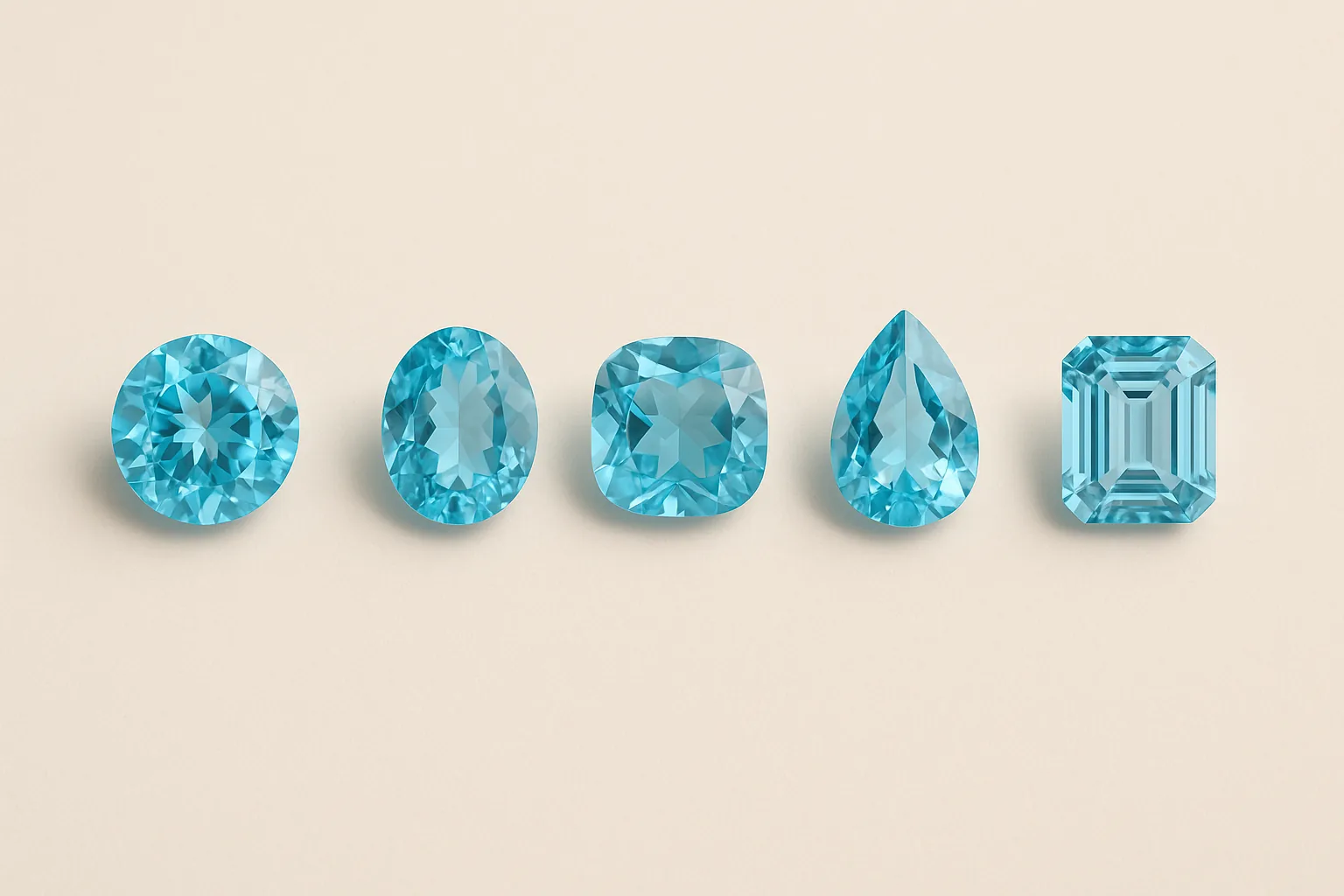
Topaz forms in elongated prismatic crystals, so long shapes waste less rough and are common: emerald cuts, elongated ovals and pears. Because blue topaz is cheap, cutters sometimes leave stones deep to hold weight, producing a dark, lifeless look. Check the stone face up. See our page on diamond clarity for the grading vocabulary the trade borrows.
Carat weight
Blue topaz is available very large and very cheaply, which makes it the default choice for big statement jewelry. Imperial topaz above a few carats is genuinely scarce, and price per carat rises steeply with size.
What loose topaz costs
The two varieties occupy different markets. Blue topaz is among the least expensive faceted gems at any size. Imperial topaz is a serious stone with prices that climb sharply with size and color quality, and fine red material is rare enough to be priced as a collector item.
- Which variety matters more than every other factor combined.
- For Imperial, the pink or red overtone is what commands the premium.
- For blue, buy the shade you like. Depth is produced to order, not found.
- Cut quality matters most on cheap material, where it is most often neglected.
Meaning, symbolism and the November birthstone
Topaz has carried associations with strength, clarity of thought and protection since antiquity, and the Greeks believed it conferred vigour. Blue topaz is a traditional gift for a fourth anniversary and Imperial topaz for a twenty-third.
It shares November with citrine. See our November birthstone page, or the guide to birthstones by month.
Why buy the stone loose
With topaz, buying loose does something specific: the variety, the treatment and the cut are all stated for that individual stone, and the difference between blue and Imperial is a difference of kind rather than of degree.
It also lets Imperial stones be compared honestly, where the overtone that carries the value is subtle and easily flattered by a warm-toned mount.
- You know the true color. Not the color a chosen metal lends it.
- You know the girdle is sound. Cleavage damage happens during setting, and a loose stone is checked before that.
- You compare like with like. Two stones on one basis, and one decision.
- The result is unique. Your stone, your design.
Designing around a loose topaz
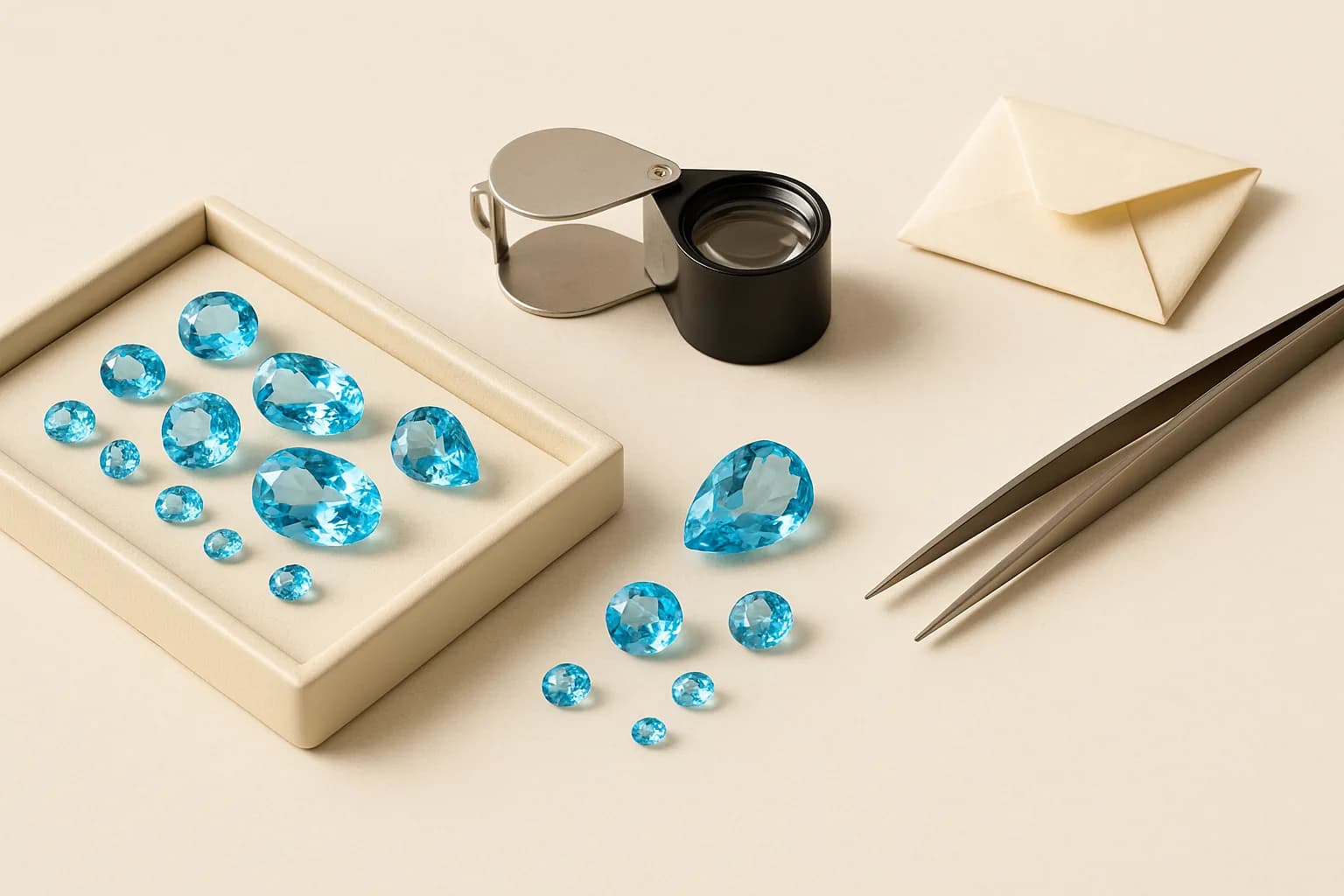
Blue topaz sits naturally with white metals, which keep it crisp, and unexpectedly well with yellow gold, which warms it and reads as vintage. Imperial topaz belongs in yellow or rose gold, which pick up the pink overtone that makes the variety worth having.
Given the cleavage, favour settings that protect the girdle. A bezel is ideal; a well built halo works; exposed corners on a large emerald cut are the arrangement to think twice about. Our pages on ring settings and metals cover the options, or go to design your own ring (opens in new tab).
A short buying checklist
- Establish which variety you are being offered, and price it accordingly.
- For Imperial, look for the pink or red overtone in daylight.
- For blue, pick the depth you like rather than paying up for one.
- Check the girdle for chips under a loupe.
- Look face up for a window in deep-cut stones.
- Choose a setting that protects the stone, and never use an ultrasonic cleaner.
Frequently asked questions
Is blue topaz natural? Almost never. Natural blue topaz exists but is pale and uncommon. Effectively all blue topaz on the market is colorless topaz that has been irradiated and then heated. The color is permanent and the material is safe.
Is irradiated topaz radioactive? No. Treated material is held until residual radioactivity decays below regulatory limits before it can be sold, and the stones are tested. Blue topaz in the trade is safe to wear.
What is the difference between Sky, Swiss and London Blue? Depth of color, produced by different treatment conditions. Sky is lightest, Swiss a bright medium, London the deepest with a slightly inky grey cast. They are grades, not origins.
What is Imperial topaz? An orange topaz with a pink or red overtone, found principally around Ouro Preto in Brazil. It is naturally colored, genuinely scarce, and many times more valuable than blue topaz.
How hard is topaz, and is it durable? It is 8 on the Mohs scale, so it resists scratching very well. But it has one direction of perfect cleavage, so a sharp knock on that plane can split it. Hardness and toughness are different properties, and topaz is strong on one and only moderate on the other.
Can I put topaz in an ultrasonic cleaner? No. The vibration can propagate a cleavage plane. Clean topaz with warm water, mild soap and a soft brush, and avoid steam cleaners as well.
Why is blue topaz so cheap? Because the raw material is abundant colorless topaz and the treatment is inexpensive and repeatable. Supply is effectively unlimited, and price follows supply rather than beauty.
Does topaz fade? Treated blue topaz is stable in normal conditions. Some brown and yellow topaz can fade with prolonged strong light exposure, so avoid leaving any topaz in direct sunlight for extended periods.
What size topaz can I buy? Blue topaz is available in very large sizes cheaply, which is why it dominates big statement jewelry. Imperial topaz above a few carats is scarce and prices climb steeply.
Is topaz suitable for an engagement ring? It can be, with a protective setting. The cleavage means a bezel or a design that shields the girdle is worth the extra thought. See our guide to designing an engagement ring.
To see what is available, browse the loose topaz collection (opens in new tab), or start from the setting and design your own ring (opens in new tab) around a stone. If you are weighing Imperial against blue, contact us (opens in new tab) and we will talk you through why the difference is worth understanding before you choose.