How are diamonds formed
Discover how natural diamonds form deep in Earth, reach the surface through volcanic eruptions, and differ from diamonds grown in a laboratory today.
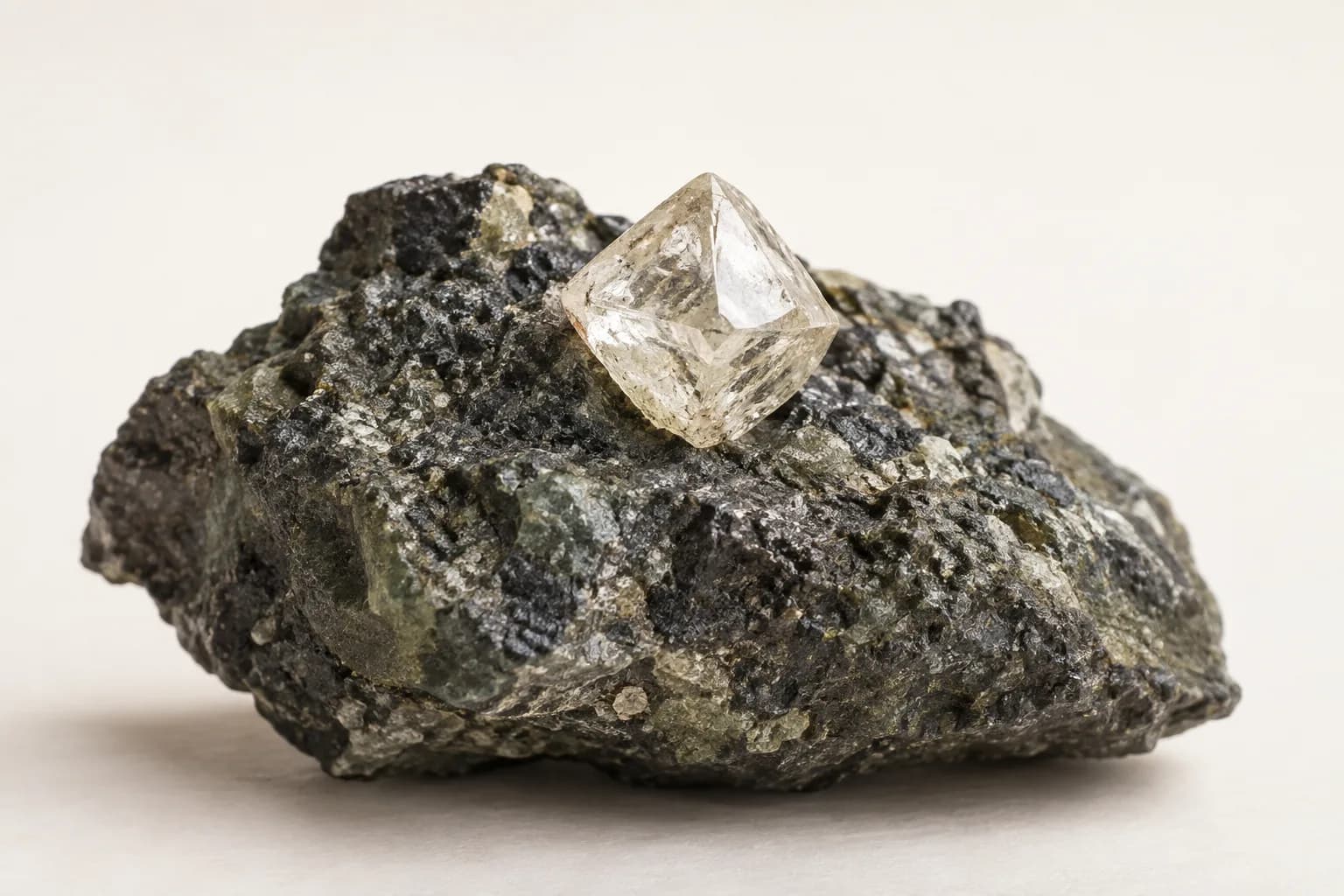
A diamond is carbon arranged in a tightly bonded crystal structure. Natural diamonds grow deep inside Earth, long before they become the polished stones seen in jewelry.
Heat, pressure and carbon
Most natural gem diamonds form in the mantle, roughly 150 to 200 kilometres below the surface, at about 900 to 1,300°C. Carbon-bearing fluids or melts move through mantle rocks. Under suitable chemical conditions, carbon crystallizes as diamond. Some diamonds originate much deeper.
Are diamonds made from coal?
Usually, no. The familiar story of coal being squeezed into a diamond is misleading. Diamond-forming carbon can come from the mantle or from material recycled into it by plate tectonics. Coal is not the usual starting material for natural gem diamonds.
How old are diamonds?
Many natural diamonds formed more than a billion years ago. Their age does not mean that each crystal took a billion years to grow: growth can occur in separate episodes, followed by long periods of storage in the mantle.
The journey to the surface
Diamonds reach the surface in rare volcanic eruptions, carried by magmas that form rocks such as kimberlite and lamproite. These eruptions transport pre-existing crystals rather than create them. Later erosion can release diamonds into river sediments and coastal deposits.
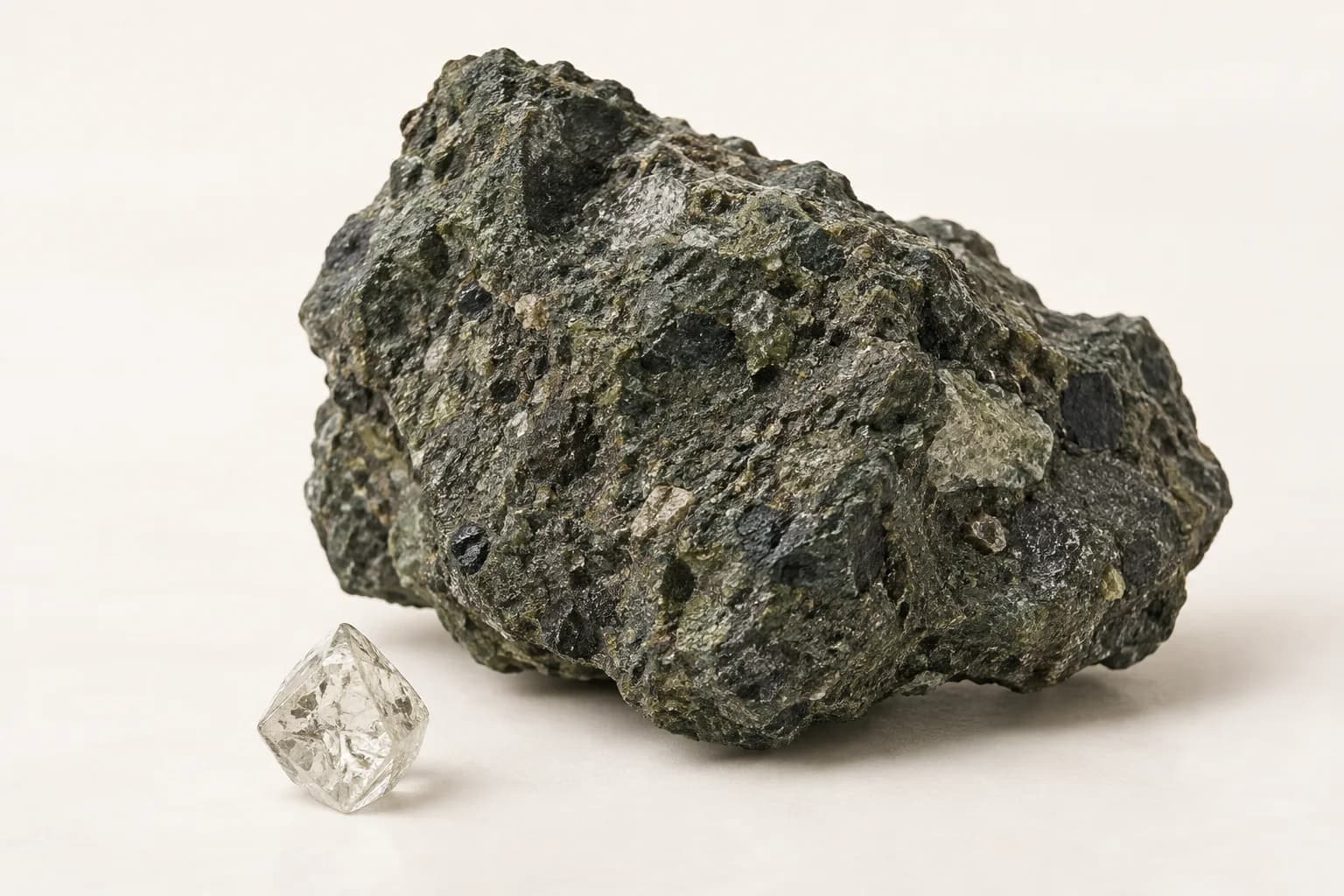
How laboratory-grown diamonds form
Laboratory-grown diamonds also have a diamond crystal structure. High pressure, high temperature (HPHT) growth uses intense pressure and heat. Chemical vapor deposition (CVD) grows diamond from a carbon-containing gas on a seed. Their growth environment differs from a natural diamond’s geological history.
From rough crystal to finished stone
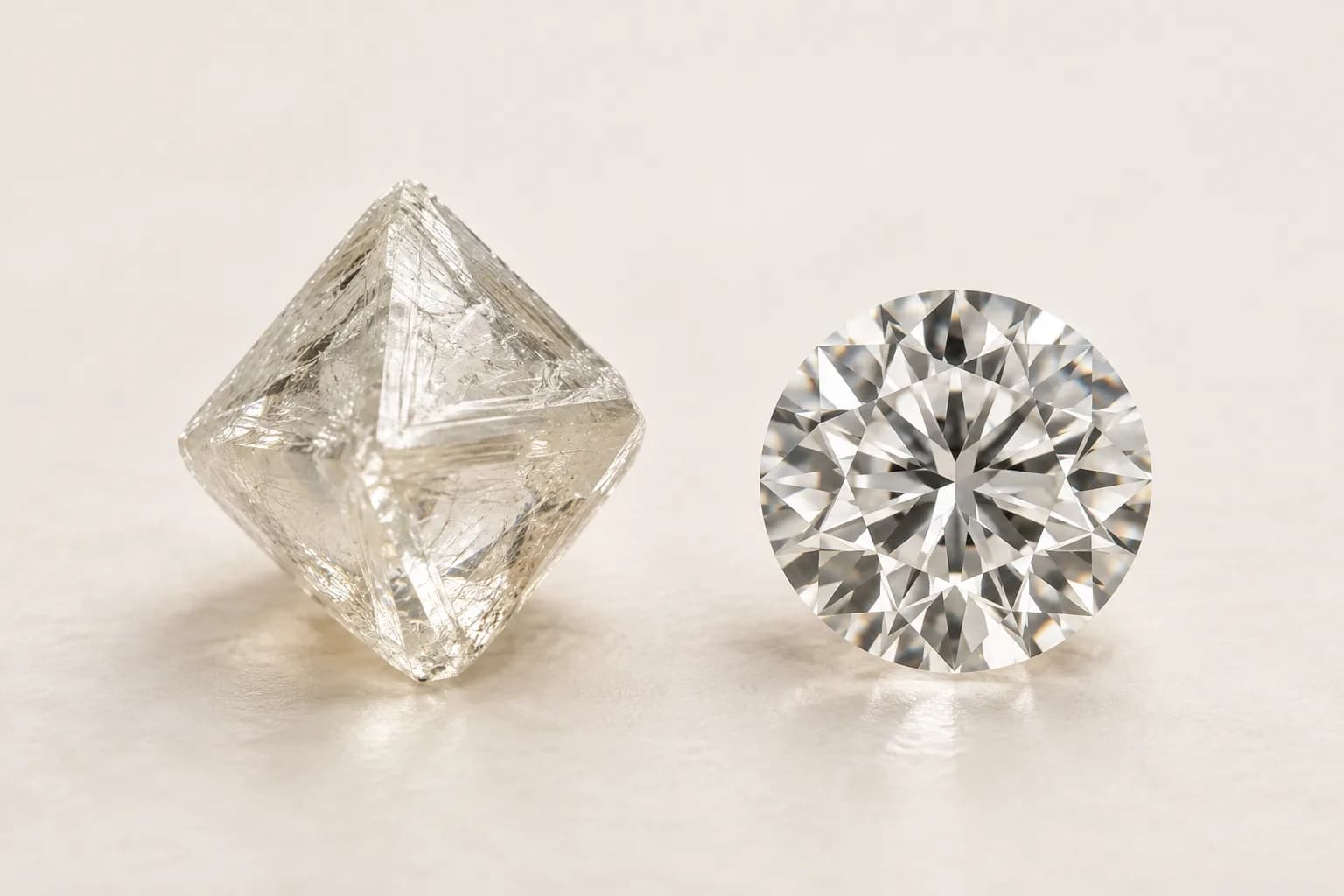
A rough diamond does not emerge with the facets of an engagement-ring stone. Cutting and polishing create that shape and control how light travels through it. Formation explains origin; it does not by itself determine the beauty or quality of the finished diamond.
Frequently asked questions
Can coal turn into a diamond? Carbon can form diamond under suitable conditions, but natural gem diamonds do not usually begin as coal. Most grow deep in the mantle from carbon-bearing fluids or melts.
Does a diamond take billions of years to grow? Not necessarily. The age of a natural diamond records its ancient origin, not continuous growth. A crystal can grow in episodes and then remain in the mantle for a very long time.
Do volcanoes create diamonds? The eruptions that bring gem diamonds to the surface usually carry crystals that already formed deep underground. Transport to the surface and crystal growth are different events.
Are laboratory-grown diamonds real diamonds? Yes. They have a diamond crystal structure, but grow in a controlled environment. Their laboratory origin must be distinguished from the geological origin of natural diamonds.