Amethyst
What makes one amethyst worth many times another: color, cut orientation and size, plus why buying the stone loose gets you a better piece for the money.
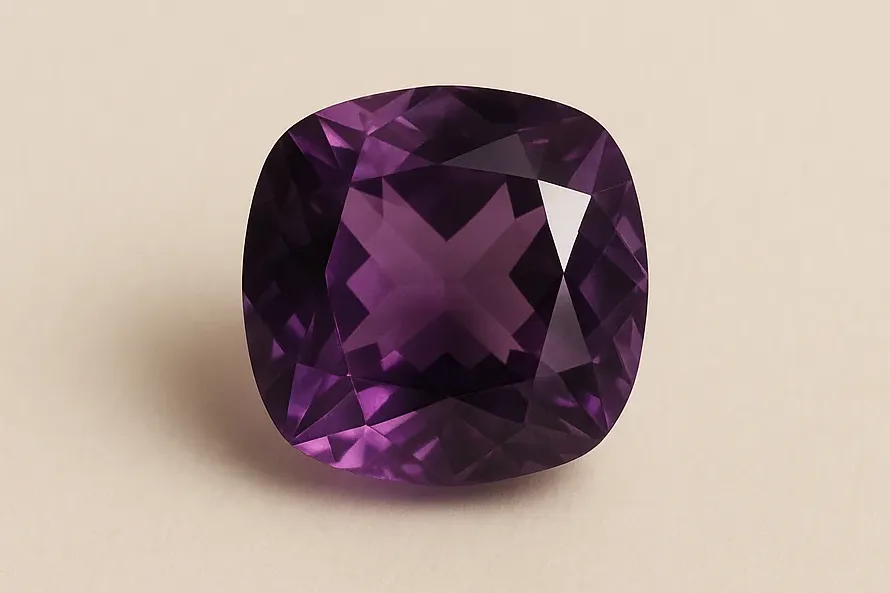
Amethyst is the purple variety of quartz, and for most of recorded history it was priced beside ruby and emerald. That ended in the nineteenth century, when enormous deposits were found in Brazil and the supply of a stone that had been reserved for bishops and monarchs became something anyone could own. The color did not change. Only the arithmetic did.
That history is the reason amethyst is such a good stone to buy loose. You can afford a size and a color that would be out of reach in almost any other gem, which means the decision stops being about compromise and starts being about taste.
This page covers what actually drives the price of an amethyst, what to look at before you buy, and why choosing the stone first and the setting second gives you a better piece for the same money.
The colors of amethyst
Amethyst runs from a barely-there lilac to a purple so deep it reads almost black in low light. The color comes from trace iron in the quartz combined with natural irradiation underground, and it is not evenly distributed: most rough is color-zoned, with bands of stronger and weaker purple running through the crystal.
That zoning is the cutter's problem, and it is why cut matters more here than the price tag suggests. A well oriented stone spreads its best color across the whole face. A badly oriented one shows a pale window in the middle with the color pushed to the edges.
- Light lilac to lavender. Delicate and cool, easy to wear daily, the most affordable end of the range.
- Medium purple. The color most people picture. Even, clean and the best balance of presence and price.
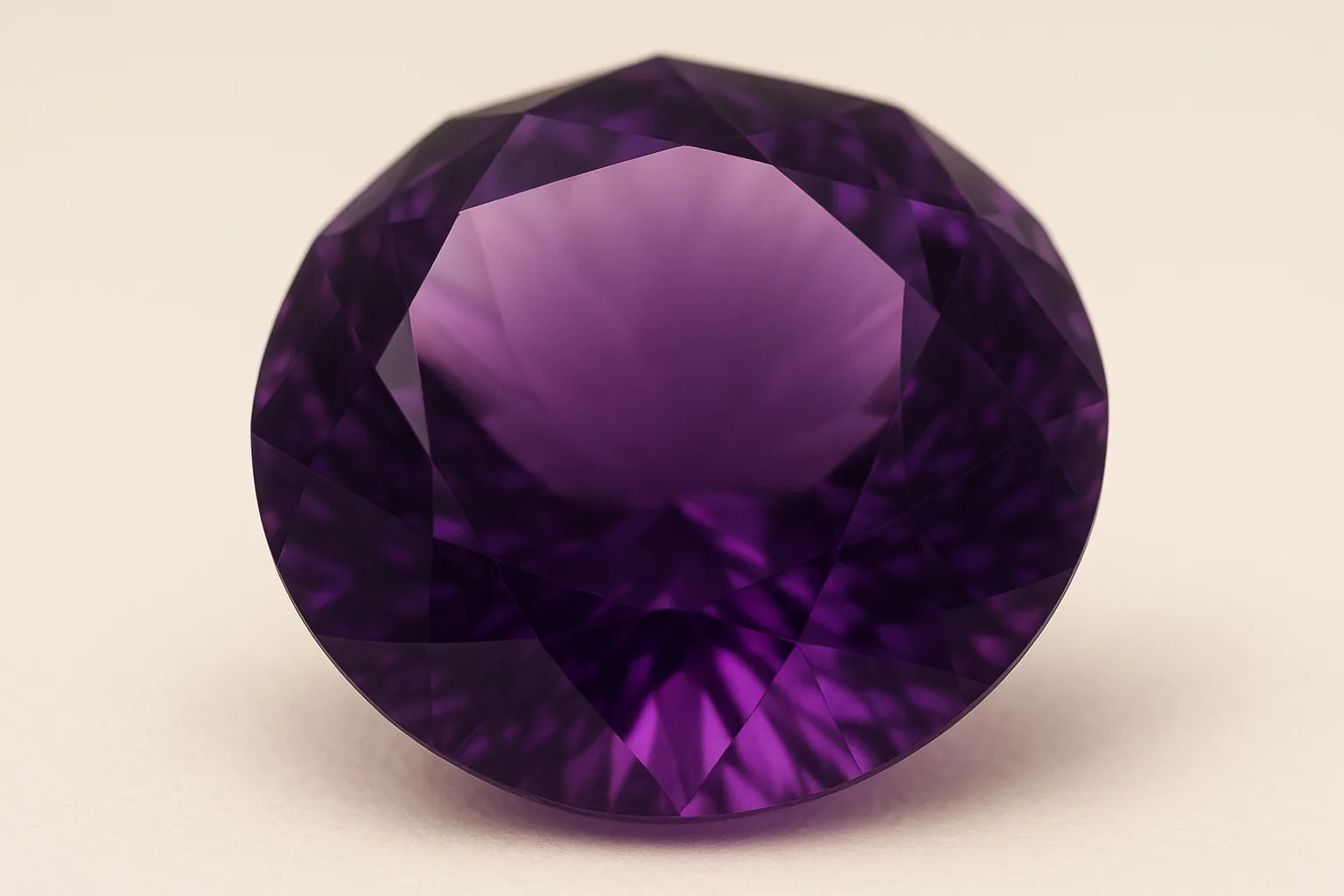
- Deep purple, sometimes called Siberian. Strongly saturated with flashes of red and blue. The name is a trade grade now, not a claim about origin.
- Rose de France. A soft pinkish lilac, briefly unfashionable and now sought again for its restraint.
Where amethyst is mined
Brazil and Uruguay dominate. Brazilian material, largely from Rio Grande do Sul, tends toward lighter and more open purples and comes in very large clean sizes. Uruguayan amethyst, from around Artigas, is typically deeper and more saturated, often with a reddish flash, and commands a premium for it.
Zambia produces strongly colored stones that can carry a blue secondary hue, and Bolivia is the source of ametrine, a natural amethyst-and-citrine bicolor from the Anahi mine. Madagascar, India and parts of the United States round out the supply. Origin is worth knowing but it is not a grade: a fine Brazilian stone beats a mediocre Uruguayan one, and the report on the stone in front of you matters more than the country on the label.
Hardness and everyday durability
Amethyst is 7 on the Mohs scale, the same as all quartz. That is hard enough for a ring worn regularly, though not as forgiving as sapphire at 9 or diamond at 10. It has no cleavage, so it will not split along a plane the way topaz can, and it takes a knock better than its hardness alone suggests.
One caution is specific to this stone and worth stating plainly: strong prolonged sunlight can fade amethyst. This is not a reason to avoid it, and no reasonable amount of wear will bleach a stone. It is a reason not to leave a piece on a sunny windowsill for a decade, and a reason to be careful with steam and ultrasonic cleaning on heavily included material.
Treatment, and what heat actually does
Most amethyst on the market is untreated, which is unusual among colored stones and is one of its quiet attractions. The color you see formed underground.
Heat is used, but mainly to turn amethyst into something else. Heated to around 400 to 500 degrees Celsius, amethyst becomes citrine, and most commercial citrine began life as amethyst. Heated differently it can become green prasiolite. So when a seller says a stone is heated, ask what the heating was for. On amethyst sold as amethyst, gentle heating to lighten overly dark material does occur and should be disclosed.
What separates a good amethyst from a great one
The four Cs apply, but their order of importance is not the one you would use for a diamond. On a colored stone, color is most of the value, and the rest support it.
Color
This is the whole game. The most valued amethyst is a strong, even, slightly reddish purple that holds its color under both daylight and lamplight. Watch for two faults: a stone that goes flat and grey under artificial light, and windowing, where the center looks washed out because light passes straight through instead of bouncing back.
Because amethyst is affordable, you are not forced to accept a compromise here. Reject pale or patchy stones and keep looking.
Clarity
Fine amethyst is expected to be eye-clean, and there is enough clean rough that you should not pay for a stone with visible inclusions unless they are doing something interesting. This is the opposite of emerald, where inclusions are tolerated because clean material barely exists.
Cut
Cut earns its keep on this stone more than on almost any other. Good proportions return light evenly across the face and hide color zoning; poor ones leave a pale window or a dark, sleepy center. Since you are not paying a premium per carat, insist on a cut that performs. Read more about how proportions govern brilliance on our page about diamond cut, where the same optics apply.
Carat weight
Large clean amethyst is genuinely available, so price per carat rises far more gently than it does for scarce stones. A twenty carat amethyst is a realistic centerpiece rather than a museum object. That changes what is worth designing: statement rings, substantial pendants and cocktail pieces are all within reach.
What loose amethyst costs
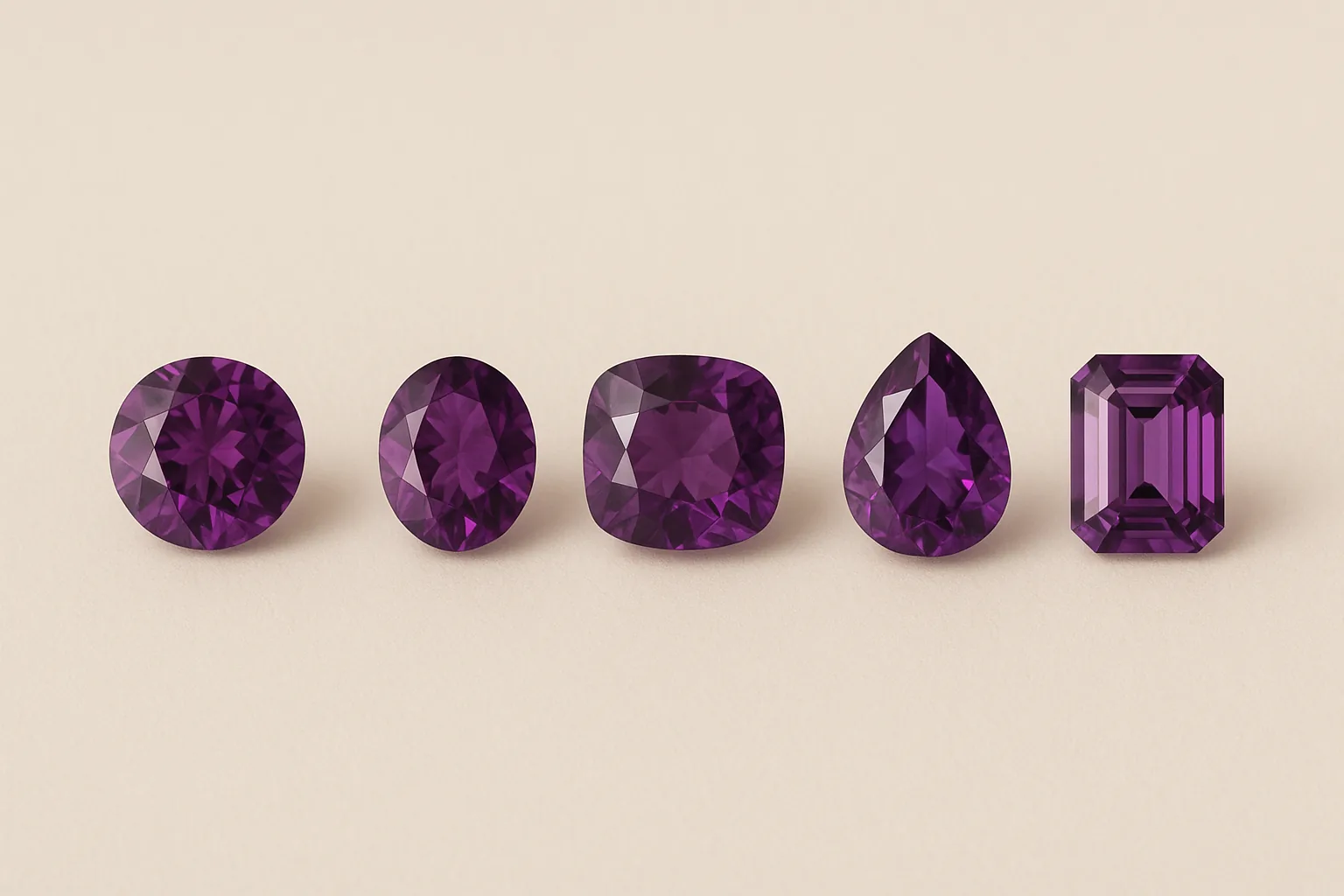
Amethyst is one of the best value propositions in colored stone. Commercial material sits in the low single digits per carat; good medium purple in commercial cuts runs modestly; and fine deep saturated stones with precision cutting reach the higher tens per carat and occasionally beyond. Even at the top, that is a fraction of what comparable size and quality costs in ruby or sapphire.
- Color moves price more than everything else combined.
- Cut quality is the second lever and the one most often neglected.
- Size costs comparatively little, so buy the size you actually want.
- Clarity should be eye-clean as a baseline, not a premium.
Meaning, symbolism and the February birthstone
The name comes from the Greek amethystos, meaning not drunken. Greeks and Romans believed the stone protected the wearer from intoxication, and wine cups were carved from it. Purple has signified authority for as long as it has been hard to produce, and amethyst carried that association into the church, where it sat in bishops' rings for centuries.
It is the birthstone for February, which makes it a natural choice for a birthday piece. See our February birthstone page for the fuller story, or the guide to birthstones by month if you are shopping for someone else.
Why buy the stone loose
A stone already set in a finished piece is a stone you cannot fully assess. The setting hides the girdle, the pavilion and often the very zoning that decides the price, and it commits you to someone else's idea of how the stone should be worn.
Buying loose reverses that. The stone is graded, described and priced on its own merits, and only then does it become a piece of jewellery.
- You know what you are paying for. Color, cut and any inclusion belong to that stone, not averaged into a finished ring.
- You compare like with like. Two loose stones differ by color and cut. Two finished rings differ by setting as well.
- You control the budget. Money goes into the stone or the metal by your choice, not the manufacturer's.
- You get a piece that is yours. Nobody else is wearing the same one.
Designing around a loose amethyst
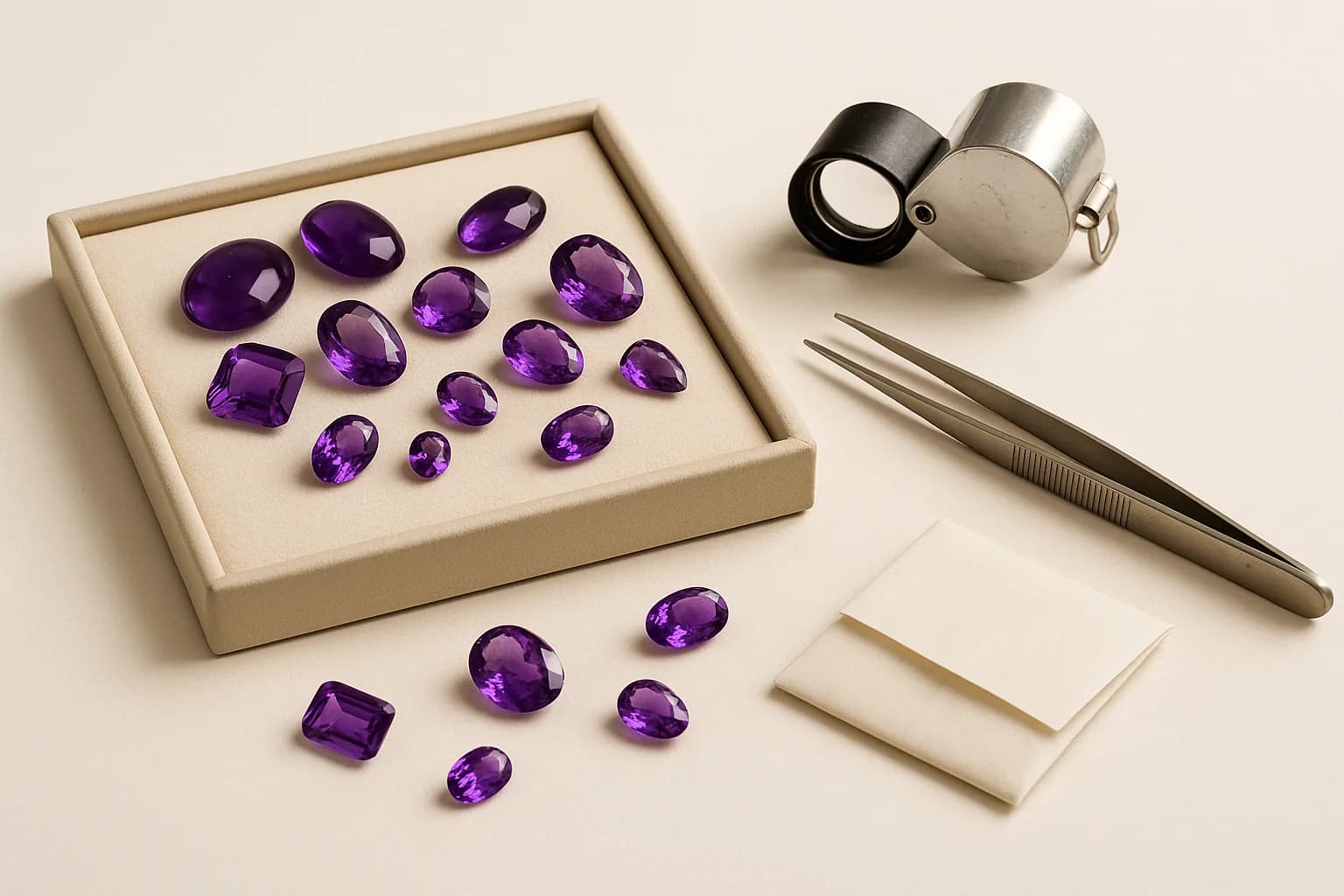
Purple sits comfortably with both warm and cool metals, which is not true of every color. Yellow gold pushes the stone warmer and brings out any red flash. White gold and platinum cool it and make the purple read more clearly as itself. Rose gold is the interesting one: it flatters lighter lilac material and can make a pale stone look deliberate rather than weak.
For settings, a halo of small colorless stones will deepen the apparent color of the center by contrast, and a bezel suits the stone's durability. Our pages on ring settings and choosing a metal go through the options in detail, and the store can build the piece around a stone you have chosen through design your own ring (opens in new tab).
A short buying checklist
- Look at the stone under at least two light sources, including one warm.
- Check for a pale window in the center when you hold it face up.
- Turn it to see whether color zoning shows from any angle.
- Confirm it is eye-clean at normal reading distance.
- Ask what treatment, if any, has been applied and get it in writing.
- Buy the size you want. On this stone, size is the cheap part.
Frequently asked questions
Is amethyst a precious or semi-precious stone? Semi-precious, under the conventional division that reserves precious for diamond, ruby, sapphire and emerald. The distinction is a nineteenth century marketing convention rather than a gemological one, and it says nothing about beauty or quality. Amethyst was treated as precious until Brazilian deposits made it plentiful.
How hard is amethyst, and can I wear it every day? It is 7 on the Mohs scale, with no cleavage. That is suitable for daily wear in a ring, and very comfortable in earrings or a pendant. For a ring worn while gardening or working with your hands, a bezel or a protective setting is worth considering.
Does amethyst fade? It can, under strong and prolonged ultraviolet light. Normal wear will not fade a stone. Leaving a piece in direct sun on a windowsill for years might. Store it out of direct sunlight and it will keep its color indefinitely.
Is amethyst usually treated? Most amethyst sold as amethyst is untreated, which is unusual among colored gems. Heat is more commonly used to convert amethyst into citrine or green prasiolite. Any treatment applied to a stone you are buying should be disclosed.
What color of amethyst is most valuable? A strong, even, slightly reddish purple that holds under both daylight and lamplight. Very dark stones that go inky and very pale ones both sell for less, though the pale Rose de France shade has its own following.
Why is amethyst so much cheaper than ruby or sapphire? Supply. Large, clean, well colored amethyst exists in quantity, and price follows scarcity rather than beauty. This is why amethyst is such good value in larger sizes.
What is Siberian amethyst? A trade term for the deepest saturated purple with red and blue flashes, originally describing Russian material. Today it describes a color grade and implies nothing about where the stone was mined.
How large can amethyst be cut? Very large. Clean rough of substantial size is available, so stones of twenty carats and well beyond are practical for jewelry rather than curiosities. This makes amethyst a strong choice for statement pieces.
How should I clean amethyst jewelry? Warm water, mild soap and a soft brush. Avoid ultrasonic and steam cleaners, particularly on included stones, and keep it away from harsh household chemicals.
Can amethyst be used in an engagement ring? Yes, and it increasingly is. At 7 on the Mohs scale it stands up to daily wear, and a protective setting handles the rest. Read our guide to designing an engagement ring for how to think about the piece as a whole.
If you are ready to look at stones, browse the loose amethyst collection (opens in new tab), or start from the setting and design your own ring (opens in new tab) around a stone you choose. If you would rather talk it through first, get in touch (opens in new tab) and someone who handles these every day will help you narrow it down to two or three.