Diamond Clarity
Clarity grades how far a diamond is free of inclusions and blemishes. Learn the scale from Flawless to I3, and which grades look clean to the naked eye.
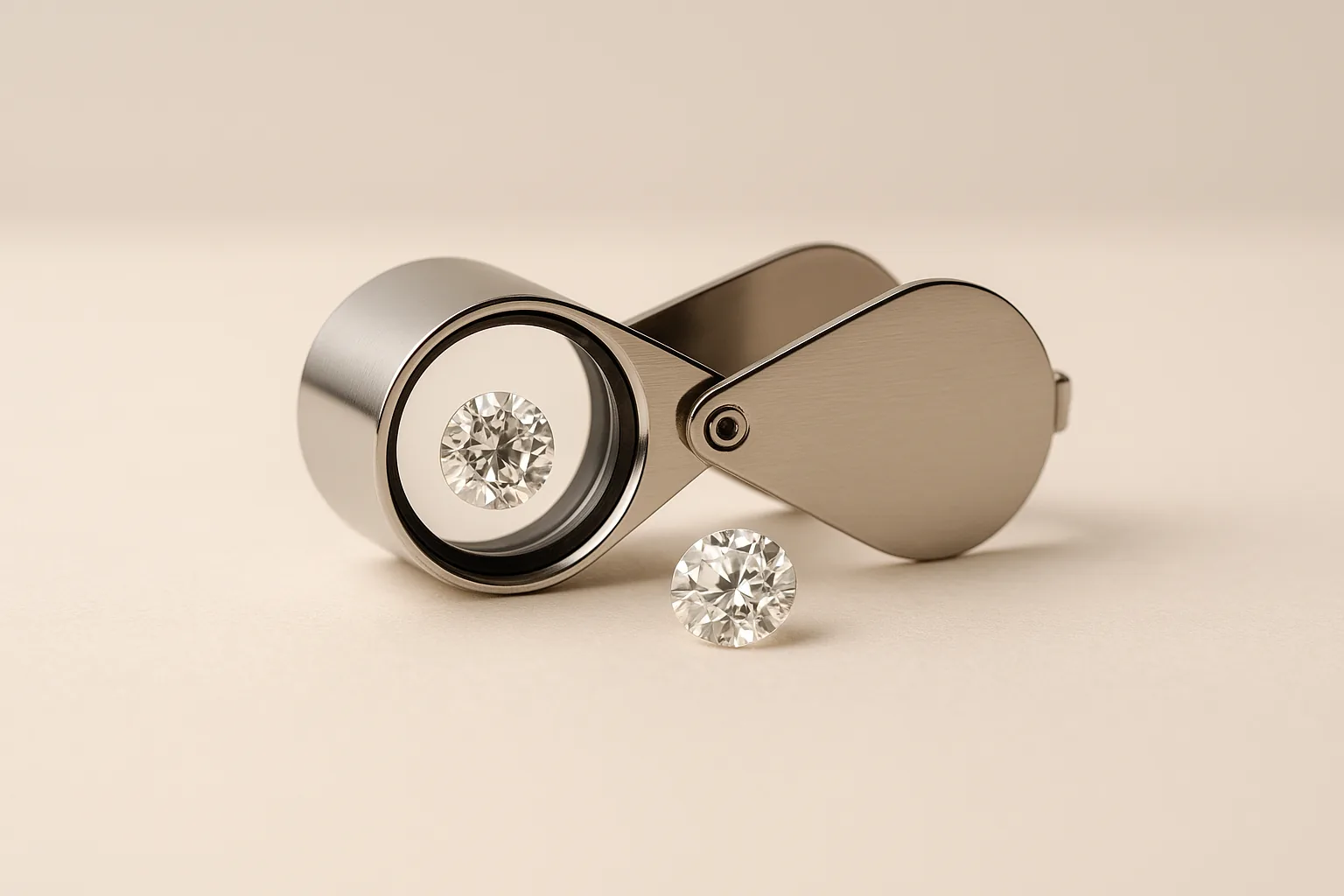
Diamond clarity is a measure of how far a diamond does or does not contain internal inclusions (flaws), or external blemishes (marks of various kinds). Can an SI1 diamond be eye-clean? Sometimes. SI1 is a grade assessed at 10x magnification, not a promise about what you will see unaided. Check the actual stone face-up in normal light and ask where its inclusions sit. GIA clarity guide (opens in new tab).
Diamonds with no inclusions or flaws are rare, and most diamonds have some flaws - including ones that can only be seen under 10X magnification. Diamonds are graded for clarity according to the level of these inclusions and flaws, and such flaws usually do not affect the diamond's beauty.
There are 11 clarity grades under the clarity grading system of the G.I.A. (the Gemological Institute of America). The scale of clarity grades runs between "flawless" - a diamond that is entirely clean and without blemish - and "inclusions", a diamond with small flaws. The exceptional clarity grades are VVS2, VVS1, IF and FL.
The clarity grades in detail
| Grade | Meaning |
|---|---|
| FL - flawless | No inclusions or blemishes visible to a skilled grader at 10x magnification. |
| IF - internally flawless | No inclusions visible to a skilled grader at 10x magnification; surface blemishes may be present. |
| VVS1 - very, very slightly included | Minute inclusions that are difficult for a skilled grader to see at 10x magnification. This grade alone does not guarantee brilliance. |
| VVS2 - very, very slightly included | Minute inclusions that are difficult for a skilled grader to see at 10x magnification. This grade alone does not guarantee brilliance. |
| VS1 - very slightly included | Minor inclusions assessed at 10x magnification. Visibility without magnification depends on the individual stone. |
| VS2 - very slightly included | Minor inclusions assessed at 10x magnification. Visibility without magnification depends on the individual stone. |
| SI1 - slightly included | Inclusions noticeable to a skilled grader at 10x magnification; some may be visible without magnification. |
| SI2 - slightly included | Inclusions noticeable to a skilled grader at 10x magnification; some may be visible without magnification. |
| I1-I2-I3 - inclusions | Inclusions obvious at 10x magnification that may affect transparency and brilliance. Inspect the individual diamond. |
- I1,I2,I3
- SI2
- SI1
- VS2
- VS1
- VVS2
- VVS1
- IF
- FL
Eye-clean means that inclusions are not visible to the unaided eye under the viewing conditions used. It is not a GIA clarity grade. VS2 and some SI1 diamonds can offer a useful balance of appearance and price, but size, shape, inclusion position and lighting matter. Inspect the actual stone and its report; no grade alone guarantees an eye-clean appearance.
Clarity is one of four Cs that trade against each other, and the guide to carat weight covers the one that moves the price hardest.
Fluorescence is the other thing a report notes about what is inside a stone, and it is not a clarity grade at all; the guide to fluorescence explains what it does to the look.
One-minute buyer case
VS1, VS2 or SI1: how to compare
Use the existing grade table as a starting point, then compare actual stones at normal viewing distance and under magnification. Pay more for VS1 only when comparing the actual stones shows a benefit you value; the grade alone cannot tell you whether you will see a difference. With VS2 and SI1, ask where inclusions sit, whether they are visible face-up and whether they affect durability. For example, if a VS2 and an SI1 of similar size and cut look equally clean face-up, compare the clarity details on each GIA report, the prices and the return terms before paying for the higher grade.
For a larger stone or a step cut, inspect especially carefully rather than treating one grade as a universal recommendation. Ask for a video of the actual diamond and the viewing conditions used for any “eye-clean” claim. Keep cut quality and budget in the comparison.
GIA Certification · GIA (opens in new tab)
Your next decision
- If VS2 and SI1 look equally clean face-up: compare the actual GIA reports, prices and return terms. Check inclusion position and cut before choosing the less expensive stone.
- If an inclusion is visible or near an exposed edge: request a magnified view and ask a qualified jeweller about durability. The grade alone cannot settle this choice.