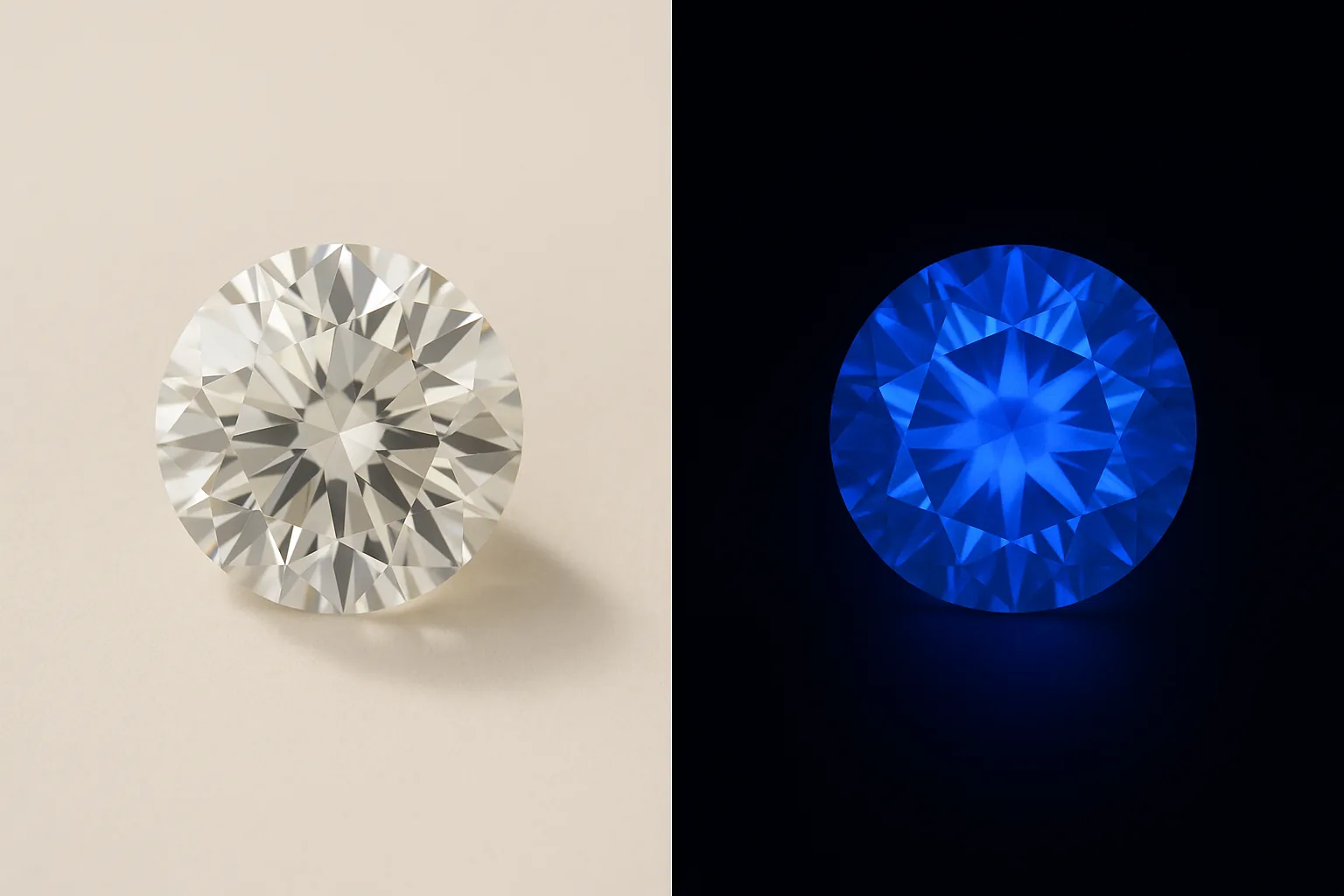
Fluorescence
Some diamonds glow blue under ultraviolet light. Learn what fluorescence is, how GIA grades it, and when it helps a stone or hurts what you pay for it.
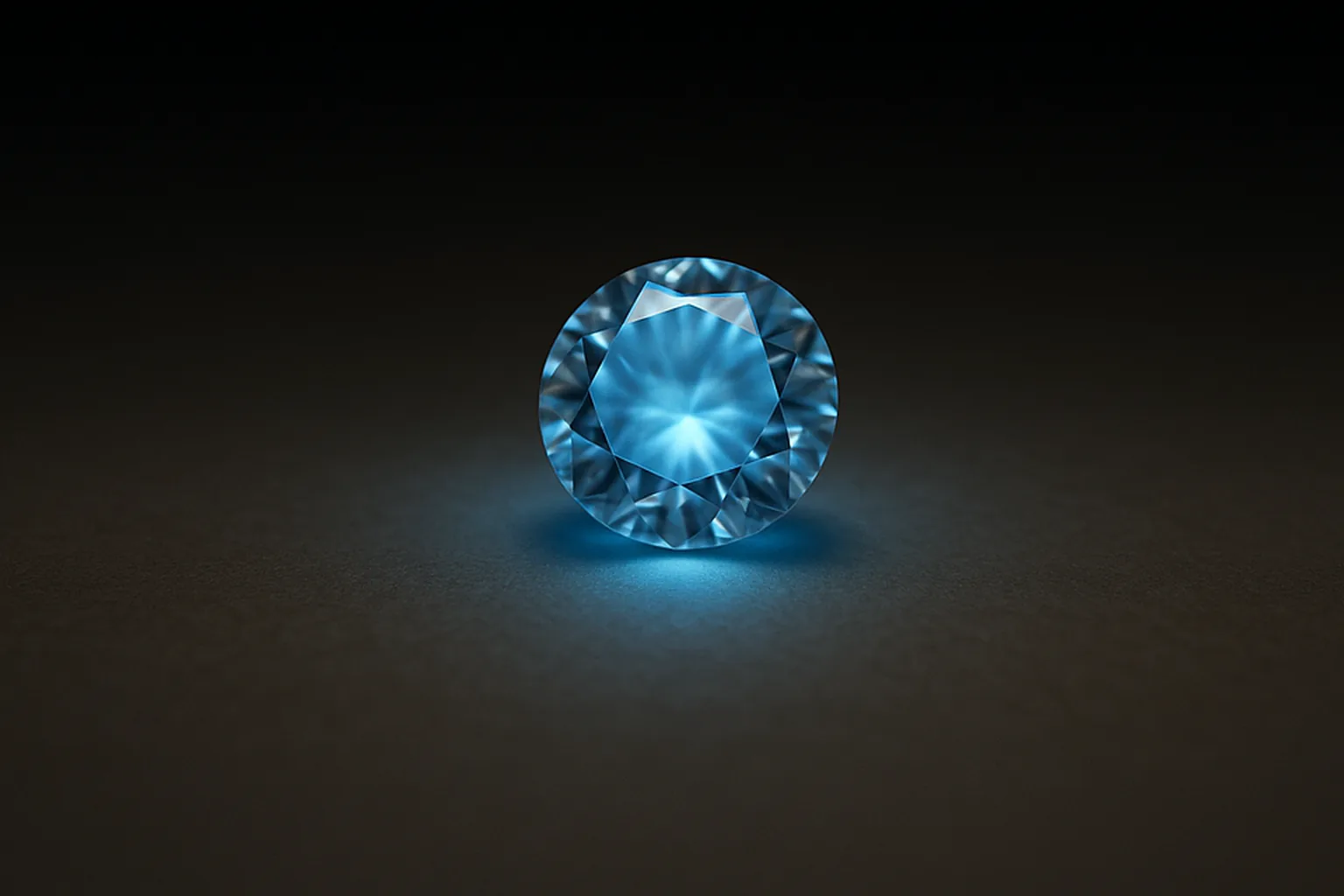
Fluorescence is a natural phenomenon in which a diamond, when placed under a UV (ultraviolet) lamp, emits a bluish light - or in rare cases a yellowish one - at varying levels and intensities. In everyday life the fluorescence cannot be seen with the naked eye, but it does affect the diamond's appearance and its price (lower), and sometimes fluorescence will even "whiten" a yellowish diamond and improve how it looks.
The GIA fluorescence scale
GIA grades a diamond's fluorescence on a five-level scale:
- None
- Faint
- Medium
- Strong
- Very strong
How should you think about fluorescence when buying a diamond?
When you are buying a yellowish color, strong fluorescence can give the appearance of a better color.
We recommend comparing several diamonds, with fluorescence and without, to see whether there are differences.
If you have chosen a stone with fluorescence, the price should be lower.
Because fluorescence can both lower a diamond's price and, in some cases, make a faintly yellow stone look whiter, it is one more reason to compare certified stones directly rather than relying on the grade alone. Purchasing closer to the source, from a manufacturer or established supplier, makes that comparison easier; a direct supplier such as Israel Diamonds, for example, lets you compare certified loose diamonds (opens in new tab), each with its GIA grading report (opens in new tab), side by side before deciding.