Citrine
Most citrine on the market is heated amethyst, and you should be told. A buying guide to color, cut and price, and how to spot a stone cut for weight.
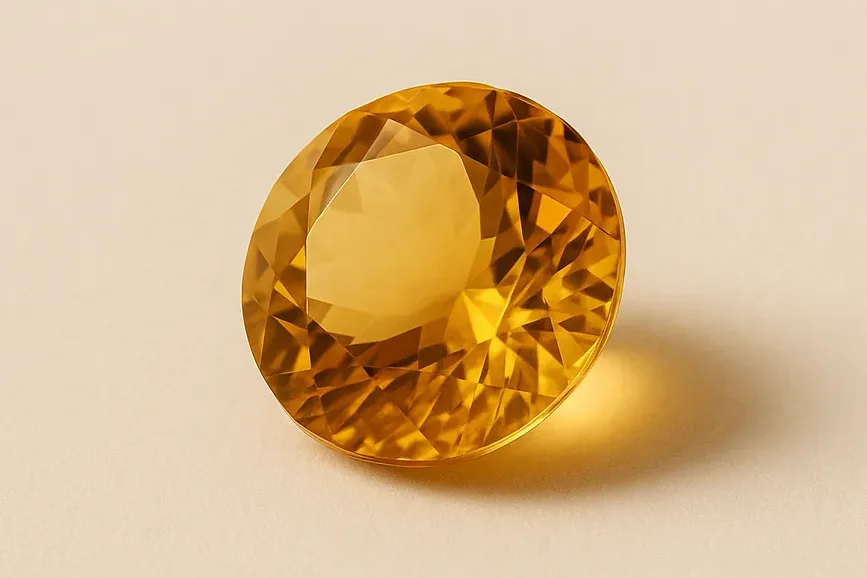
Citrine is quartz in the yellow to orange range, and it is the stone most likely to be misrepresented to you by accident rather than by design. The great majority of citrine on the market began life as amethyst and was heated until the purple turned gold. That is a legitimate, permanent, centuries-old practice. It is also something you should be told rather than left to assume.
None of which makes it a lesser stone. Heated or natural, citrine is durable, available in sizes that would be fantasy in a scarcer gem, and priced so gently that the only real constraint on what you commission is your own taste.
This page covers what the heat actually does, how to tell the two apart, and what to look for before you buy a loose citrine.
The colors of citrine
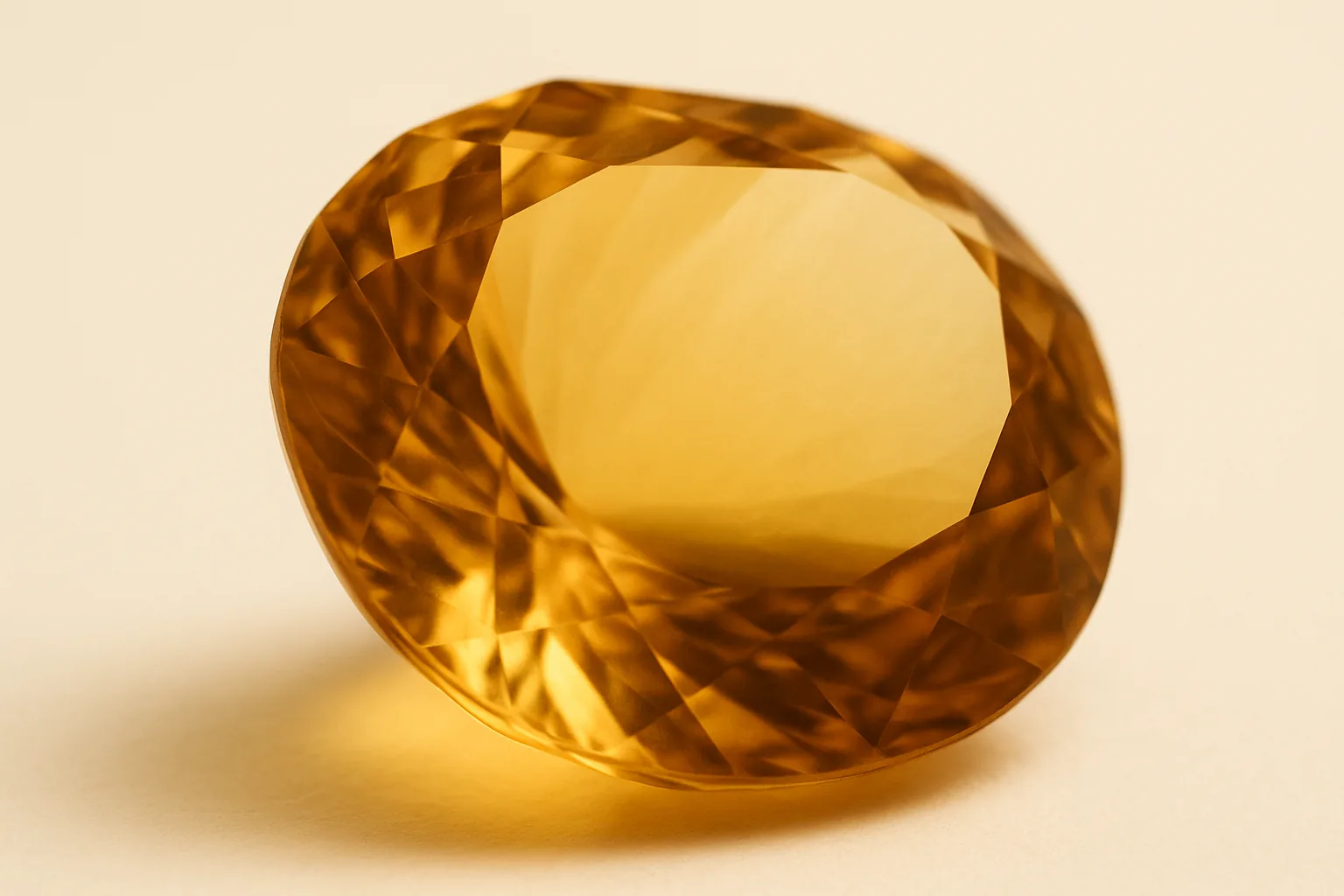
The range runs from a pale lemon yellow through warm gold to a deep reddish orange. Iron gives the color, and where that iron sits in the crystal decides the shade. Natural citrine tends toward the cooler lemon end; heated amethyst tends toward the warmer orange end, often with a faint reddish cast at the edges.
Neither end is better. They are different colors, and the deep orange is the one the market pays most for.
- Pale lemon. Cool and delicate, most often natural rather than heated, and inexpensive.
- Golden yellow. The color most people mean by citrine. Even, warm and easy to wear.
- Madeira. A deep reddish orange named after the fortified wine. The most valued shade and usually heat-derived.
- Smoky gold. A brownish overtone that reads as antique. Out of fashion for decades and quietly returning.
Where citrine comes from
Brazil supplies most of it, and Rio Grande do Sul in particular supplies most of the amethyst that becomes it. Bolivia contributes something unusual: the Anahi mine produces ametrine, a single crystal that is amethyst at one end and citrine at the other, cut to show both.
Madagascar, Zambia, Spain and Russia all produce citrine, some of it naturally colored. Natural citrine is genuinely uncommon, which is worth knowing when a seller offers it: the claim is not impossible, but it is unusual enough to be worth a question.
Hardness and everyday durability
Citrine is 7 on the Mohs scale, the same as every other quartz, with no cleavage. That makes it a practical everyday stone, well suited to rings, and unlikely to chip from ordinary knocks.
It shares one caution with amethyst: strong prolonged ultraviolet light can shift the color over years. Ordinary wear will not do it. A piece left on a sunny sill for a decade might. Keep it out of direct sun when it is not being worn and it will not change.
Treatment, and the amethyst question
Most citrine sold is heat-treated amethyst. Amethyst held at roughly 400 to 500 degrees Celsius converts to yellow or orange, permanently and stably, with no special care required afterwards. Some material is also heated from smoky quartz. The result is real quartz with real color, not a coating or a dye.
There are soft indicators of origin. Heated stones often show a slightly reddish or orange cast and can retain faint color zoning from the amethyst; natural citrine leans lemon and is usually more evenly colored. Neither test is conclusive, and honestly it matters less than sellers sometimes imply. What matters is that you are told, and that the price matches what you are actually buying.
What separates a good citrine from a great one
Color leads, as it does in any colored stone, and because citrine is inexpensive you are never forced to compromise on the other three.
Color
Saturation is what you are paying for. The most valued citrine is a deep, saturated golden orange with no brown murkiness, even across the whole face. Watch for stones that go flat and brownish under warm indoor light, which is exactly where a yellow stone gets used most.
Clarity
Fine citrine is eye-clean, and there is more than enough clean material that you should not pay for visible inclusions. Anything you can see without a loupe should be reflected in the price or should send you to the next stone.
Cut
Cut earns more here than the price suggests. Citrine is often cut for weight rather than for beauty, which produces deep, sleepy stones with a pale window in the centre. Ask to see it face up and check that light comes back at you. Our page on diamond cut explains the optics, which are the same whatever the material.
Carat weight
Large citrine is plentiful and cheap by any standard. Twenty and thirty carat stones are ordinary rather than remarkable, which makes citrine one of the best choices for a genuinely large statement piece. Since price per carat barely climbs, buy the size the design wants.
What loose citrine costs
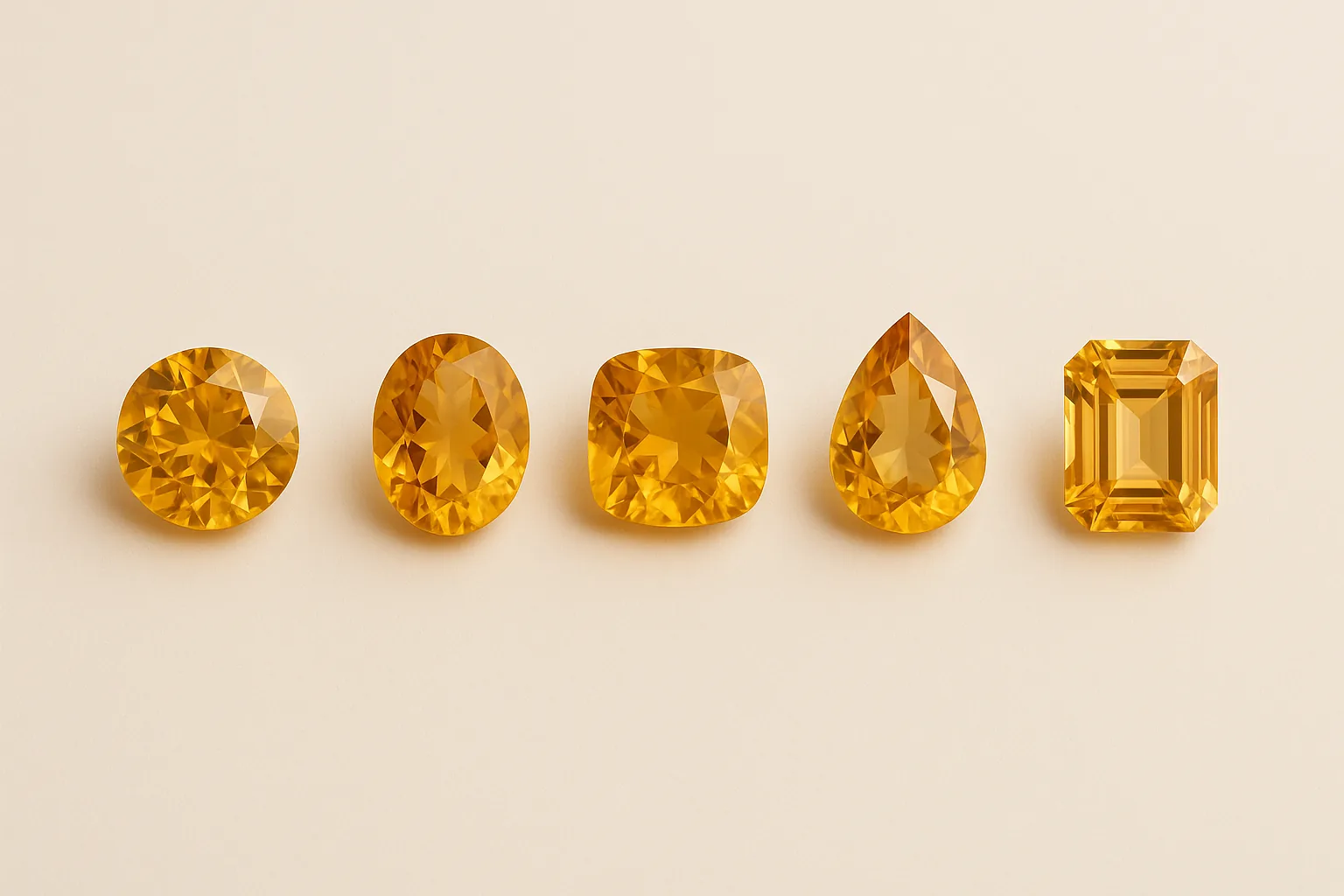
Citrine is among the least expensive transparent gems of any size. Commercial yellow is inexpensive per carat even in large sizes. Fine Madeira orange in a precision cut commands a real premium by citrine standards, and remains modest by the standards of almost anything else.
- Depth of color drives price more than anything else.
- Cut quality is the most commonly neglected factor and the easiest to check.
- Size is close to free, so let the design decide it.
- Natural rather than heated carries a premium, though not a large one.
Meaning, symbolism and the November birthstone
Citrine has long been called the merchant's stone, associated with abundance, energy and warmth, and it has carried sun symbolism in nearly every culture that has used it. It is a traditional gift for a thirteenth anniversary.
It shares November with topaz. Our November birthstone page covers both, and the birthstones by month guide has the rest of the year.
Why buy the stone loose
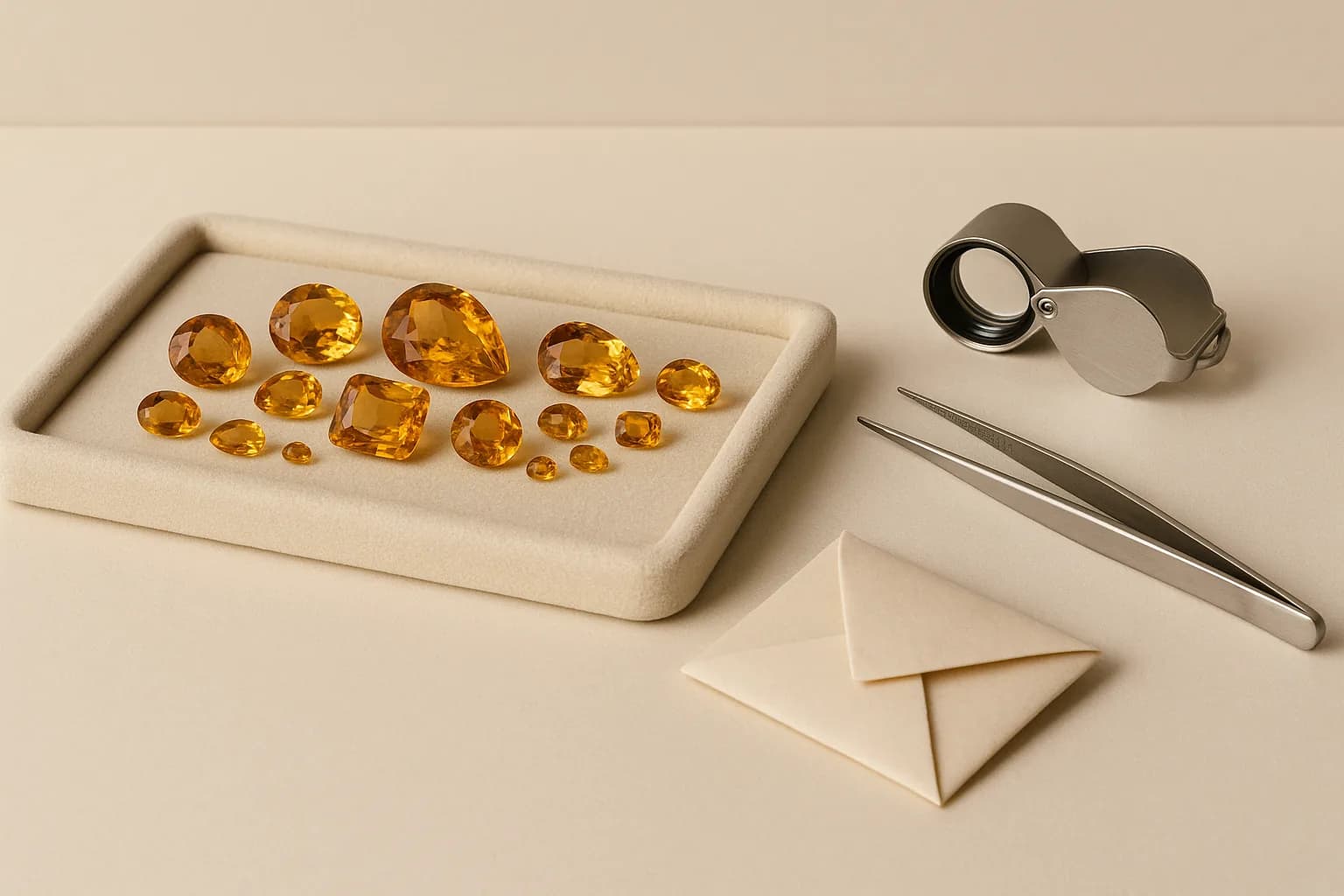
The two things that decide a citrine's quality, the depth of its color and whether the cut returns light or leaks it, are precisely the two things a finished setting obscures.
Loose, depth of color and quality of cutting stay two separate questions with two separate answers. Set, they arrive as one finished object carrying one price.
- You know about the window. A badly cut stone is a fact about the stone, not about the ring.
- You compare colors honestly. Depth measured against another stone, not against a mount.
- You choose where the money goes. Into the stone or the metal, by your decision.
- The piece is yours alone. A stone you picked, in a design built around it.
Designing around a loose citrine
Yellow gold is the natural partner and doubles the warmth, which suits the deeper Madeira shades. White metals do the more interesting thing: platinum or white gold cools the surroundings and makes a golden stone read as distinctly its own color rather than blending into the mount. Rose gold sits somewhere between and flatters the orange end.
Because large citrine is affordable, it suits designs that would be extravagant elsewhere: broad cocktail rings, long pendants, substantial earrings. See ring settings and choosing a metal, or build a piece around a stone through design your own ring (opens in new tab).
A short buying checklist
- Look at it face up and check that light returns instead of passing through.
- Judge the color under warm indoor light as well as daylight.
- Confirm it is eye-clean at normal reading distance.
- Ask whether it is natural or heated, and get the answer in writing.
- Watch for brown murkiness in stones sold as deep orange.
- Buy the size the design needs. Size is the cheap part here.
Frequently asked questions
Is most citrine really heated amethyst? Yes. The great majority of commercial citrine is amethyst heated to roughly 400 to 500 degrees Celsius, which converts the purple to yellow or orange permanently. It is still quartz and the color is stable, but you should be told, and it should be reflected in the price.
How can I tell natural citrine from heated? There are indicators rather than proofs. Heated material often shows a reddish or orange cast and may retain faint zoning from the amethyst; natural citrine leans toward lemon and is usually more even. A laboratory report is the only definitive answer, and for a stone at this price point it is rarely worth commissioning.
Is heated citrine worth less? Slightly, but the gap is smaller than people expect, because heating is standard, permanent and stable. Color and cut quality move the price far more than treatment does.
How hard is citrine? It is 7 on the Mohs scale with no cleavage, the same as all quartz. That is suitable for daily wear in any kind of jewelry, including rings.
Does citrine fade? It can shift under strong, prolonged ultraviolet exposure over years. Normal wear presents no risk. Store it away from direct sunlight and the color is stable indefinitely.
What is Madeira citrine? A trade term for a deep reddish orange, named after the fortified wine. It describes a color grade rather than an origin, and it is the most valued shade of citrine.
What is ametrine? A single crystal that is part amethyst and part citrine, cut so both colors show in one stone. Nearly all of it comes from the Anahi mine in Bolivia.
How large can citrine be cut? Very large. Clean rough is plentiful, so stones of twenty, thirty carats and beyond are practical for jewelry. Price per carat climbs gently, which makes citrine an unusually good choice for a large centerpiece.
How should I clean citrine jewelry? Warm water, mild soap and a soft brush. Avoid steam and prolonged ultrasonic cleaning, especially on stones with visible inclusions, and keep it away from harsh chemicals.
Can citrine be used in an engagement ring? Yes. At 7 on the Mohs scale with no cleavage it handles daily wear, and its low cost allows a substantial stone. Our guide to designing an engagement ring covers planning a piece around a colored center.
To see what is available, browse the loose citrine collection (opens in new tab), or start from the design and create your own ring (opens in new tab) around a stone you have chosen. If you would like a hand narrowing it down, contact us (opens in new tab) and we will help you shortlist a few.