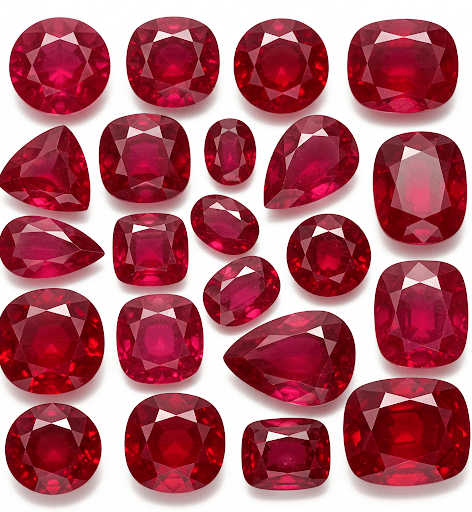
Ruby
Ruby and sapphire are the same mineral; only the color differs. Learn what makes a ruby valuable, where they are mined, and the meanings attached to them.
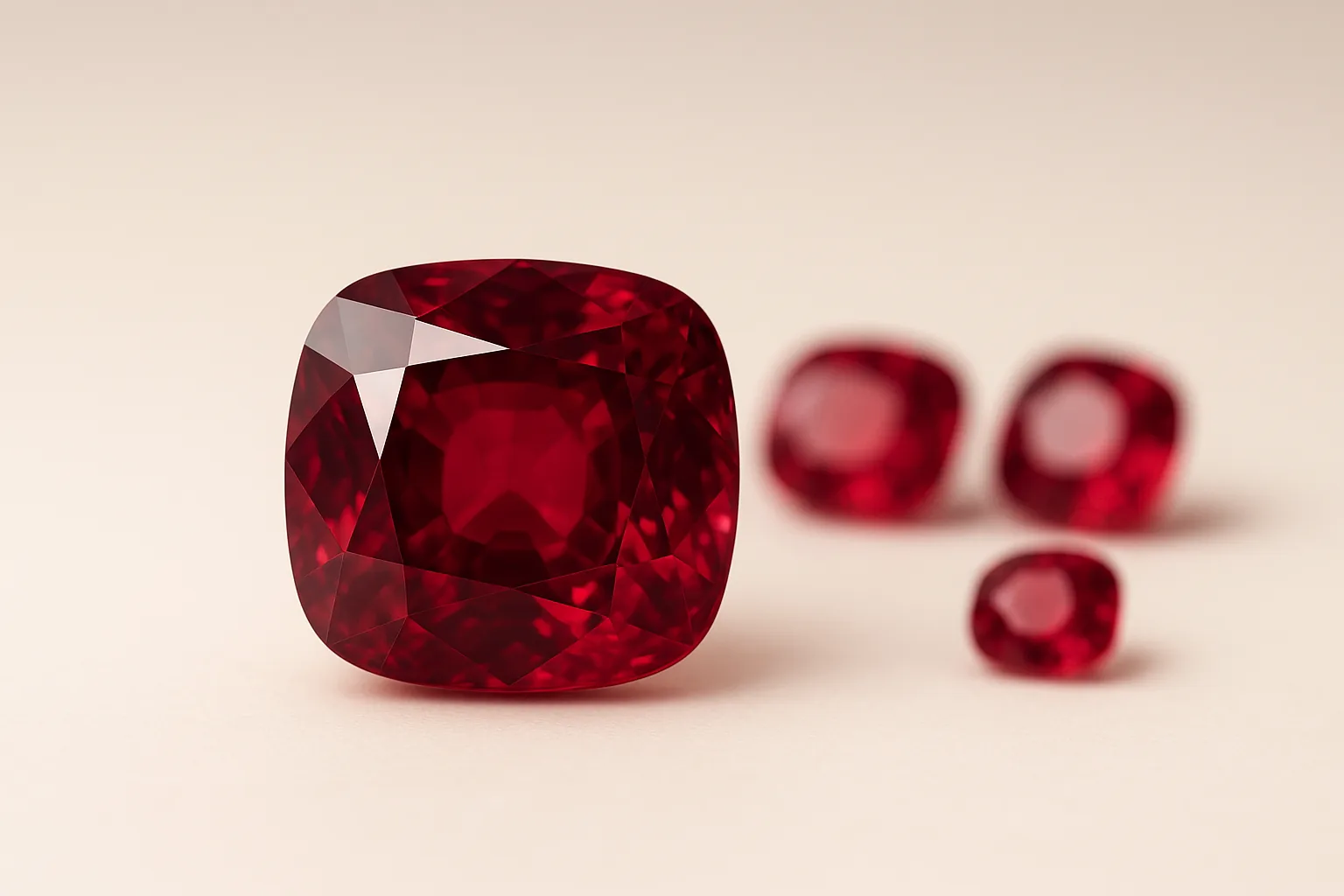
The word "ruby" comes from the Latin "rubens", which means red.
Rubies are commonly found in shades of red, from a deep, rich red through to pigeon's blood red and a pinkish red. The red hue is caused by the presence of the mineral chromium.
The ruby is the birthstone of July, and it is also accepted as a traditional gift for those celebrating a 15th or 40th anniversary.
Rubies are particularly strong stones, with a hardness of 9 on the Mohs scale. They are as durable as sapphires and only slightly softer than diamonds.
Rubies are found all over the world, including Myanmar (formerly Burma), Africa, Australia and the USA, Thailand and other locations in Asia.
The most valuable rubies are those with a full, rich red color with a slight touch of blue tones. Originally the finest rubies were extracted from Myanmar, and hence the name "Burmese ruby (opens in new tab)", which describes the highest-quality rubies.
Almost all of them will contain flaws, and those without flaws are extremely rare and reach prices higher even than diamonds of comparable weight and quality.
Thanks to their brilliant shades of red, they are sometimes associated with themes connected to the essence and vitality of life. If there is one stone that represents the passion within love, it is the ruby.
In alternative medicine it is believed that the ruby confers vigor, strength and vitality. It safeguards relationships and financial stability. It has the ability to assist with fertility.
Worth knowing: almost all natural rubies undergo treatment to improve their color and increase their durability (controlled heating). This is accepted practice in the jewelry industry and is recognized by the American Gem Trade Association.
The most sought-after ruby is the color known as "pigeon's blood", which is their deep red hue.
Frequently asked questions
What should you look for when choosing a ruby? When buying a ruby, focus first on color, then on clarity, cut and weight (carat). A rich, vivid red color gives the highest value. Origin, treatments and certificates also play an important part in the overall quality and price.
What does "natural ruby" mean? A natural ruby is a gemstone that formed naturally within the Earth, and not in a laboratory. It may be untreated (opens in new tab) or may have been heated to improve its color and clarity, but it remains a genuine ruby of natural origin, with rarity and long-term value.
Why is color the most important factor in a ruby? Color has the greatest effect on a ruby's value. A vivid, rich, saturated red ruby is the most sought after. Stones that are too dark, too light or with a brown tone are usually of lower value, even if they are large.
What are "pigeon's blood" rubies? Pigeon's blood rubies are considered to have an intense, pure red color of exceptional depth. Traditionally associated with a Burmese origin, this color grade represents the highest quality level of rubies and sometimes reaches very high prices.
Where do the finest rubies come from? High-quality rubies come from places such as Burma (Myanmar), Mozambique, Thailand and Pakistan/Sri Lanka. Origin can affect value, but the color, the clarity and the treatment status of each individual ruby matter more than the place alone.
Are rubies treated, and is heating accepted? Yes. Most natural rubies are heated to improve color and clarity. This is a standard and accepted treatment in the industry and does not significantly reduce value when it is disclosed. Rubies that have been heavily treated, or subjected to uncontrolled heating, are worth significantly less.
How durable are rubies for everyday wear in jewelry? Rubies are rated 9 on the Mohs hardness scale, which makes them very durable and suitable for everyday wear. They are an excellent choice for rings, earrings and bracelets, particularly when they are properly protected and cared for.
Are rubies suitable for engagement rings? Yes. Rubies are durable and symbolic, representing love and passion. Their hardness makes them ideal for ruby engagement rings (opens in new tab), offering a colorful alternative to diamonds while retaining strength, durability and timeless appeal.
How much are rubies worth? The value of rubies varies a great deal. Prices depend on color, clarity, size, origin and treatment. High-quality rubies can cost thousands of dollars per carat, and exceptional stones may reach even higher prices because of their rarity.
What is a "good carat" size for a ruby ring? For rings, rubies of 1–2 carats are popular and visually striking. Larger rubies are rarer and more expensive. Small rubies can also look impressive thanks to their strong color, so quality matters more than size alone.
Are rubies rarer than diamonds? Fine rubies are sometimes rarer than diamonds. Exceptional rubies with superb color and minimal treatment can be more expensive per carat than diamonds, which makes them highly sought after by collectors and buyers of fine jewelry.
Do rubies come with a certificate? It depends on the stone. Reputable sellers provide a gemological certificate confirming natural origin, authenticity and treatments. A certificate adds confidence and transparency when buying certified loose rubies (opens in new tab), especially for valuable stones or for investment. As with diamonds, buyers often find that going closer to the source - to a specialist or direct supplier rather than through several middlemen - means a wider choice of certified stones and clearer pricing when comparing one ruby with another.
Can loose rubies be used for bespoke jewelry? Yes. Buying a loose ruby (opens in new tab) allows you to create a completely bespoke piece of jewelry. From engagement rings to pendants, custom designs let you choose the setting, the metal and the style, and create a unique piece with your own gemstone.
Ruby is the birthstone for July, and the July birthstone guide covers the lore that goes with it.