July
Ruby, the reddest of the precious stones, is the birthstone of July. Learn why fine rubies outprice diamonds, and what has long been attributed to them.
The birthstone of the month of July - ruby, odem
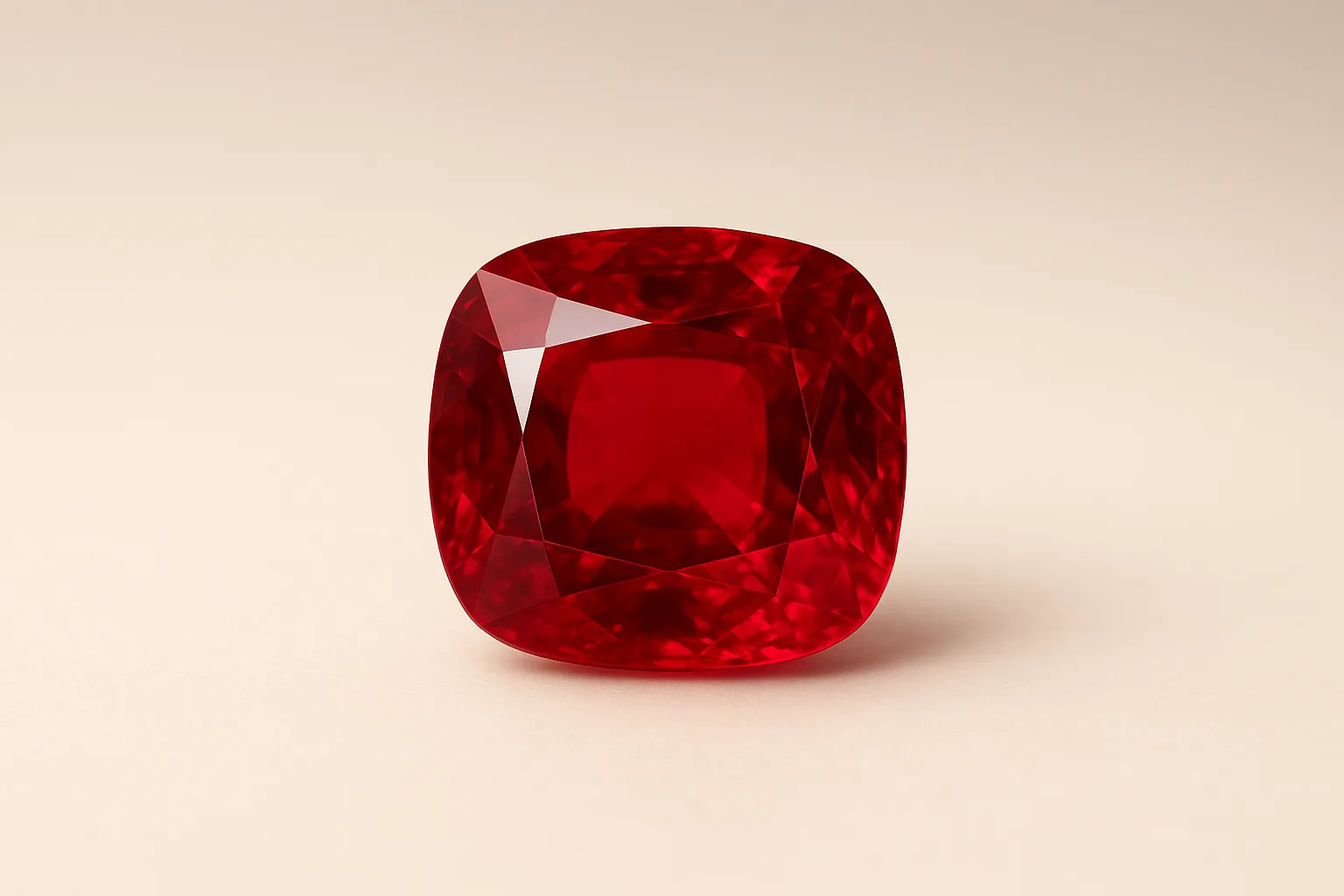
Those born in July are full of passion for life, and the ruby, known in Hebrew as odem, is the birthstone of the month of July. The ruby is the most precious of the 12 stones created by God. The ruby is distinguished by its red color. Its name comes from the Latin word rubrum, which means red.
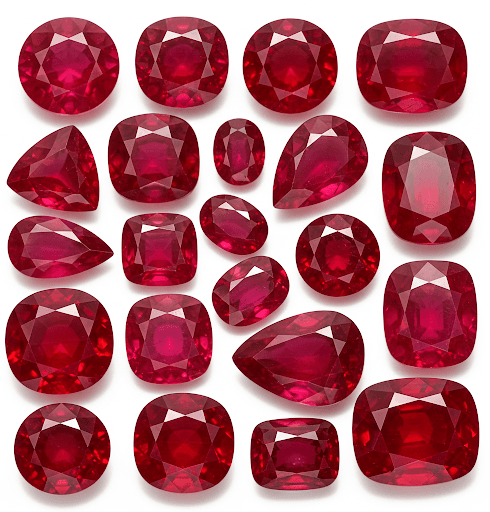
The ruby comes in several shades of red, and the redder the stone, the higher its price.
The ruby is associated with strong energy, passion and courage. It increases self-confidence and strengthens the will to succeed.
Symbolism: a stone of strength, life and eternal love. It stimulates energy and increases self-confidence. Influence: the ruby awakens passion and motivation, brings a strong energy of life and joy, and increases self-confidence.
The ruby in Judaism
"And thou shalt make a breastplate of judgement, the work of the skilful workman; like the work of the ephod thou shalt make it: of gold, of blue, and purple… And thou shalt set in it settings of stones, four rows of stones: a row of carnelian…" Exodus 28:13–17.
The ruby stone is identified with the odem stone found in the breastplate of the High Priest. There is of course no certainty that this really is the same stone, but the word points to a connection with the color red. It may in fact have been the carnelian stone and not the ruby that we mean, because according to archaeological findings it was the carnelian that was common in antiquity, not the ruby.
The connection between the word odem and the ruby stone was apparently first made in the tenth century CE, in the translation of the Bible into Latin carried out by Luca ben Costa.
In Midrash Talpiyot the name ruby appears, and it is attributed to what we today call coral.
"And this stone is called ravin and grows in the sea, and it is utterly red, and Onkelos translates it samkan, and for this reason it is called odem, because its appearance is red as blood."
Midrash Talpiyot goes on to set out the virtues of the ruby: "And its virtue is that any woman who carries it never miscarries, and it is good for a woman in difficult labor; and if it is ground and mixed into food and drink it will greatly help with pregnancy…" That is to say, it is recommended to crush the ruby and eat it, and it causes a woman to succeed in conceiving and in carrying the pregnancy.
Midrash Talpiyot also addresses the question of why the odem stone is attributed to Reuben: "And as for the odem stone being given to Reuben, it is because his face reddened in sin when he disturbed his father's bed, and he confessed." He is referring to the account in Genesis 35, verse 22.
Healing virtues attributed to the ruby
Since ancient times people have revered the ruby and believed it had magical powers. The ruby was considered to instil health, wealth and wisdom. In the Middle Ages the ruby was used in medicines. Some of the peoples of the East would insert the ruby into an incision in the skin, because they believed the stone would send higher powers of courage and resourcefulness flowing through their blood. Because of its rarity, the ruby was considered a symbol of wealth and power among rulers in the past. The Indians believed that the color of the stone radiated heat, and that if the stone were placed in water it would make the water boil.
How do you identify a genuine ruby?
Chemical and crystalline identity - the ruby and the sapphire belong to the same family, corundum, which is a crystallized oxide of aluminum. These two stones have the same chemical composition and a similar crystal form. The difference in color arises from small quantities of different coloring agents.
Despite the similar chemical composition, the ruby is a far rarer gemstone than the sapphire. A good-quality ruby can reach prices far higher than diamonds.
Hardness - the ruby is considered the second hardest stone after the diamond. The ruby's hardness has been put to use in mechanical watches. Ruby stones served as bearings for the mechanical parts of the watch because they do not wear down. Even today ruby stones are used as bearings in watches that work by a mechanical movement.
Asterism - certain polished ruby stones give a special light effect: when light strikes the ruby it is reflected and scattered in the shape of a star, and it is called a Star Ruby. When the polished ruby is turned, the reflection of the star moves with it. Four, six or even 12 rays can be reflected on the stone. In English this property is called asterism. One of the most famous ruby stones with this property is The DeLong Star Ruby, on display at the natural history museum in New York. This ruby weighs 100.32 carats, and in 1964 it was stolen from the museum and ransomed from the thieves for the sum of 25,000 dollars.
The red color of the ruby
The ruby has one color - red - but in a number of different shades. These shades have been given names. The most prestigious color is "pigeon blood". This is a term that Indian traders began to use in order to define the brilliant red color of the ruby. This definition has also been adopted by gemologists in our own day. A ruby of this color is extremely rare, even among ruby stones themselves.
Mining the ruby
The ruby is a rare gemstone and is mined in a limited number of countries - Myanmar (Burma), Thailand, Sri Lanka, India, Pakistan and Australia - and in each place it has a slightly different chemical composition. For example, rubies mined in Ceylon have a color tending towards pink. Rubies mined in Thailand have a purple or brown tone because of traces of iron. One of the principal places for ruby mining to this day is Myanmar, where rubies have been mined for thousands of years.
In Burma, in the distant past, there was a law according to which when a ruby stone larger than 6 carats was discovered it passed into the ownership of the king. Therefore, when miners found a particularly large ruby they would immediately break it into smaller stones that could be sold.
Alternative stone: red spinel, red garnet.
Choosing a July ruby
A fine ruby is among the rarest and most sought-after colored gemstones, so certification and direct comparison really matter. Buying closer to the source lets you weigh color and clarity against price; Israel Diamonds offers certified loose rubies (opens in new tab) to set in a ring of your choice.
This month belongs to two zodiac signs, Cancer up to the 22nd and Leo from then on, and the stones tradition gives those signs are not the birthstone of the month. Astrology and gemstones sets the two systems side by side.