October
October has two birthstones: opal and tourmaline. Compare their colors, everyday wear and care, then choose a thoughtful birthday gift with confidence.
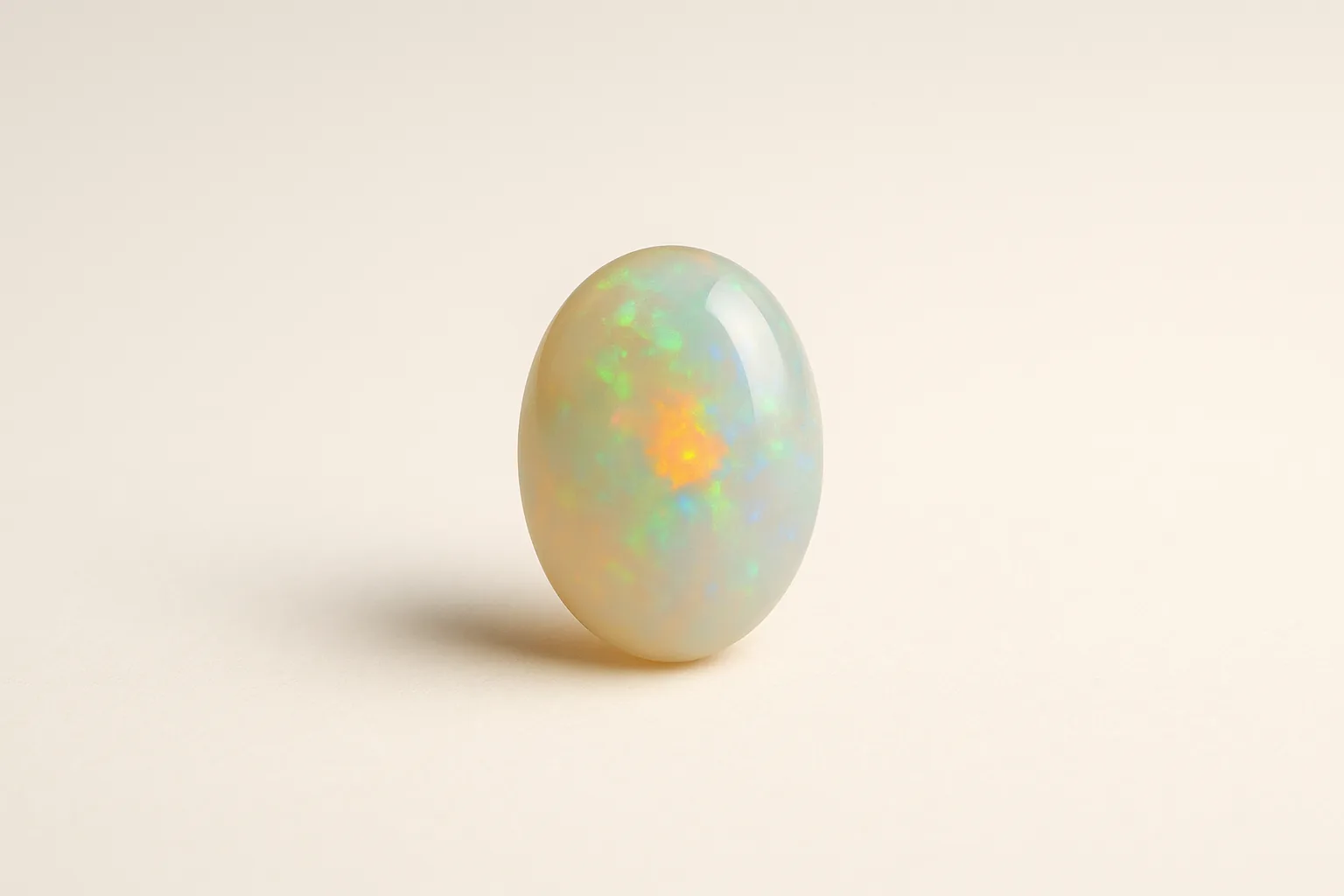
October has two birthstones: opal and tourmaline. Opal is known for shifting play-of-color, while tourmaline offers many body colors, including pink and green. Choose the stone for its appearance and the way the jewelry will be worn. The traditions below describe cultural beliefs, not demonstrated effects on health or good fortune.
The opal stone looks as though patches of the pure colors of the rainbow have been frozen within it in a wonderful natural composition.
The colors of the opal
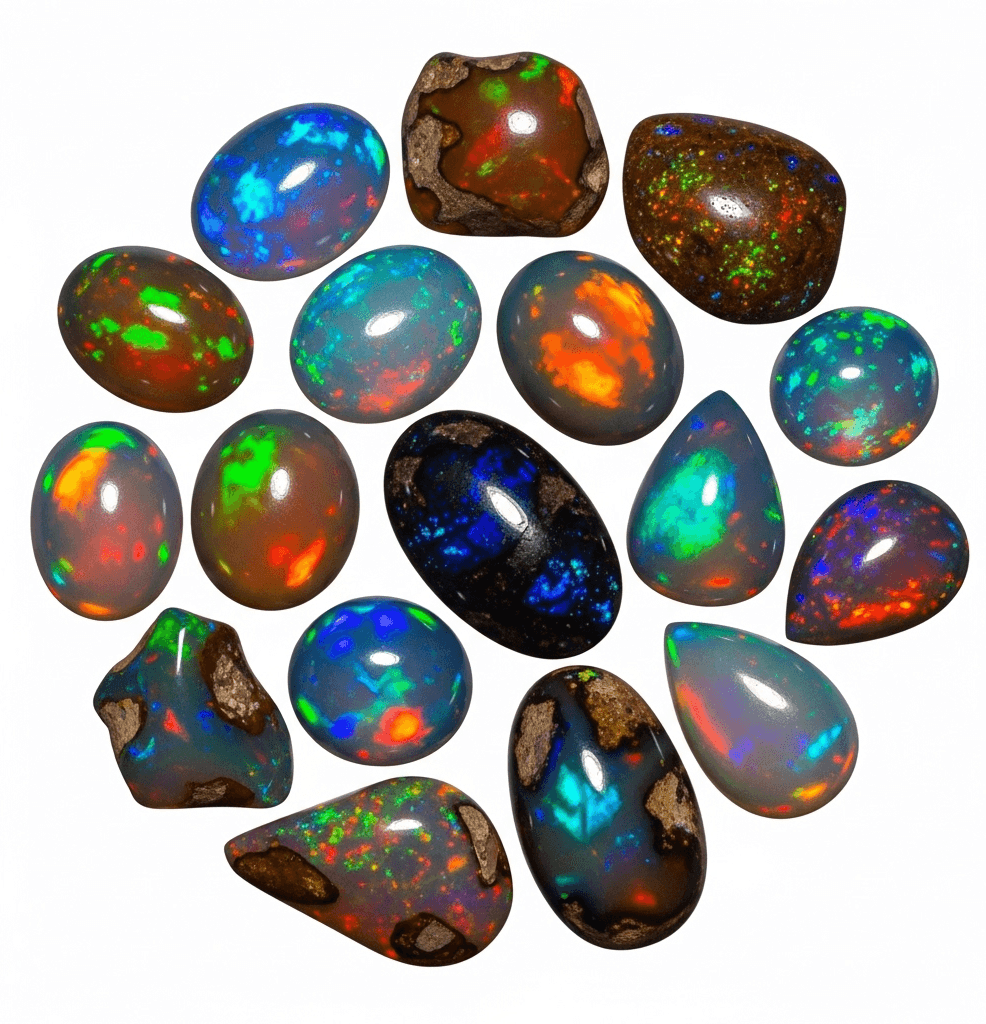
Black opal, despite its name, is not black but a stone whose dark body color is made up of deep shades of purple, green or blue, in which intense flashes of color can be seen.
The darker the stone and the more varied the play of colors within it, the rarer and more valuable it is.
The black opal is considered the most expensive opal. White opal is an opal identical in its chemical composition to the black opal, but the flashes of color in it appear against a light background. This opal usually has fewer flashes of color, because to the human eye mixed colors appear as white. The opal is more expensive and also rarer the clearer the boundaries of color within it are.
The opal in Judaism
The opal is identified with the leshem stone, one of the stones appearing in the breastplate of the High Priest. The stone was attributed to the tribe of Dan, but it is not possible today to know with certainty whether the stone they called leshem really is the opal that we know today.
"Dan upon leshem, and it is called atupsi, and upon it a human face inverted, because the tribe of Dan turned the bowl upside down and turned Leshem into a symbol in the idol of Micah. And it is written in the book of Joshua, in the division of the land, 'and they called Leshem, Dan, after the name of Dan their father', which is a city in the Land of Israel."
(The breastplate stones according to Midrash Talpiyot, the book of Rabbi Eliyahu HaKohen of the 17th–18th century who lived in Izmir, Turkey)
Properties and healing virtues of the opal
It is the chemical structure of the opal that gives it its distinctive coloring. The opal is composed of silica and water, but it is the internal structure that creates the beautiful colors. In fact the opal is composed of minute spheres of silica of uniform size, a size that can only be made out with an electron microscope - a ten-millionth of a millimeter. The spheres are arranged in fine layers one on top of another. Light striking the surfaces of the spheres is spread into the colors of the spectrum and returns to the eye as a flash of a particular light. At a different angle, the color reflected from this layer will change. It is the size of the spheres that determines the color seen from the layer. When the spheres are not equal in size, the light is spread to a different degree in each sphere, and so the color will look different from each individual sphere.
The mystical properties of the opal
Hope, faith and good fortune. The belief that whoever wears the stone will see a change in their luck - a belief arising from the shifting play of colors within the stone.
The opal is associated with creativity and imagination. It inspires and strengthens personal expression.
A stone of inner vision, creativity and intuition. The opal heightens the imagination, strengthens the connection with the emotions and encourages creativity.
Historical background of the opal
The opal stone has been known in Europe since Greek and Roman times. The source of the stone in those periods was present-day Hungary and Czechoslovakia. In England, in the time of Queen Elizabeth I, jewelry set with opal stones was widespread among the nobility.
The opal is even mentioned in Shakespeare's play "Twelfth Night". At the beginning of the 19th century the opal lost value and its price fell by more than 50%. This was because bad luck became attached to the stone's name following the publication of a story written by Sir Walter Scott in 1829.
In 1877 large opal deposits were discovered in South Australia, and these overshadowed the Hungarian production that had been common until then. Australian opal won its great fame thanks to an opal stone named The Flame Queen - a black opal stone weighing 253 carats.
Legends about the opal
At various periods there was a belief that the opal brings bad luck. This belief perhaps arose because of the stone's delicacy. Opal is difficult to work and it breaks and develops cracks quickly; it is sensitive to changes in temperature, to wear and to harsh chemicals. In the Roman period it was believed that the opal stone brings good fortune, thanks to the ability to see within it the rainbow that symbolizes hope. In medieval Europe, women with golden hair believed that wearing a necklace of opal stones would preserve the color of their hair.
October's harder-wearing alternative
Opal is beautiful but delicate and sensitive to knocks and temperature, so many people choosing an October birthstone for daily wear prefer tourmaline, its traditional alternative. Israel Diamonds offers loose tourmaline (opens in new tab) in a range of colors to set as you wish.
This month belongs to two zodiac signs, Libra up to the 22nd and Scorpio from then on, and the stones tradition gives those signs are not the birthstone of the month. Astrology and gemstones sets the two systems side by side.
Opal has a guide of its own: what play of colour is, how to spot a doublet, and what it costs.
Opal or tourmaline for an October gift?
Opal suits someone who wants changing flashes of color and can give the jewelry careful treatment. Tourmaline is more resistant to scratching, but it still needs protection from impacts and heat. For either stone, ask about treatments and cleaning before buying.