December
Turquoise, the oldest gemstone known, is December's birthstone. Learn how far back it has been mined, why it is fragile, and what cultures have made of it.
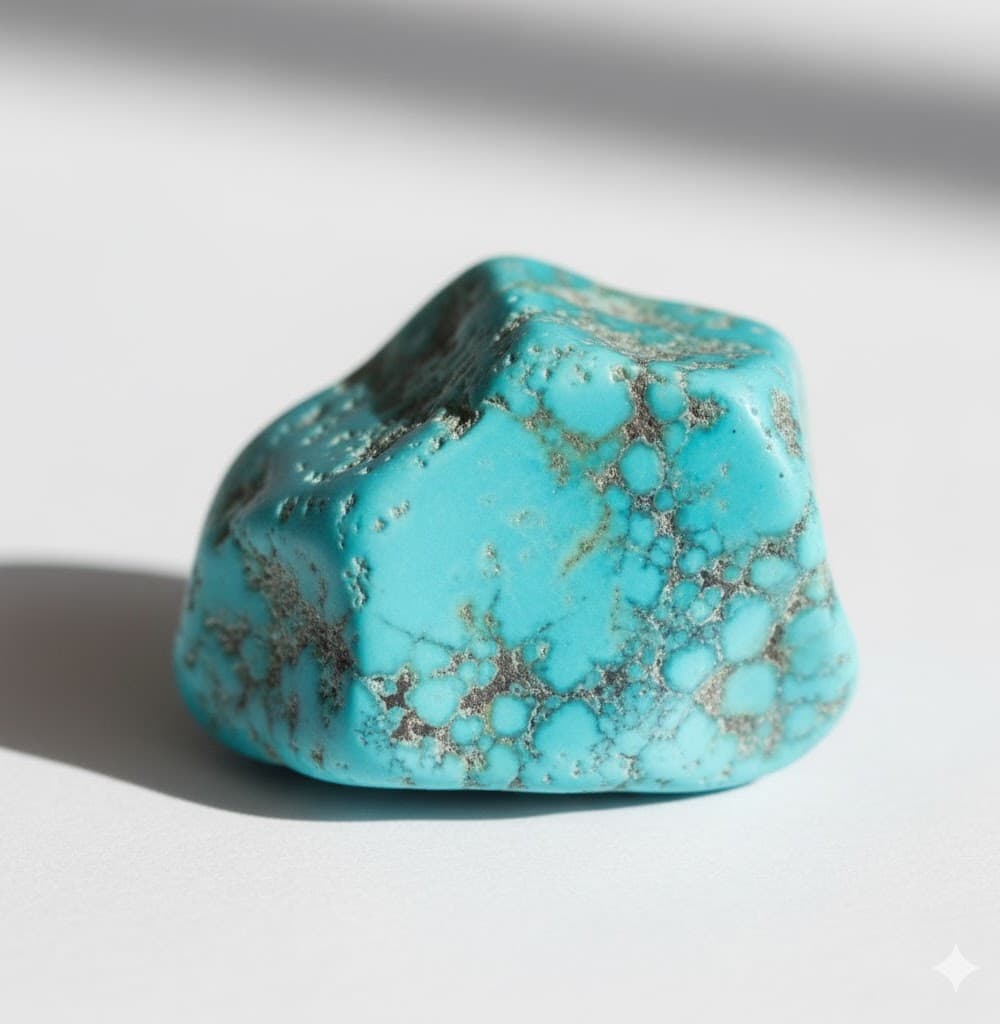
Turquoise is the birthstone of the month of December. It is the most ancient gemstone in the world.
Turquoise stones have been found in archaeological excavations from the Neolithic period - some 8,000 years ago.
The stone is distinguished by its blue color, and is particularly sensitive to chemicals.
The origin of the name turquoise
The turquoise stone was brought to Europe from Persia by way of Turkey. Europeans, who mistakenly thought that turquoise originated in Turkey, called the stone "Turkish". The stone's name was changed by the French to "turquoise", and that is the stone's name to this day.
Properties and healing virtues of turquoise
In ancient Persia it was believed that the blue stone helped to overcome the influence of the "evil eye". The Persians used to weave turquoise stones into the manes or tails of their horses and camels, so that they would protect them. In Europe it was customary to give rings set with turquoise as a "forget-me-not" gift. It was also believed that the stone had a property that prevented injuries and broken bones.
Mining the turquoise stone
Turquoise is easy to mine and is found in veins close to the surface. Turquoise is found mainly in dry regions and in deserts. The mining areas in the world today: Iran; the United States - Texas, New Mexico, Colorado, Arizona, California; Tibet and China.
Polishing turquoise is complicated. The stone is difficult to polish and to work, since it is naturally porous. The ancient Persians found a way to work the stone by traditional methods which are used to work it to this day. Turquoise is also sensitive to chemicals and should be cleaned only with warm soapy water.
History of turquoise
The turquoise stone is the most ancient gemstone known in the world. Turquoise stones have been found in archaeological excavations from the Neolithic period - about 8,000 years before our time. Turquoise can be found in various cultures from ancient Egypt, through Persia (today's Iran), to South America.
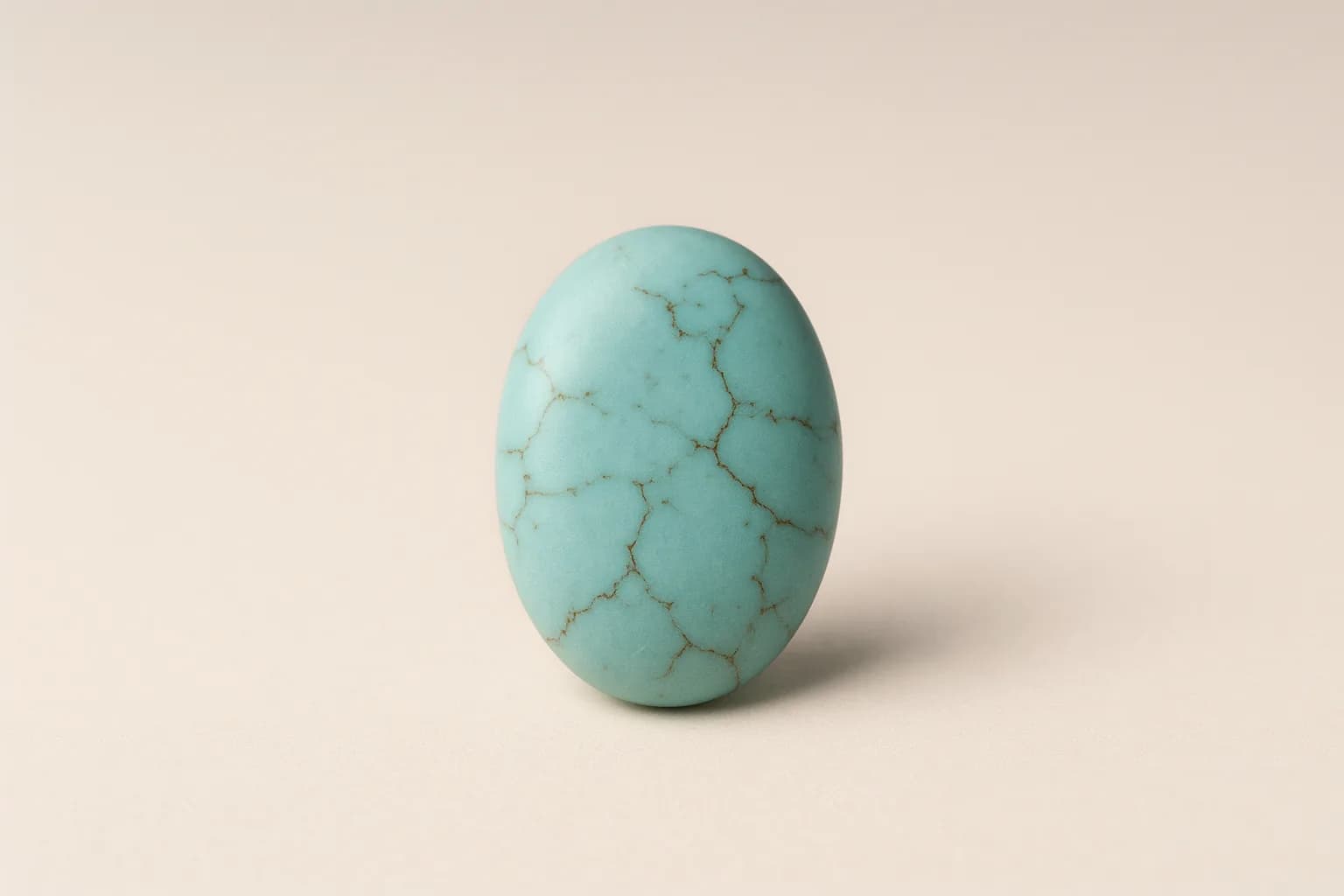
The color is azure or greenish, light to dark. Sometimes gray-brown or black patches appear on it. Smooth turquoise stones with uniform texture and color are rare and quite expensive. In various cultures it was widely used for making amulets. It is considered the national stone of Iran.
Jewelry set with turquoise stones has been found in the tombs of the pharaohs in Egypt. The turquoise stone was found in the rocks of the Sinai desert, and the ancient Egyptians had mines there as long as 6,000 years ago. The ancient Egyptians also used to crush turquoise into a powder, which they used as eye make-up.
In the Aztec culture, which ruled Mexico in the 15th and 16th centuries, ritual objects for the gods were decorated with turquoise stones.
In Europe there was a flourishing and great demand for jewelry set with turquoise in the second half of the 19th century, with the opening of the Suez Canal and the success enjoyed by the play 'Cleopatra', which brought turquoise stones into fashion.
Turquoise helps to protect the soul, increases the sense of tranquillity and strengthens the immune system. The influence of the turquoise stone is particularly strong on the emotions. It gives immediate help to those whose emotions are wounded or unbalanced; it connects the person using it with their capacity to contribute to others and to humanity; it suits those who feel they have nothing to contribute and who consequently keep themselves in the background. This is the best stone for raising emotional intelligence. It echoes the fact that we are all one, and that when a person does good to others they do good to themselves as well.
On the physical side it strengthens and increases life energy and thereby has an indirect influence, mainly on the nervous system. Turquoise is good for the physical and energetic balance of the lungs - it eases breathing and suits those suffering from asthma. It is generally good for treating animals; domesticated animals in particular connect with it.
Alternative stones: tanzanite, blue zircon.
The December birthstone in jewelry
Turquoise has adorned jewelry for thousands of years and remains a distinctive December birthstone, though its softness and porosity call for gentle wear. To read more about the stones linked to each month, see Israel Diamonds' guide to birthstones (opens in new tab).
This month belongs to two zodiac signs, Sagittarius up to the 21st and Capricorn from then on, and the stones tradition gives those signs are not the birthstone of the month. Astrology and gemstones sets the two systems side by side.
Each of the three December stones has its own guide: tanzanite, turquoise and zircon, with the treatments, the prices and the care each one needs.