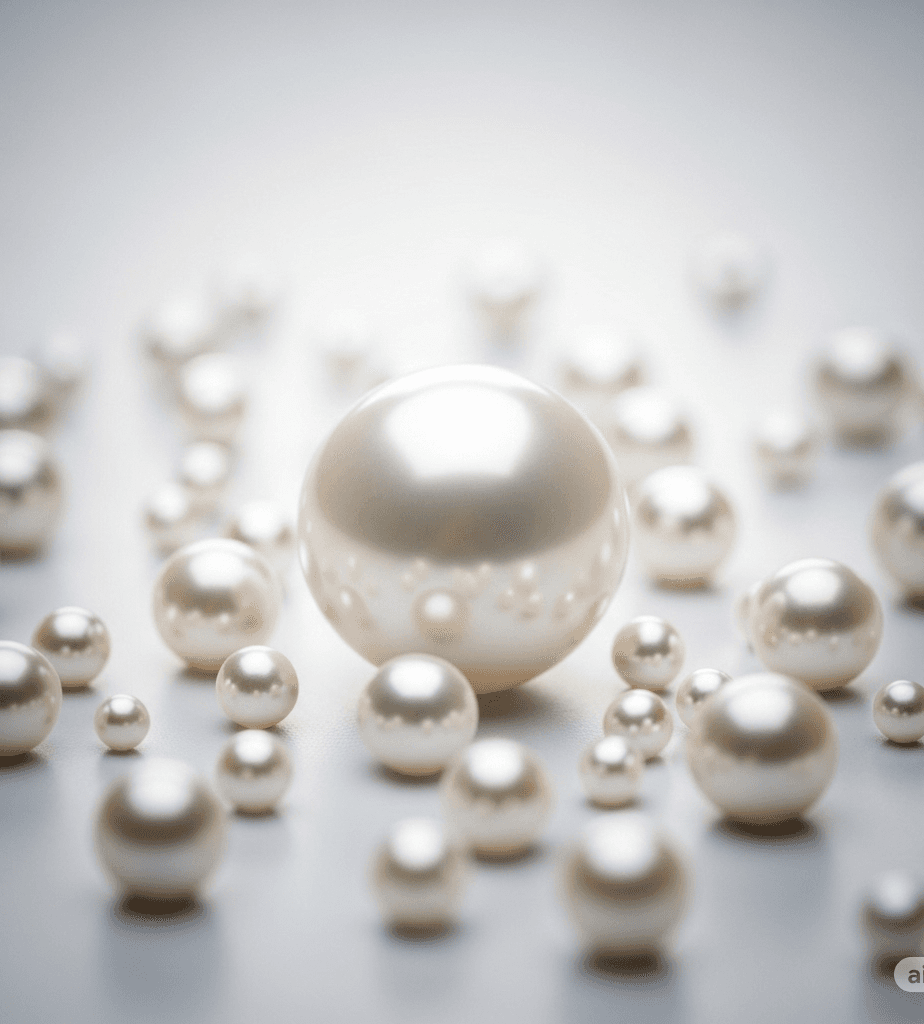
June
The pearl is June's birthstone and the only gem grown by a living creature. Learn how pearls are judged for luster, shape and color, and how to keep them.
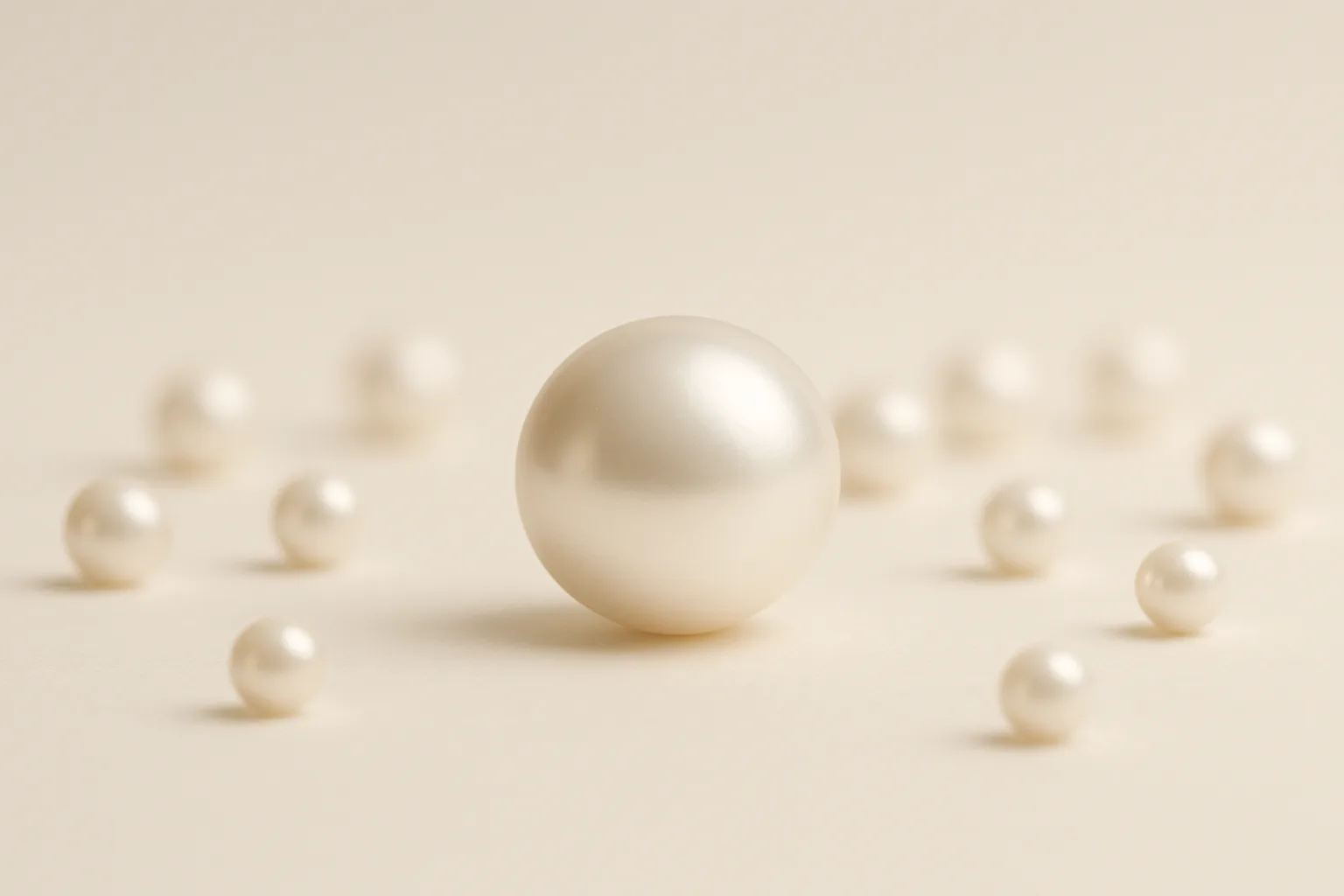
The birthstone of the month of June - the pearl
Those born in June are especially wise. The birthstone of those born in June is the pearl, the most beloved of all time. Proverbs 8:11: "For wisdom is better than pearls, and all things desirable are not to be compared unto her."
Pearls symbolize purity and innocence. They convey softness and bring harmony.
Symbolism: a stone of spiritual wholeness and innocence. It strengthens the connection with the inner self.
Influence: pearls increase a sense of tranquillity and calm, and help in understanding and coping with emotions.
Colors: pearls come in shades of white, cream, pink and even black.
Natural, cultured and artificial pearls
Natural pearls are expensive and rare, both because of the risk involved in harvesting them and because of environmental and climatic changes which mean that fewer pearls form inside oysters. Today such fine pearls can be seen in the jewelry of royal houses. Trade in them today takes place mainly among collectors.
The earliest evidence of cultured pearls comes from 12th-century China.
The cultured pearls we know today are the result of research carried out in Japan in the late 19th and early 20th centuries. The researchers Mise and Nishikawa developed a method for creating round pearls. The entrepreneur Kokichi Mikimoto patented the process, and the first harvest of cultured pearls by this method was produced in 1916.
The pearls are grown by adopting methods of marine farming. The oyster's shell is opened carefully but forcefully, and a piece from the shell of another oyster is inserted into it together with part of the oyster's mantle. The oyster is left under water for two to three years until the pearl forms. Pearls are grown both in fresh water and in salt water, and there is no difference between them.
Today it is customary to use cultured pearls, whose main centers of production are China, Japan, Tahiti and Australia.
Artificial pearls are beads of glass or plastic manufactured in factories, imitating the color and shape of pearls. Such imitations were made as far back as the Renaissance and were called Majorca pearls. These were created by coating glass beads with powdered fish scales.
The qualities and value of pearls
Pearls, like diamonds, are sorted for quality and value according to five variables:
Size - the larger the pearl, the harder it is to grow and therefore the rarer it is.
Luster - the more lustrous the pearl, the higher its quality is considered, since luster is a sign of a good structure in the coating.
Shape - the rounder the pearl's shape, the more expensive it is, since it is rare to find completely round pearls and demand for them is high.
Color - color is a factor affecting the price of the pearl. The sought-after color varies from country to country and is also dictated by the demands of fashion.
Cleanliness - the smoother and more flawless the surface of the pearl, the more its value rises.
The pearl in Judaism
The pearl is mentioned in the Bible several times:
In the book of Proverbs 31:10, "A woman of valor who can find? For her price is far above pearls" - here there is a comparison between a woman of quality and a rare pearl.
In Proverbs 8:11, "For wisdom is better than pearls, and all things desirable are not to be compared unto her" - here too there is a comparison between wisdom and the finest gemstone, which is the pearl.
In the Scroll of Esther the "dar" appears, the inner coating of the oyster that produces pearls. The dar appears in the description of the palace of Ahasuerus. "There were hangings of white, fine cotton, and blue, bordered with cords of fine linen and purple, upon silver rods and pillars of marble; the couches were of gold and silver, upon a pavement of green, and white, and shell, and onyx marble" - Esther 1:6.
In the book of Samuel I, chapter 1, verse 2, we are told of Elkanah who had two wives, Hannah and Peninnah. That is to say, the name of the gemstone was also used as a given name.
Properties and healing virtues attributed to the pearl
The qualities attributed to the pearl are vitality, beauty, innocence, wisdom and integrity.
The healing virtues of pearls are associated with the stomach and the digestive system, as well as with the immune system and with mental stress. It is said that King Henry VIII of England used powdered pearls to heal wounds.
Historical background on pearls
No one knows for certain who were the first people to begin gathering pearls and wearing them, but it is known that the pearl was the favored gemstone of kings and nobility for many years.
In antiquity, finding pearls in the sea was difficult and was done by diving deep and harvesting the oysters, and so only members of the nobility and kings could afford to wear pearls; they therefore symbolized wealth and nobility.
It is known that in the days of the Roman emperor Julius Caesar, only women of the nobility wore pearls.
In 2008, a gold earring set with a pearl and an emerald from the Roman period was found in excavations in Jerusalem. The earring was preserved intact in astonishing condition and looks fashionable and contemporary, as though it had been made in our own day.
In the Renaissance period it was customary to weave pearls as an ornament into women's hair. According to Marco Polo, the kings of Malabar wore a necklace containing 108 rubies and 108 pearls, which was passed down as an inheritance through generations of kings.
In Japan, powdered pearl was used as make-up for geishas.
Legends about pearls
For many years it was not known how a pearl is formed, and there was a belief that the pearls in the sea were the tears of the angels over the sins of humankind, which had fallen into the depths of the sea. In one of the descriptions of paradise in the Koran it is said that the fruits of the trees are pearls and smaragd, and that everyone who enters the gates of the heavenly kingdom receives a tent of pearls.
In Indian mythology it is said that the god Vishnu drew the first pearl from the depths of the ocean and gave it to his daughter Pandaia on her wedding day.
Storing and caring for pearls
It is advisable to store pearls in a cloth or silk pouch and to take care to avoid contact with sharp metal or gemstones that could cause scratches.
Alternative stone - moonstone, alexandrite, agate
The June birthstone in jewelry
Pearls remain a classic, understated choice for a June birthstone, whether strung as a necklace or set in a ring. If you would like to read more about the stones assigned to each month, Israel Diamonds keeps a guide to birthstones (opens in new tab).
This month belongs to two zodiac signs, Gemini up to the 20th and Cancer from then on, and the stones tradition gives those signs are not the birthstone of the month. Astrology and gemstones sets the two systems side by side.
Each of the three June stones has its own guide: pearl, alexandrite and moonstone, covering how to judge one and what it costs.