January
Garnet, the deep red stone named for the pomegranate, is the birthstone of January. Learn its colors, its history and the qualities long attributed to it.
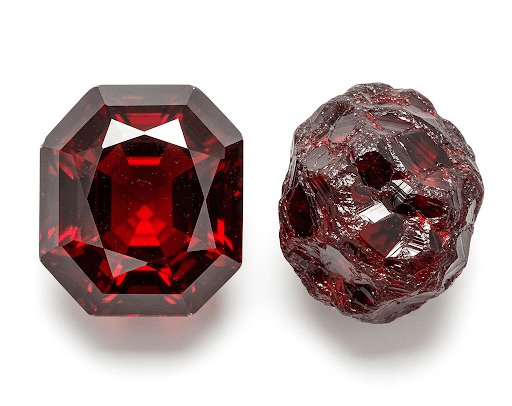
The red gemstone garnet, known in Hebrew as nofech, whose color recalls pomegranate seeds - and hence the origin of its name, in the Latin word describing pomegranate seeds.
The garnet in Judaism
Some hold that the garnet is the "nofech" stone mentioned as one of the stones of the breastplate, but according to another view it is in fact the "bareket" set in the breastplate that is the garnet. This is because the garnet stone appears in two principal colors, green and red. According to Midrash Talpiyot, the book of Rabbi Eliyahu HaKohen of the 17th–18th century who lived in Izmir, Turkey, the garnet is the stone found in the breastplate of the High Priest, and he attributes healing properties to the stones: "It will help against deadly poisons - eight barley grains, well crushed - it will save the sick from death. If hung about the neck or bound in a ring it guards a person from the falling sickness. It is good for the memory and for the eyes and good for becoming rich, and it teaches a person to speak with wisdom and to understand hidden riddles, and it will almost bring a person to prophecy."
Properties and healing virtues attributed to the garnet - it symbolizes perseverance and strength, and is known as the "stone of commitment", which strengthens commitment and devotion towards a particular goal.
The Egyptians believed the stone was a symbol of life, while in the Middle Ages it was used as a remedy for treating illnesses. In India and Persia it was considered an amulet worn by warriors against poisoning, plague and lightning strike.
Some held that the likeness of a lion carved into a garnet stone would preserve health and protect against misfortunes on the roads. Because of its reddish tone, some believed the stone would heal bleeding and even stimulate the circulation of the blood in the body.
According to crystal lore, the garnet is effective for healing poisonings, depression and an underactive thyroid gland, and it has the ability to awaken awareness of emotional intentions and to encourage inhibited sexuality. Also, according to this lore, the garnet is effective in treating back and neck pain.
Historical background to the garnet
- In the third century BCE the Greeks used to set garnet stones, which were wider than their fingers, into massive gold rings.
- On statues of the goddess Isis in Egypt, the goddess of fertility and nature in the Egyptian pantheon, garnet stones were set into the goddess's girdle. They symbolized her power.
- The Romans used to carve figures in garnet, and in the 18th century garnets were set into hoop earrings. In the Victorian period, garnet stones were set into brooches and bracelets.
- Certain Asian tribes used garnets as bullets for their weapons, since they held that a stone as red as blood would cause a more serious wound than a lead bullet.
Legends about the garnet
A fine garnet stone glows like a flame of fire. According to legend, Noah lit the ark with the help of garnet stones.
Alternative stone - rhodolite
Choosing a garnet today
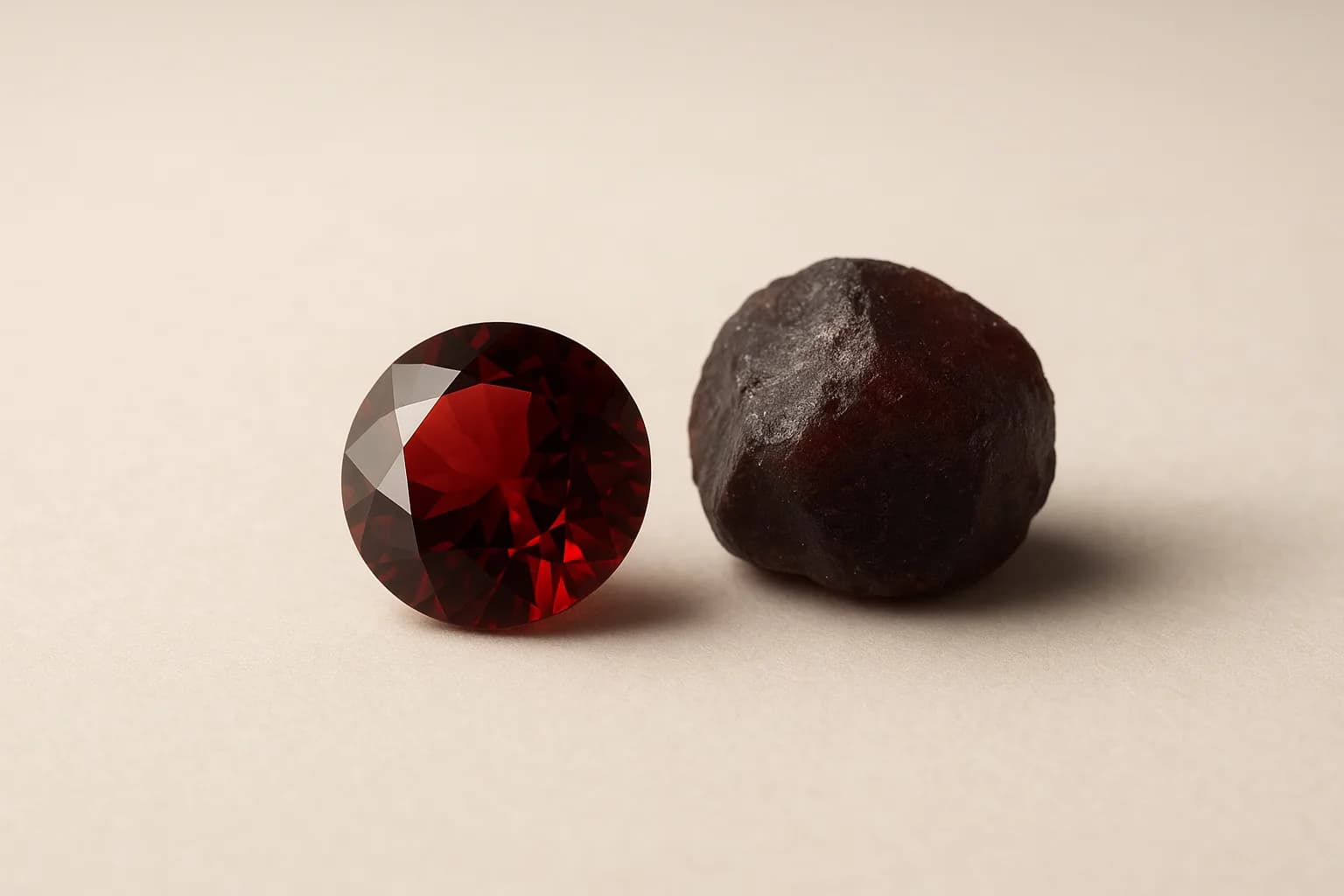
Beyond its history and symbolism, the garnet remains one of the warmest and most affordable red gemstones for a ring or pendant. If you are looking for a January birthstone, buying from a direct gemstone supplier lets you weigh color, clarity and size across certified stones before you decide. Israel Diamonds, for example, offers loose garnets (opens in new tab) you can set to your own design.
This month belongs to two zodiac signs, Capricorn up to the 19th and Aquarius from then on, and the stones tradition gives those signs are not the birthstone of the month. Astrology and gemstones sets the two systems side by side.
Garnet is not only red. Two green garnets have guides of their own: tsavorite, the tough one, and demantoid, the one with more fire than diamond.