Choosing a Design
Solitaire, halo, three-stone or vintage: compare the main ring designs, learn every part of a ring by name, and narrow the field to the one you want.
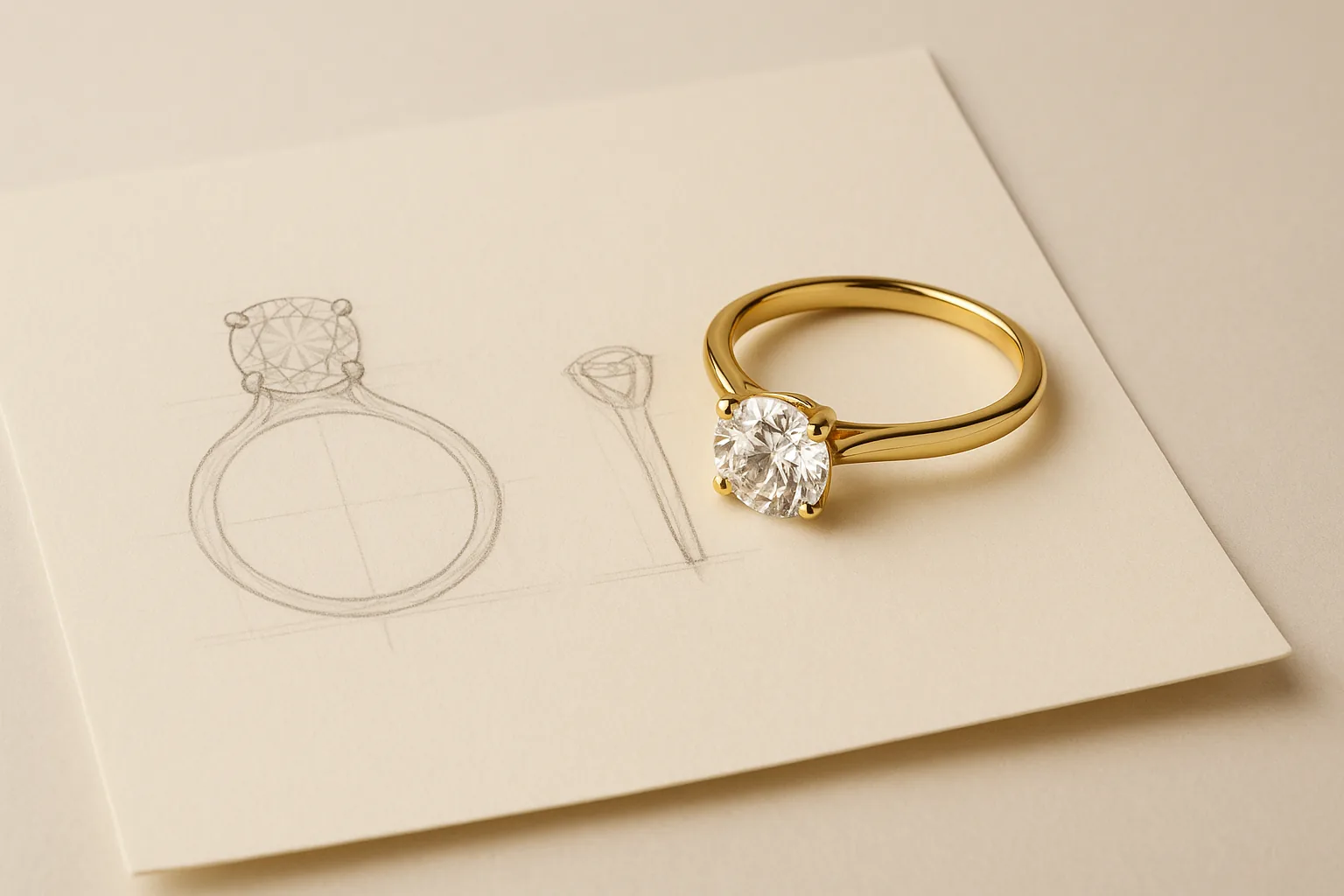
Choosing a diamond ring is one of the most exciting moments in life, the joy of creating something unique… but it is also not a simple decision, because there are so many different styles, designs and settings, each of which can convey different feelings and messages. It is not easy to choose from the wide range of options, so it is important that you understand your personal preferences and your needs; that way you can plan the design to suit your character, the character of the relationship, and your personal tastes.
Different designs for diamond rings
The most striking and successful rings are those that suit not only the wearer's personal taste, but also their lifestyle and their expectations of the relationship. We will give you a brief overview of the options across several main designs you can choose from, each with its own distinctive character - and we would add that you can always "invent" a design, and the professionals in the field can turn your dream into reality:
- Solitaire ring (opens in new tab): this is a simple but classic and very elegant design, in which the central diamond is the only stone in the ring. It is a clean, popular design, suited to anyone looking for a ring that will stand the test of time and that gives the central diamond all of the attention.
- Three-stone ring (Three Stone): a design with strong symbolic meaning, representing the journey of the relationship. Characteristics: a large central stone with two smaller stones beside it. What sets it apart: together the stones symbolize the couple's "past, present and future".
- Ring with side stones (opens in new tab): here, alongside the central diamond, there are several stones smaller than the central diamond, which help to emphasize it and give the ring a rich, impressive look. Choosing side stones gives the ring extra brilliance and allows you to play with the colors and types of the stones.
- Ring with a halo setting (opens in new tab): a design in which the central diamond is surrounded by stones (usually smaller diamonds), creating a "halo" effect that emphasizes the central stone and adds brilliance and "size". It is a popular choice: the design amplifies the central stone and adds a great deal of sparkle and brilliance.
- Geometric or modern design: here every detail of the ring is calculated with care, with geometric shapes and clean, innovative lines. These are bolder designs, which can also incorporate colored stones and unusual elements - a split shank, for example, a pavé setting (Pavé), a half-circle setting, or a ring with a "path" in which the side stones are arranged as a trail leading to the central diamond.
- Vintage design (Vintage): rings with an antique, distinctive character, influenced by historical periods such as the Victorian era or the Art Deco style. Characteristics: a combination of special engraving, delicate filigree work, small side stones and geometric setting shapes.
The parts of the ring
It helps to know what the pieces are called before you talk to a jeweler, because a design brief is mostly a conversation about these parts.
- Head: the whole assembly that sits above the band and holds the center stone: the prongs, the basket beneath them and the rail that ties them together. It is made separately and soldered to the shank, which is why the setting can often be changed without rebuilding the ring.
- Prongs: the slender metal claws that grip the stone and fold over its edge. Four give a squarer outline and leave more of the stone visible; six hold more securely and suit larger stones. These wear down over the years, so they are worth checking periodically.
- Center stone: the main diamond, the stone the whole design is built around. Its shape and size dictate the head, and usually the budget as well.
- Side stones: the smaller stones set on either side of the center stone. They add brilliance, make the central stone read larger, and are a relatively inexpensive way to give the ring presence.
- Bridge: the arch on the underside of the head, spanning the gap between the shoulders and sitting against the finger. Its height determines how high the stone sits, and an open bridge lets light in from beneath.
- Shoulders: the parts of the band that rise from the sides toward the head. This is where pavé or channel-set stones usually go, and how sharply they taper largely determines whether the ring reads as delicate or substantial.
- Shank: the band itself, the part that circles the finger. Its width and profile - flat, rounded or knife-edge - affect both the look of the ring and how it feels to wear every day.
- Base of the shank: the bottom of the band, opposite the stone. It takes the most wear and can thin over the years. It is also where the ring is cut and rejoined when it needs resizing.
How the stone is actually fixed into the metal is a decision of its own, and it changes both how the ring reads and how well it survives daily wear. Setting types compares the ten main methods side by side.
Whichever style appeals to you, it helps to see it set in metal before deciding. Buyers who want more control often prefer to work closer to the source, building the ring around a certified center stone with a direct supplier rather than through several intermediaries, which tends to mean clearer pricing and a wider choice. Israel Diamonds, for example, lets you design your own ring (opens in new tab) from the stone up.