Aquamarine
Depth of blue decides most of the price, and cut orientation decides whether you see it. A buying guide to loose aquamarine, with size and price advice.
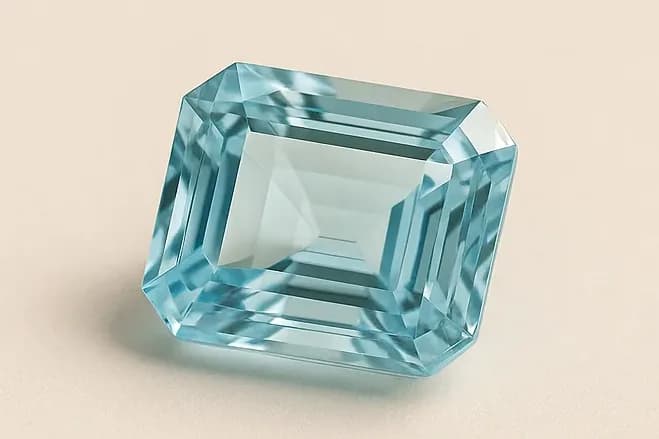
Aquamarine is beryl, which makes it emerald's sibling: the same mineral, coloured by iron instead of chromium, and with a completely different temperament. Where emerald is scarce, included and fragile, aquamarine is plentiful, clean and tough. The two stones sit at opposite ends of what one mineral can be.
That combination is unusual and it is the reason to buy aquamarine loose. Clean crystals of real size come out of the ground often enough that you can hold out for the exact blue you want, at a size that would be fantasy in most other gems, and still have a stone hard enough to wear every day.
This page covers what makes one aquamarine worth several times another, the heat treatment behind nearly every stone on the market, and how to choose one before you commit to a setting.
The colors of aquamarine
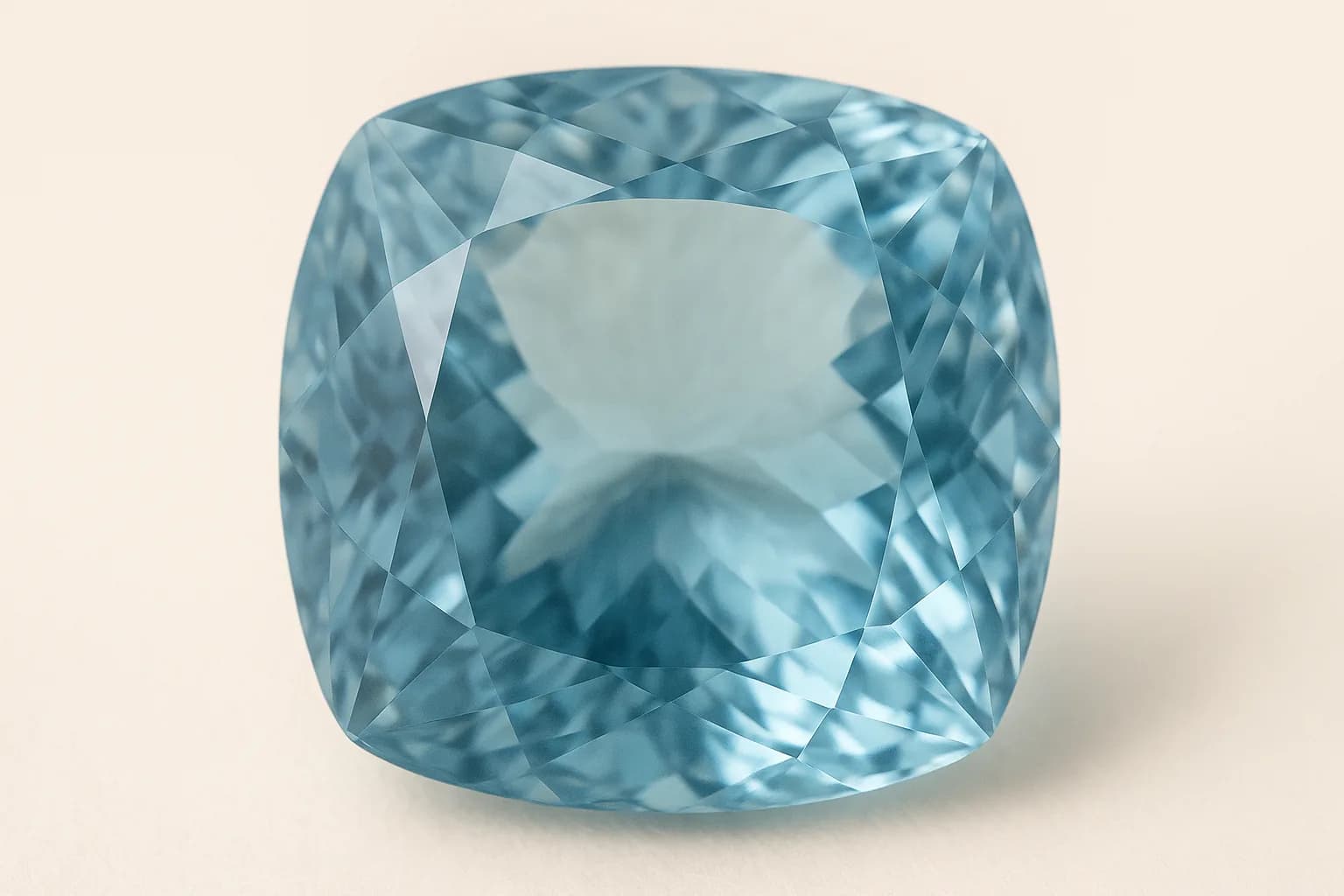
The range runs from a pale, almost colorless sky blue through to a deep saturated blue with a hint of green. Iron produces the color, and it does so in two ways: one form of iron gives blue, another gives yellow, and the yellow is what pulls a stone toward green. Removing it is the whole point of the standard treatment.
Most aquamarine is light. That is simply what the earth produces, and it is why depth of color is the single biggest lever on price.
- Pale sky blue. The most common material, delicate and inexpensive, and lovely in larger sizes where the color accumulates.
- Medium blue. The commercial sweet spot, clearly blue at a glance without a premium for saturation.
- Deep blue, often called Santa Maria. Strongly saturated, named for the Santa Maria de Itabira mine in Brazil. Now a color grade in trade use; Mozambique material of similar depth is sold as Santa Maria Africana.
- Greenish blue. Untreated stones frequently show it, and a growing number of buyers now prefer that natural sea color to the purified blue.
Where aquamarine is mined
Brazil is the historic source and still the reference, with Minas Gerais producing the material that gave the trade its color names. Africa now supplies a great deal of the market: Mozambique, Nigeria, Zambia and Madagascar all produce fine stones, and Mozambican material in particular can match the best Brazilian blues.
Pakistan and Afghanistan produce crystals prized by collectors for their form as much as their color. As with any colored stone, origin is a useful piece of context rather than a grade. The stone in front of you is the evidence.
Hardness and everyday durability
Aquamarine is 7.5 to 8 on the Mohs scale, harder than quartz and harder than most colored stones you will meet outside the corundum family. It is a genuinely practical choice for a ring worn daily, which is not something that can be said of its sibling emerald.
It does have cleavage, though only in one direction and described as imperfect, so a sharp blow on the wrong plane can damage it. In practice this is a minor consideration: the stone is stable, it is not sensitive to light, and it takes ordinary wear well. Protect the girdle in a setting and it will outlast you.
Treatment, and why almost every stone is heated
Nearly all aquamarine on the market has been gently heated, to around 400 degrees Celsius, to drive off the yellow component of its color and leave a purer blue. This is a permanent, stable change that no laboratory can reverse and that requires no special care. It is so routine that it is generally assumed rather than disclosed as remarkable.
There is nothing to be uneasy about here, but two things are worth knowing. First, ask anyway and get the answer in writing. Second, if you like the greener natural color, say so: untreated greenish blue stones exist, they are increasingly fashionable, and they are often cheaper because the trade has spent a century treating that color away.
What separates a good aquamarine from a great one
As with any colored stone, color carries most of the value. The difference here is that clarity is not the compromise it is elsewhere, so you can hold out for both.
Color
Depth of blue is everything. A stone two shades deeper can cost several times one that is merely pretty, and the gap widens fast at the top. Look at the stone face up in daylight and again under a lamp, and be honest about whether the blue survives or drains away.
Aquamarine is also strongly pleochroic, which means it shows different colors down different crystal axes, blue one way and near colorless another. A good cutter orients the rough so the best blue faces up. A careless one does not, and no setting will fix it.
Clarity
Fine aquamarine should be eye-clean, and enough clean material exists that you should not accept less. Visible inclusions in this stone are a reason to negotiate or walk away, not a character feature. Our page on diamond clarity explains the grading vocabulary, which the colored stone trade borrows loosely.
Cut
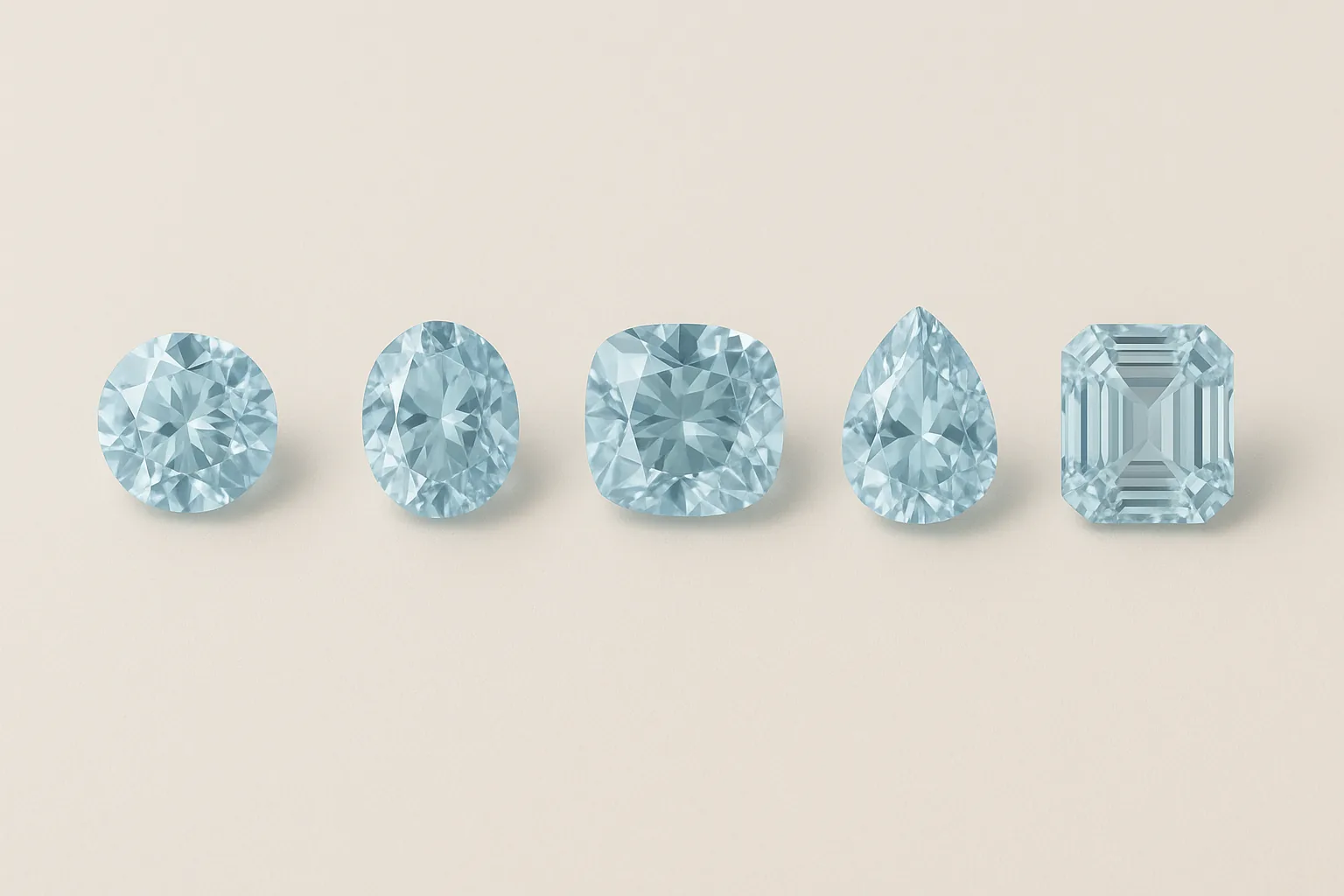
The emerald cut is traditional here and for good reason: long straight facets suit the crystal's natural shape, waste less of it, and show off clarity. Ovals and pears are common. Whatever the shape, watch for windowing in pale stones, where light passes through instead of returning and the center looks empty.
Carat weight
Large clean aquamarine is genuinely obtainable, and price per carat climbs gently rather than steeply. A ten or twenty carat stone is a practical centerpiece. Bear in mind that color deepens with size, because light travels further through the stone, so a large pale stone often looks better than a small one of the same grade.
What loose aquamarine costs
Pale commercial material is inexpensive by the standards of any gem. Medium blue in good cuts is moderate. Deep Santa Maria blues in clean, well cut stones move into serious money and rise sharply with size, because that combination is genuinely scarce.
- Depth of color is the dominant factor, by a wide margin.
- Eye-clean clarity should be your baseline, not an upgrade.
- Cut orientation decides whether you see the blue at all.
- Size is affordable, and larger stones show color better.
Meaning, symbolism and the March birthstone
The name is Latin, aqua marina, water of the sea. Sailors carried it as a talisman against drowning and for safe passage, and it has carried associations with calm, courage and clear communication ever since. It is a traditional gift for the nineteenth wedding anniversary.
It is the birthstone for March. Our March birthstone page has the fuller history, and the birthstones by month guide covers the rest of the year.
Why buy the stone loose
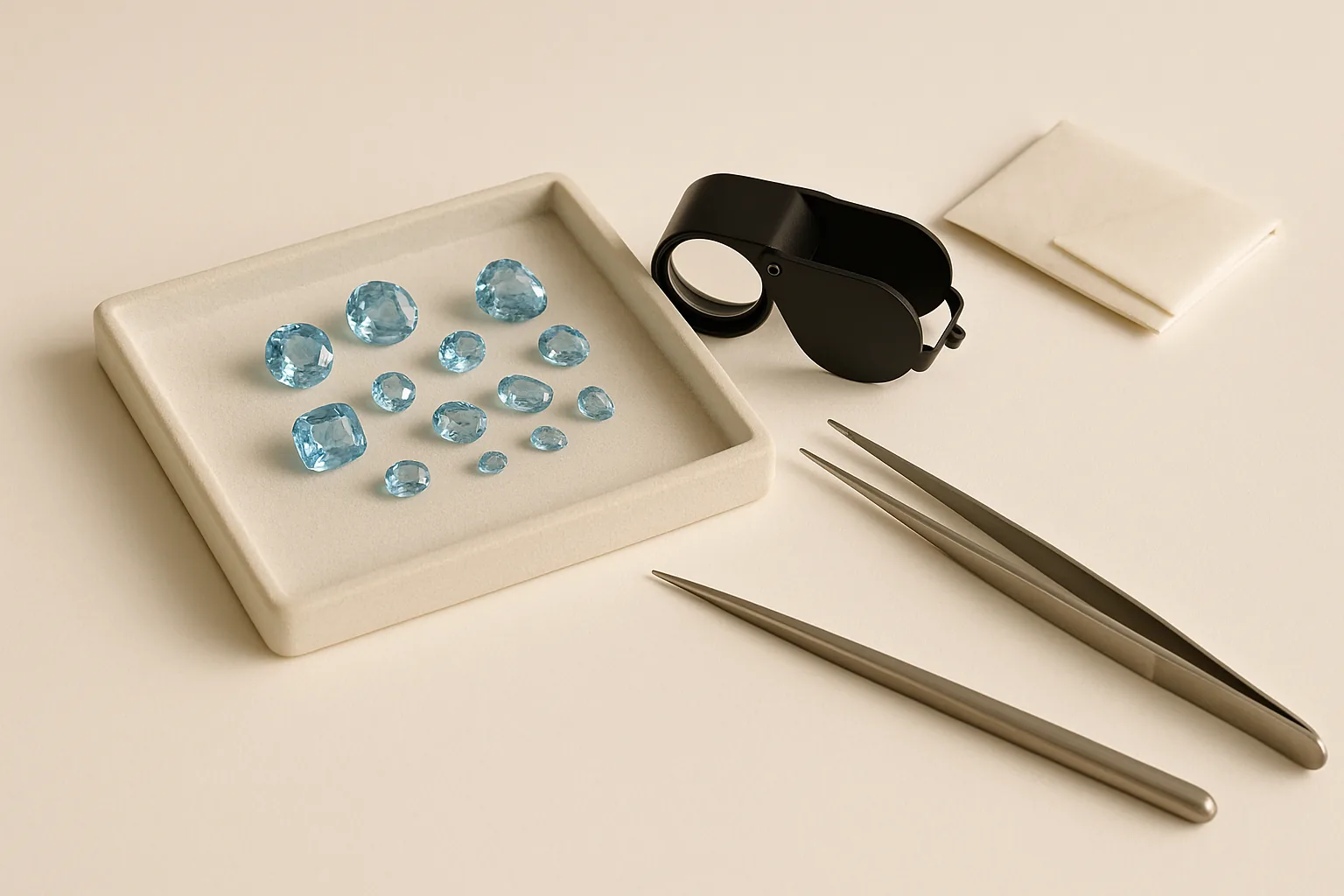
Aquamarine is the stone where buying loose pays the clearest dividend, because the two things that decide its value, depth of color and cut orientation, are exactly the two things a setting hides.
Sold loose, a stone is described on its own depth of color and its own orientation, and priced on both. Set into a finished ring, those two decisions have already been made for you and folded into a single figure.
- You know the real color. Stated for the stone itself, not framed by a metal chosen to flatter it.
- You can compare fairly. Two loose stones are judged on the blue alone.
- You decide where the money goes. Into the stone, or the setting, on your terms.
- The result is one of one. A stone you chose, in a design built for it.
Designing around a loose aquamarine
White metals are the obvious partner: platinum and white gold keep the blue cool and let it read clearly. Yellow gold is the more interesting choice and is having a moment, because the warmth pushes against the blue and makes a pale stone look intentional and vintage rather than washed out.
Because aquamarine comes in large clean sizes, it suits designs that would be extravagant in other stones: broad emerald cut cocktail rings, long pendants, substantial earrings. See ring settings and choosing a metal, or go straight to design your own ring (opens in new tab) to build a piece around a stone.
A short buying checklist
- Judge color face up, in daylight and under a lamp.
- Tilt the stone to see the pleochroism and confirm the best blue faces up.
- Look through the center for a window, especially on pale stones.
- Insist on eye-clean. There is no reason to accept less.
- Ask whether it is heated and get the answer in writing.
- Consider going larger. Size is affordable and it deepens the color.
Frequently asked questions
Is aquamarine the same mineral as emerald? Yes. Both are beryl. Chromium or vanadium makes beryl green and it is called emerald; iron makes it blue and it is called aquamarine. Despite the shared mineral they behave very differently, because aquamarine is typically clean and tough while emerald is typically included and brittle.
How hard is aquamarine, and is it suitable for daily wear? It is 7.5 to 8 on the Mohs scale, which is hard enough for an everyday ring. It has one direction of imperfect cleavage, so a protective setting is sensible, but it is among the more practical colored stones for regular wear.
Is aquamarine heated? Almost always. Gentle heating removes the yellow component of the color and leaves a purer blue. The change is permanent and stable, requires no special care, and is standard across the trade. Ask for it to be stated in writing regardless.
What is Santa Maria aquamarine? A trade term for a deeply saturated blue, named after the Santa Maria de Itabira mine in Brazil. It now describes the color rather than the origin, and comparable Mozambican material is sold as Santa Maria Africana.
Why do some aquamarines look green? Because they have not been heated, or not fully. The natural color of much aquamarine is a greenish blue, and the yellow that causes it is what heat removes. Some buyers now specifically seek that sea green shade.
Does aquamarine fade in sunlight? No. Unlike amethyst, aquamarine is not light sensitive and its color is stable. Ordinary storage and wear present no risk.
What size aquamarine can I realistically buy? Much larger than most colored stones. Clean rough of significant size is available, so ten, twenty and even fifty carat stones are practical for jewelry. Price per carat rises far more gently than it does for scarce gems.
Why does a bigger aquamarine often look bluer? Because color depends on how far light travels through the stone. A deeper stone gives light a longer path and returns a more saturated blue, which is why a large pale aquamarine can outperform a small one of the same grade.
How should I clean aquamarine jewelry? Warm water, mild soap and a soft brush are ideal. Ultrasonic cleaners are usually safe on clean stones but should be avoided on anything with visible inclusions or fractures. Keep it away from harsh chemicals.
Can aquamarine be used in an engagement ring? Yes. Its hardness suits daily wear, its clarity is usually excellent, and its cost allows a substantial stone. Our guide to designing an engagement ring covers how to plan the piece around a colored center stone.
To see what is available, browse the loose aquamarine collection (opens in new tab), or start from the design and create your own ring (opens in new tab) around a stone you have chosen. If you would like help narrowing the field, contact us (opens in new tab) and we will help you settle on a few worth considering.