How to Clean and Care for Your Engagement Ring
Learn a safe home-cleaning routine, which products to avoid, how care changes by gemstone, and the warning signs that need a jeweler's attention.
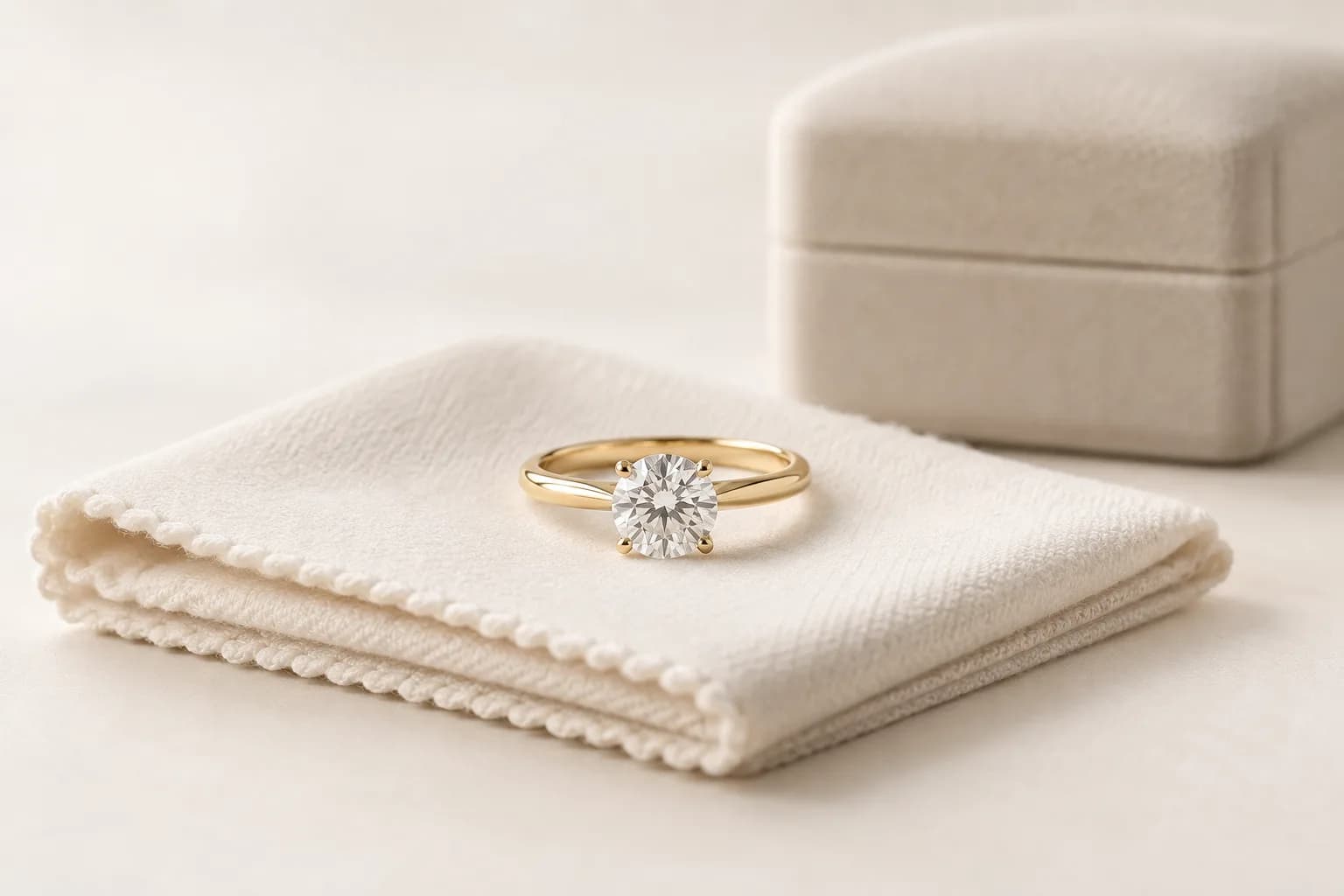
An engagement ring collects skin oils, soap and dust every day. Regular, gentle cleaning restores its brightness, but the safest method depends on the stone, its treatments and the setting. A routine that suits an untreated diamond may damage an emerald, pearl or filled stone.
A safe cleaning routine at home
Use this method only when you know the ring contains an untreated diamond, sapphire or ruby in a sound setting. If the stone is unidentified, treated, porous or already loose, leave it dry and ask a jeweler how it should be cleaned.
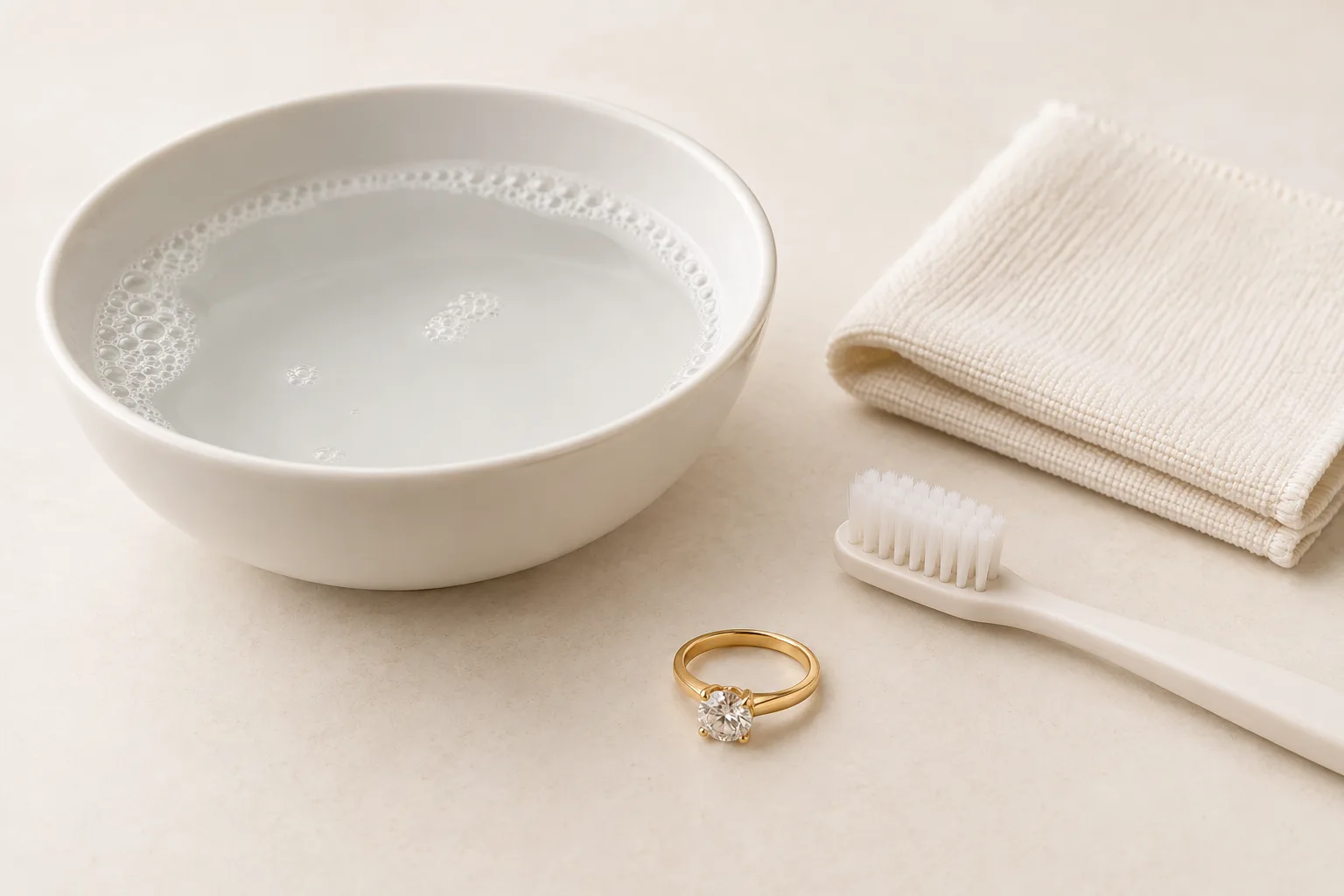
- Prepare a bowl away from the drain. Never clean a ring over an open sink. Fill a small bowl with lukewarm water and add a few drops of mild dishwashing liquid without bleach or moisturizers.
- Soak it briefly. Ten to twenty minutes is usually enough to soften the film behind the stone. Do not use hot or boiling water.
- Brush gently. Use a new, soft-bristled toothbrush and light pressure. Clean beneath the center stone and around the prongs, where residue gathers, without forcing the bristles into the setting.
- Rinse in a second bowl. Fresh lukewarm water removes the soap without putting the ring at risk near a drain.
- Pat it dry. Use a clean, lint-free cloth and let the ring finish drying on the cloth. Paper towels can leave fibers and may scratch softer metals.
When to take the ring off
Remove the ring before swimming, cleaning, gardening, lifting weights or doing work that can strike or bend it. Chlorine and household chemicals can affect alloys and finishes, while a hard knock can loosen a prong even when the gemstone itself looks unharmed.
Put the ring on after hand cream, sunscreen, perfume and hairspray. These products rarely harm a diamond, but they build a dull film beneath it. When washing your hands away from home, place the ring in a secure case rather than on the edge of a sink.
Cleaning methods to avoid
Do not use toothpaste, baking soda, powdered cleaners, bleach or improvised chemical mixtures. Abrasives can mark gold and platinum, and strong chemicals can attack metal alloys, plating, adhesives and some gemstone treatments.
An ultrasonic cleaner or steam cleaner is not automatically safe because a stone is hard. Vibration and heat can worsen fractures, shake loose stones and damage filled, oiled or heat-sensitive gems. Use either method only when a jeweler who has examined the ring says it is suitable.
Match the care to the gemstone
- Diamond, sapphire and ruby: the mild soap routine is generally suitable when the stone is untreated and the setting is secure. Fracture-filled diamonds and treated corundum need professional advice.
- Emerald: most emeralds contain oil or resin. Avoid ultrasonic and steam cleaning, sudden temperature changes and prolonged soaking. A soft damp cloth is the cautious choice unless a jeweler gives different instructions.
- Pearl, opal, turquoise and other delicate or porous gems: avoid soaking, heat and harsh cleaners. Wipe them with a soft, slightly damp cloth and dry them promptly.
- Unknown stone or treatment: do not experiment. A grading report, sales receipt or jeweler can identify treatments that change how the ring should be cleaned or repaired.
Protect the setting as well as the stone
Take the ring off by holding the band, not by pulling the center stone or its prongs. Store it alone in a fabric-lined compartment so it cannot scratch other jewelry or be scratched by another diamond.
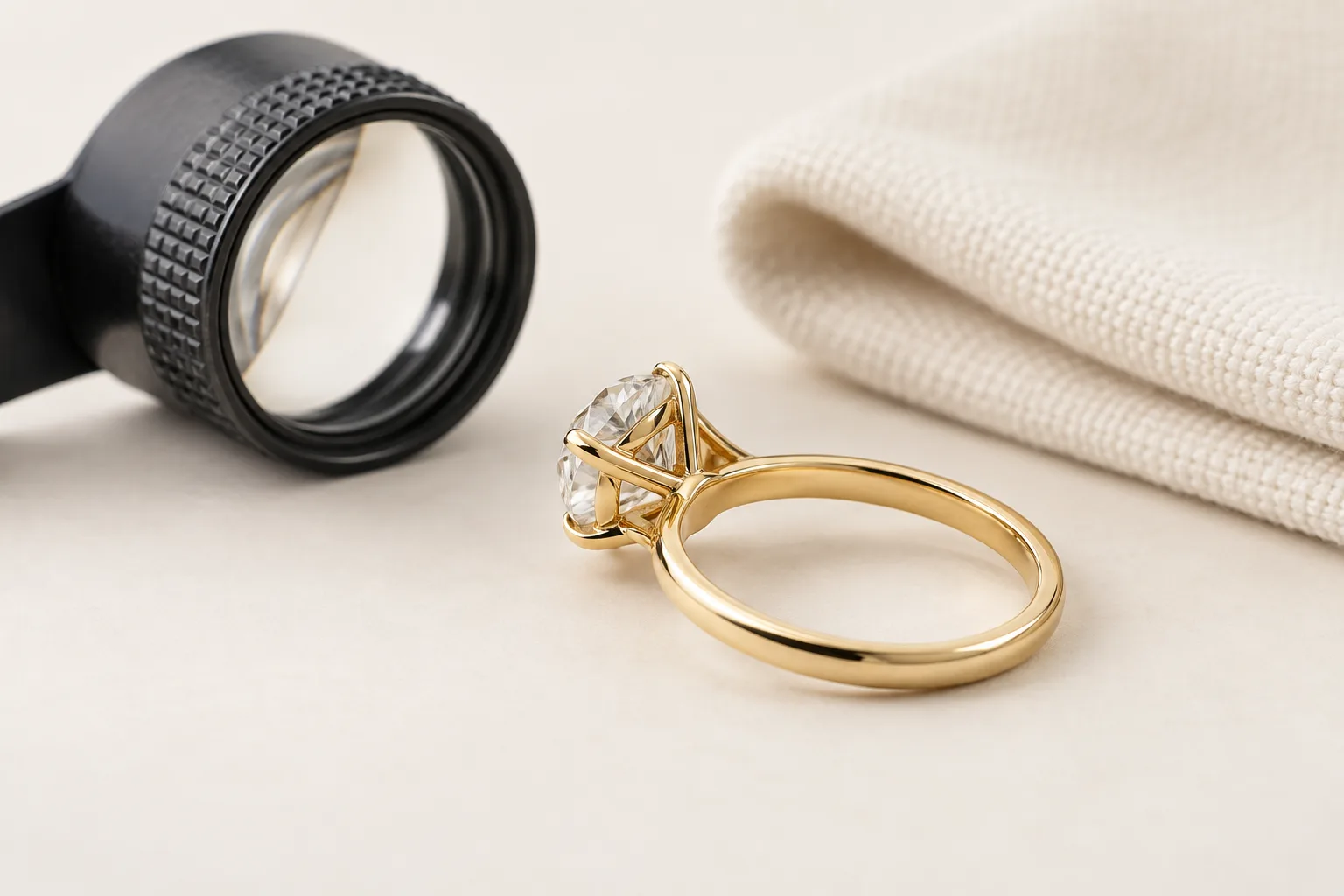
Check the ring in good light. A stone that clicks, turns or moves, a prong that catches on fabric, a visible gap, or a bent band needs attention. Stop wearing the ring and keep it in a closed box until a jeweler can inspect it. A periodic professional check is sensible, especially after an impact or for a ring worn every day.
Frequently asked questions
How often should I clean my engagement ring? Wipe it whenever it looks dull and use the gentle home routine every few weeks if its stone and treatment allow it. Daily habits matter more than a strict schedule.
Can I wear my engagement ring in the shower? It is better to remove it. Soap, shampoo and conditioner leave residue, and a slippery ring is easier to lose.
Can dishwashing liquid damage a ring? A few drops of a mild product in lukewarm water are usually safe for untreated diamond, sapphire and ruby. Avoid formulas containing bleach, abrasives or moisturizers, and do not soak delicate or treated stones.
How do I know whether a prong is loose? Look for movement, a faint rattle, a new gap or a prong that catches on clothing. Do not test it by pushing the stone. Stop wearing the ring and have the setting checked.