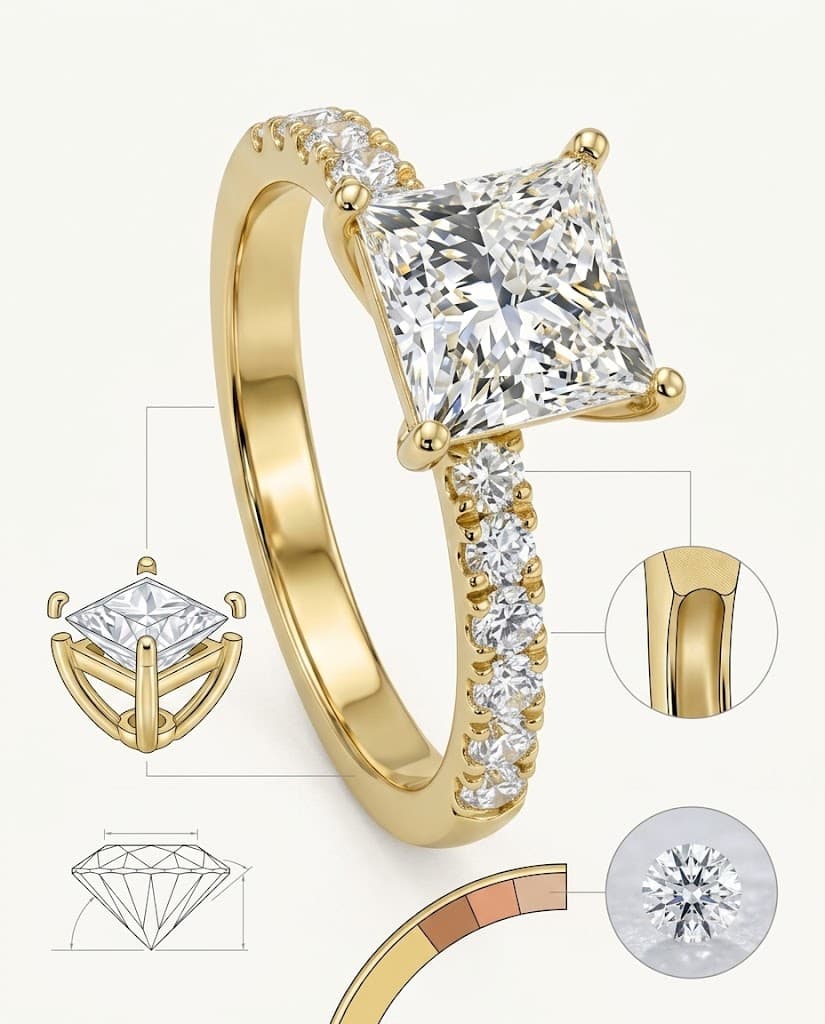
Welcome to our guide on how to choose a diamond for an engagement ring.
Choosing an engagement ring is an exciting and deeply important decision in any relationship, and it marks the next step you take together.
Choosing the diamond is the central step in buying an engagement ring, which is why it is important to learn and understand the factors worth weighing, so that you end up with the diamond that is perfect for you.
We are here to guide you along the way and help you choose well, and we believe that with this guide you will gain the knowledge you need and find your bearings when you buy a diamond.
In this guide you will get a sense of the four central characteristics, also known as "the four Cs", that define a diamond's quality: carat (weight), color, clarity and cut. You will learn how to identify and assess each of these, and so choose in a way that suits your own taste and your own budget.
In addition, you will find important tips for choosing the engagement ring. We will give you information about the types of gold and the different types of diamonds, taking your personal taste and budget into account, and the guide will provide tips and information to help you make informed decisions and, of course, get the best value for your money - because when you choose a ring you have to consider the budget, the personal taste of the person receiving it, and most importantly the diamond itself and the place you choose to buy the engagement ring from.
Where you buy matters as much as what you buy. Because diamonds are priced per carat and become directly comparable once they are certified, many buyers get more for their budget by purchasing closer to the source, directly from a diamond manufacturer or established supplier rather than through several intermediaries. That can mean sharper pricing, a wider choice of certified stones and more freedom to customize. A direct supplier such as Israel Diamonds, for example, lets you compare certified loose diamonds (opens in new tab) by grade and price and set your chosen stone in an engagement ring (opens in new tab).
We hope this guide gives you the tools you need to make the best decision for your perfect engagement ring, one that reflects your love.